What a ceremony center’s emergency plan should cover
Most ceremonies end without an emergency. A center’s emergency plan is for the night that doesn’t, and it’s one of the clearest tests of how seriously a place takes your safety. A good plan is specific and practical, and the people running the ceremony know it well. A weak one is a reassurance: “we’ve never had a problem,” “the space is protected,” “the medicine takes care of people.”
This guide describes what a sound plan covers, what’s different about each kind of ceremony, and the questions to ask so you can judge a center’s answer.
A useful benchmark
Oregon’s licensed psilocybin program requires every service center to keep a written safety and emergency plan. Under the state’s rules, the plan must set out how the center will:
- Evacuate clients or move them somewhere safe if the space becomes unsafe, for example in a fire or a power cut.
- Respond when a client has a medical or other emergency.
- Handle disruptive behavior and difficult reactions that aren’t emergencies.
- Respond when a client tries to leave before the session is over, including contacting the person the client named in advance.
- Keep clients safely monitored if a facilitator can’t continue.
Facilitators must be given the plan before they work there, and must go over the relevant parts with each client during preparation. The rules also require staff to call 911 when anyone on the premises needs emergency care for an immediate or potential threat to life, and to notify the client’s emergency contact if emergency services were called.
Those rules apply only in Oregon. They’re still a good list to hold any center to, whatever it offers and wherever it is.
Medical emergencies
Ask who on site is trained to recognize and respond to a medical emergency, and what they’re trained in. A current first aid and CPR certificate is the minimum for any ceremony involving a strong substance. For some, it isn’t enough.
Oregon’s rules put it this way: facilitators must use their training to tell typical side effects from medical emergencies, and must call emergency responders or other medical professionals immediately in an emergency. That distinction is where many problems start. Vomiting, shaking, crying and strong emotion can be normal in some ceremonies. Chest pain, a seizure, trouble breathing, confusion that doesn’t lift, or someone who can’t be woken are not.
A good plan also covers the practical details:
- How far the nearest hospital or clinic is, and whether it’s open at night.
- Who drives, in what vehicle, and whether that person stays sober.
- Whether there’s phone signal or another way to call for help, such as a landline or satellite phone.
- Who speaks the local language well enough to talk to emergency services.
- Where each participant’s medical information and emergency contact are kept.
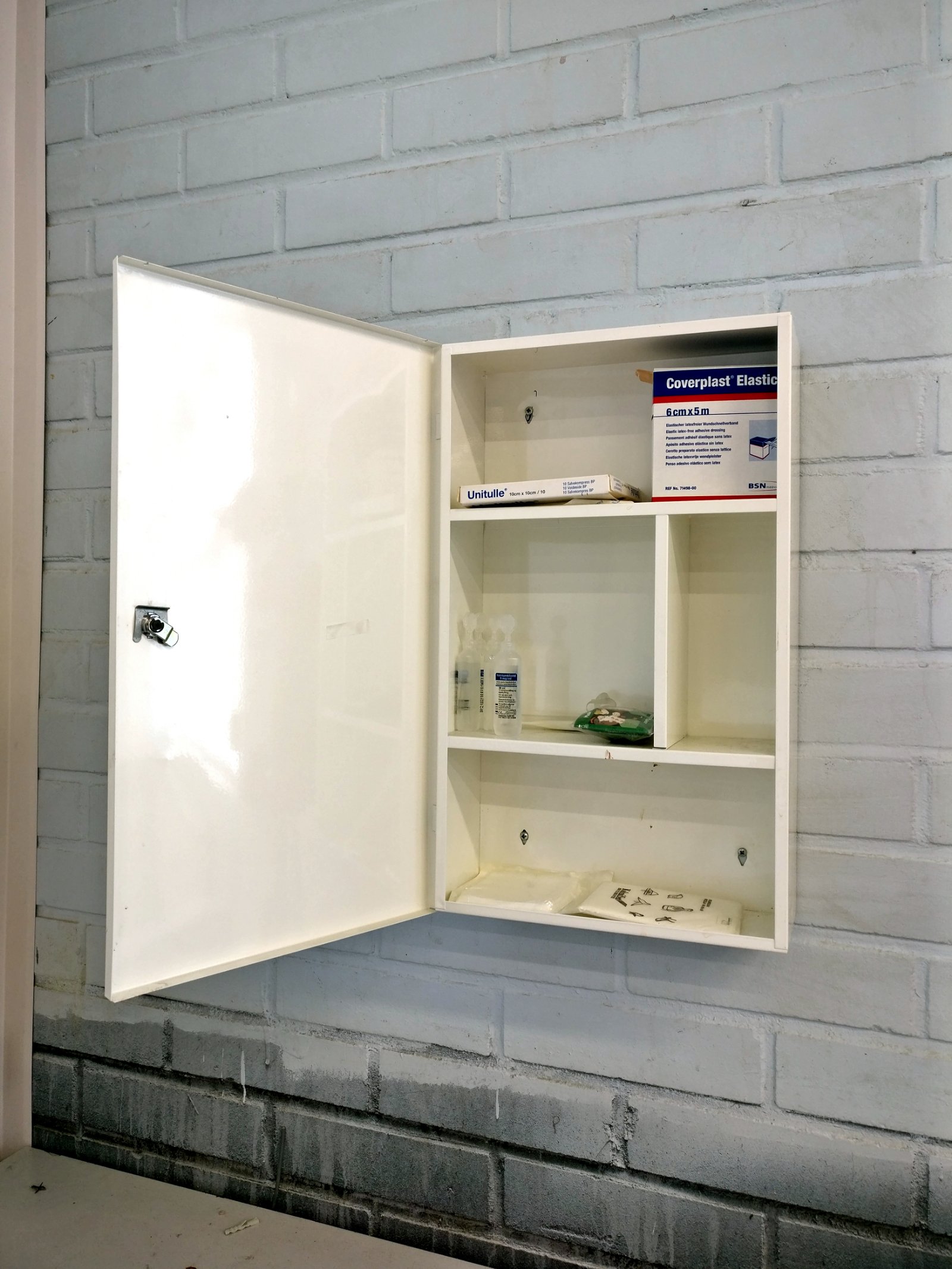
- What first aid equipment is on hand, such as a first aid kit and a blood pressure monitor.
Seizures
Staff should know basic seizure first aid. The US Centers for Disease Control and Prevention advises staying with the person, moving anything nearby that could hurt them, turning them gently onto their side if they’re lying down, and timing the seizure. It advises calling for emergency help if a seizure lasts longer than five minutes, if another follows soon after, if the person has trouble breathing or waking afterwards, is injured, or if it happens in water. It also advises calling if it’s someone’s first seizure.
Risks particular to each practice
Different ceremonies call for different preparations.
- For ibogaine, the main danger is to the heart. A review of its cardiac effects concluded that it should only be given under strict medical observation, with continuous heart monitoring over a long enough period. A center offering ibogaine without that is missing the core of its emergency plan.
- For kambo, staff should know that sessions which involve drinking a lot of water have been followed by dangerously low blood sodium. Case reports describe vomiting, confusion and seizures, and one death in 2025 after severe brain swelling. A worsening headache, repeated vomiting or confusion after kambo calls for urgent medical help.
- For 5-MeO-DMT, a review of the research describes hospitalization and a death when it was combined with substances that block monoamine oxidase, such as those in ayahuasca. A plan should include how the center keeps those substances apart.
- For classic psychedelics such as psilocybin and ayahuasca, the most common serious problems are psychological, covered below.
- For breathwork, ask what the center does if someone faints, panics or has chest pain.
Psychological emergencies
Johns Hopkins safety guidelines for psychedelic research name overwhelming fear and confusion as the most likely adverse reaction, and warn that it can lead people to do dangerous things, such as leaving the site. In a survey of nearly 2,000 people about their hardest experience with psilocybin mushrooms, 11% said they put themselves or others at risk of physical harm. The risk was higher when physical comfort and social support were missing.
So a plan needs to say what staff do when someone is terrified, confused or agitated. Things to look for:
- Enough staff that one person can stay with someone in distress while others look after the group. The Hopkins guidelines call for at least two monitors in research sessions so nobody is ever left alone.
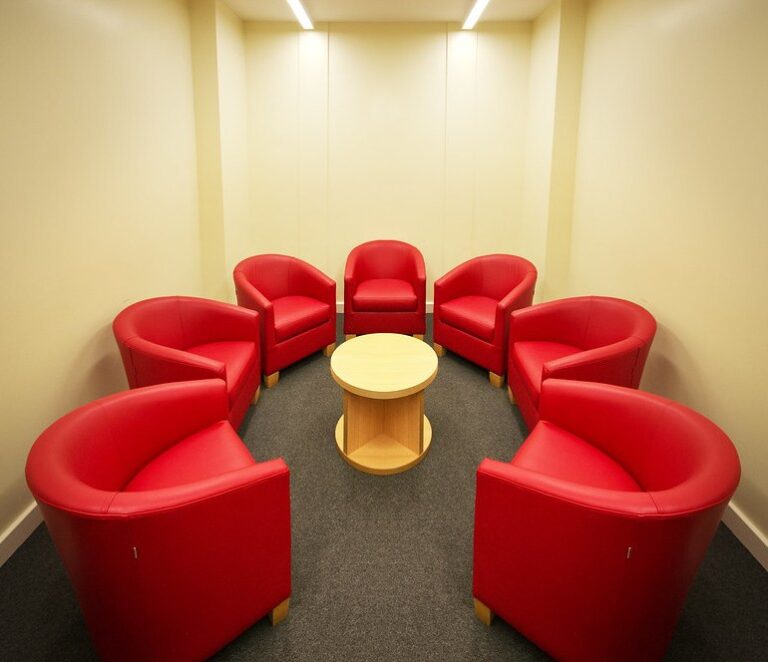
- A quiet, safe space nearby where someone can be supported away from the group, with a staff member present.
- Staff trained to stay calm and present. The Zendo Project, which trains people to support others through difficult psychedelic experiences, describes its approach as creating a safe space, sitting with a person rather than guiding them, and helping them through an experience rather than trying to shut it down.
- A clear point at which support turns into calling for help. The Zendo Project’s own materials say to contact professional services if someone has a medical emergency, is an immediate danger to themselves or others, or needs more support than you can give.
The Hopkins guidelines note that a hospital emergency department is a last resort for purely psychological distress in research settings, because staff unused to psychedelic effects can make things worse. That isn’t a reason to avoid hospital in a medical emergency. It’s a reason for a center to have people who can handle fear and confusion on site.
Someone trying to leave
A frightened person may try to walk out into the dark, toward water or onto a road. Ask what the center does if that happens. Good answers involve staff who follow and stay with the person, a site that’s been checked for hazards, and a plan to contact the person’s emergency contact. Locking people in, or physically holding them down, is not a plan.
Nobody should drive after a ceremony. Oregon requires a transportation plan for every client and forbids approving a client to drive, ride a bike or use any other self-operated transport afterwards.
Your part of the plan
You can make the center’s job easier. Before the ceremony:
- Give the center a list of your medicines and health conditions, and an emergency contact who knows where you are.
- Tell someone at home where you’ll be, who’s running it, and when you’ll check in.
- Know the local emergency number and where the nearest hospital is.
- Arrange how you’ll get home afterwards without driving.
- Keep your own phone, ID and some money.
Questions to ask
- Do you have a written emergency plan? Can I see the parts that affect me?
- Who is trained in first aid and CPR, and when did they last renew it?
- Is a nurse, paramedic or doctor on site or on call?
- How far is the nearest hospital, and how would someone get there at night?
- Is there phone signal or another way to call for help?
- What do you do if someone panics, becomes confused or tries to leave?
- How do you decide that something is a medical emergency and not part of the process?
- Have you ever called emergency services? What happened, and what did you change afterwards?
Listen for specifics. “We’d call an ambulance, which takes about 25 minutes; our nurse would stay with them, and one of us would ring their emergency contact” is a plan. “Nothing has ever gone wrong” isn’t, especially from a place that has run hundreds of ceremonies.
More guides
- Facilitators: what experience and training look like
- Health screening: why a good center asks about your health
- Medications and health conditions: who shouldn’t sit
- Red flags: when to walk away
- When it goes badly: difficult experiences and where to get help
Reviews sometimes describe how a center handled a hard night, which tells you more about its emergency plan than its website does. You can search the Safe Ceremonies listings and read past participants’ accounts, in categories such as peyote and iboga, bufo and 5-MeO-DMT and kambo.
Sources
- Oregon Administrative Rules, Chapter 333, Division 333 (Psilocybin), including 333-333-4460 (service center safety and emergency plan), 333-333-4700 (duty to contact emergency services), 333-333-5000 (preparation sessions) and 333-333-5120 (facilitator conduct). Checked 8 October 2026. https://secure.sos.state.or.us/oard/displayDivisionRules.action?selectedDivision=7102
- Centers for Disease Control and Prevention. First aid for seizures. https://www.cdc.gov/epilepsy/first-aid-for-seizures/index.html
- Koenig X, Hilber K (2015). The anti-addiction drug ibogaine and the heart: a delicate relation. Molecules. https://pmc.ncbi.nlm.nih.gov/articles/PMC4382526/
- Tran CQ, Houston R, Marino MA, et al. (2025). Shamanic Kambô frog hyponatremic toxicity leading to brain death: a case report. Cureus. https://pmc.ncbi.nlm.nih.gov/articles/PMC12154959/
- Leban V, Kozelj G, Brvar M (2016). The syndrome of inappropriate antidiuretic hormone secretion after giant leaf frog (Phyllomedusa bicolor) venom exposure. Toxicon. https://doi.org/10.1016/j.toxicon.2016.07.007
- Ermakova AO, Dunbar F, Rucker J, Johnson MW (2022). A narrative synthesis of research with 5-MeO-DMT. Journal of Psychopharmacology. https://pmc.ncbi.nlm.nih.gov/articles/PMC8902691/
- Johnson MW, Richards WA, Griffiths RR (2008). Human hallucinogen research: guidelines for safety. Journal of Psychopharmacology. https://pmc.ncbi.nlm.nih.gov/articles/PMC3056407/
- Carbonaro TM, Bradstreet MP, Barrett FS, et al. (2016). Survey study of challenging experiences after ingesting psilocybin mushrooms. Journal of Psychopharmacology. https://pmc.ncbi.nlm.nih.gov/articles/PMC5551678/
- Zendo Project. Playa guide and the four principles of psychedelic care. https://zendoproject.org/resources/playa-guide
Photo: Metal First Aid Cabinet by Santeri Viinamäki, CC BY-SA 4.0.

Author: Safe Ceremonies
User reviewed ceremonies