Ayahuasca and mental health: what the research says
If you’ve read about ayahuasca online, you’ve probably seen it described as a cure for depression, trauma or addiction. Some of those claims point to real studies. Most of the studies are small, many have no comparison group, and almost none look like the retreat you might be thinking of booking. This guide goes through what has actually been published, what each kind of study can and can’t show, and what the research says about risk.
Nothing here is medical advice. If you’re living with depression, anxiety or another condition, the person treating you is the right first conversation, and our guide on medications and health conditions covers who shouldn’t sit at all.
First, how to weigh a study
Headlines rarely say what kind of study they’re reporting. The kind matters more than almost anything else, so it helps to know the main types before looking at results.
- A case report describes one person, or a handful. It can raise a warning or an idea. It can’t tell you how common something is.
- A survey asks people who have used ayahuasca about their experience. Surveys can reach thousands of people, but the people who answer are self-selected, they’re remembering, and nobody checks what they drank.
- An observational study follows people who chose to attend a retreat or a church, often measuring them before and after. It can show change. Without a comparison group it can’t show that ayahuasca caused the change rather than time off, the setting, hope, or the fact that people tend to sign up when they feel at their worst.
- An open-label trial gives a known substance to patients in a clinic. Everyone knows what they got, which makes expectation hard to separate from effect.
- A randomized, placebo-controlled trial assigns people by chance to the real thing or a dummy. It is the strongest design, and with psychedelics it has a known weakness: most people can tell whether they got the active substance.
Size matters too. A result in 29 people can be real and still be far less certain than the same result in 300.
What the trials found on depression
Controlled research on ayahuasca for depression comes down to very few studies, and most of it from one research group in Brazil.
The first was an open-label study of six patients with depression, given ayahuasca in a hospital setting. Depression scores fell sharply over the following three weeks. A 2016 systematic review of psychedelic trials counted it as the only ayahuasca clinical trial meeting its criteria at the time, and pointed out its limits: six people, no placebo, no control group. Half the patients vomited.
The strongest study so far is a randomized, double-blind, placebo-controlled trial published in 2019. It included 29 people with treatment-resistant depression, meaning depression that hadn’t improved with earlier treatments. Each received a single dose of either ayahuasca or a placebo drink made to look and taste similar. A week later, 64% of the ayahuasca group met the study’s definition of a response, compared with 27% of the placebo group. On days one and two, response rates were high in both groups; the gap opened up by day seven. Nausea affected 71% of the ayahuasca group and vomiting 57%.
The authors listed the limits themselves. The sample was small. The patients had long-standing depression and many had a personality disorder as well, so the results may not apply to other people. And keeping a psychedelic trial blind is hard, because participants who vomit and see visions can usually guess what they drank. The trial also measured only one week, so it says nothing about whether any benefit lasted.
That is the heart of the controlled evidence: a promising signal from one small trial, in a hospital, with screened patients and trained staff, and a placebo group that probably knew it was the placebo group.
Long-term church members
Some research has looked at people who drink ayahuasca regularly as a sacrament in Brazilian churches. A 2012 study compared 127 long-term members with 115 people who were active in other religious groups and had never taken ayahuasca, measuring them at the start and again a year later. The ayahuasca users scored lower on every measured dimension of psychological symptoms and did as well or better on several tests of thinking and planning.
The authors were clear about what this can’t show. People who had a bad time with ayahuasca are likely to have left these churches and so weren’t there to be studied. The users weren’t matched to the controls on earlier intelligence scores. And the religious community itself, with its rules, support and sense of meaning, may explain some of the differences. The study tells you that long-term ritual use in that setting wasn’t linked to obvious harm in the people who stayed. It doesn’t tell you what a few ceremonies at a retreat will do.
Studies of retreat participants
Most recent ayahuasca research follows people who chose to attend a retreat. A 2026 systematic review gathered 18 such prospective studies, meaning studies that measured people before and after. Across them, researchers reported improvements in wellbeing, depression and other psychiatric symptoms, substance use and several personality measures, on average. The same studies also reported smaller groups of participants with persisting psychiatric problems they linked to their ayahuasca use.
The review’s authors described most of these studies as limited by small samples, unknown and unstandardized doses, no control groups and non-random designs. None of the prospective studies they found looked specifically at physical health conditions.
One example gives a sense of scale. A 2025 study asked 36 people to log their mood three times a day for five days before and five days after a four-day ayahuasca retreat. On average, positive mood rose and negative mood fell. About 5.5% showed some potentially meaningful worsening of mood. A week of before-and-after data from 36 volunteers is useful, and it is also a long way from proof that retreats treat anything.
What the research says about risk
The largest source on harms is the Global Ayahuasca Survey, which collected answers from over 8,000 people in more than 50 countries between 2017 and 2019. Of those who answered questions on physical effects, 69.9% reported at least one, most often vomiting or nausea (62%). About 2.3% said they had needed medical attention for a physical effect.
On mental health, 55.4% reported some psychological adverse effect, most often hearing or seeing things that others don’t (28.5%) or feeling disconnected or alone (21%). About 12% of that group said they had needed professional support for these effects. Most people who reported a psychological effect, about 88%, saw it as part of a positive process of growth or integration. That is worth knowing, and it also shows how hard these effects are to judge from inside a ceremony culture that often frames difficulty as progress.
The survey found physical adverse effects more often in people who were older when they first drank, had used more ayahuasca, had a physical health condition, had a history of substance use disorder, or drank in settings without supervision. Psychological adverse effects were more common in people with a history of anxiety disorder, among others. The authors note the usual survey limits: self-selection, memory, and no way of knowing what was in the brew.
Psychosis is the risk people fear most. A 2017 systematic review of published cases concluded that psychotic episodes after ayahuasca or DMT appear rare, and that most of the reported cases involved a personal or family history of psychotic illness, other drug use, or an unsupervised setting. It recommended psychiatric screening and advised that people with a personal or family history of psychosis or mania avoid these substances. Most of its evidence was case reports, which can show that something happens but not how often.
Medication interactions are a separate, well-understood risk. The vine in ayahuasca contains compounds that block an enzyme called monoamine oxidase. That’s what allows the DMT in the brew to work when swallowed, and it’s also why combining ayahuasca with SSRI antidepressants and some other medicines can cause serotonin syndrome, a potentially dangerous reaction. Never stop or change a prescribed medicine for a ceremony without the person who prescribed it.
What the research can’t tell you yet
- Whether ayahuasca works better than existing treatments. No trial has compared them head to head.
- How long any benefit lasts. The only placebo-controlled trial followed people for a week.
- What happens to people who drop out of studies, leave churches, or never answer surveys.
- Anything reliable about physical illnesses. There are personal stories, and no prospective research to back health claims.
- Whether results from a hospital trial with screened patients apply to a retreat with a different brew, different staff and a different group.
Reading a center’s claims
When a center cites research, a few questions will tell you a lot:
- Which study, exactly? A real claim can name the paper.
- Who was studied, and how many people? A trial in 29 hospital patients can’t support “heals depression” on a retreat website.
- Was there a comparison group?
- Does the center mention the risks those same studies found, such as vomiting, distressing after-effects and drug interactions?
- Is it screening for the conditions the research flags, such as a history of psychosis or mania?
A grounded center can say something like “early research is promising, the evidence is still thin, and here is how we screen for the risks.” A center that promises a cure is telling you more than the science knows.
If you’re struggling after a ceremony, Fireside Project’s free psychedelic peer support line, 62-FIRESIDE (623-473-7433), takes calls and texts. In the US, the 988 Suicide & Crisis Lifeline is available by call or text at 988.
More guides
- What ayahuasca is
- Psychedelic research: the studies worth knowing
- Medications and health conditions: who shouldn’t sit
- Common myths about ayahuasca
- When it goes badly: difficult experiences and where to get help
- Grounded or “woo woo”? How to read a group’s beliefs
Reviews won’t tell you whether ayahuasca works, but they can tell you whether a center screens carefully, talks honestly about risk and follows up afterwards. You can search the Safe Ceremonies listings and read past participants’ reviews of ayahuasca centers and integration and aftercare services.
Sources
- dos Santos RG, Osório FL, Crippa JAS, et al. (2016). Antidepressive, anxiolytic, and antiaddictive effects of ayahuasca, psilocybin and lysergic acid diethylamide (LSD): a systematic review of clinical trials published in the last 25 years. Therapeutic Advances in Psychopharmacology. https://pmc.ncbi.nlm.nih.gov/articles/PMC4910400/
- Palhano-Fontes F, Barreto D, Onias H, et al. (2019). Rapid antidepressant effects of the psychedelic ayahuasca in treatment-resistant depression: a randomized placebo-controlled trial. Psychological Medicine. https://pmc.ncbi.nlm.nih.gov/articles/PMC6378413/
- Bouso JC, González D, Fondevila S, et al. (2012). Personality, psychopathology, life attitudes and neuropsychological performance among ritual users of ayahuasca: a longitudinal study. PLOS ONE. https://journals.plos.org/plosone/article?id=10.1371/journal.pone.0042421
- Haupt MJ, Carra S, Boehnke KF, Aday JS (2026). Preliminary effects of ayahuasca on mental and physical health: a systematic review of prospective studies. Progress in Neuro-Psychopharmacology and Biological Psychiatry. https://doi.org/10.1016/j.pnpbp.2026.111634
- Sznitman SR, Behar YA, Dicker-Oren SD, et al. (2025). A prospective ecological momentary assessment study of an ayahuasca retreat. Psychopharmacology. https://pmc.ncbi.nlm.nih.gov/articles/PMC11861408/
- Bouso JC, Andión Ó, Sarris JJ, et al. (2022). Adverse effects of ayahuasca: results from the Global Ayahuasca Survey. PLOS Global Public Health. https://journals.plos.org/globalpublichealth/article?id=10.1371/journal.pgph.0000438
- dos Santos RG, Bouso JC, Hallak JEC (2017). Ayahuasca, dimethyltryptamine, and psychosis: a systematic review of human studies. Therapeutic Advances in Psychopharmacology. https://pmc.ncbi.nlm.nih.gov/articles/PMC5433617/
- Hamill J, Hallak J, Dursun SM, Baker G (2019). Ayahuasca: psychological and physiologic effects, pharmacology and potential uses in addiction and mental illness. Current Neuropharmacology. https://pmc.ncbi.nlm.nih.gov/articles/PMC6343205/
- Fireside Project, psychedelic peer support line. https://firesideproject.org/
- 988 Suicide & Crisis Lifeline. https://988lifeline.org/
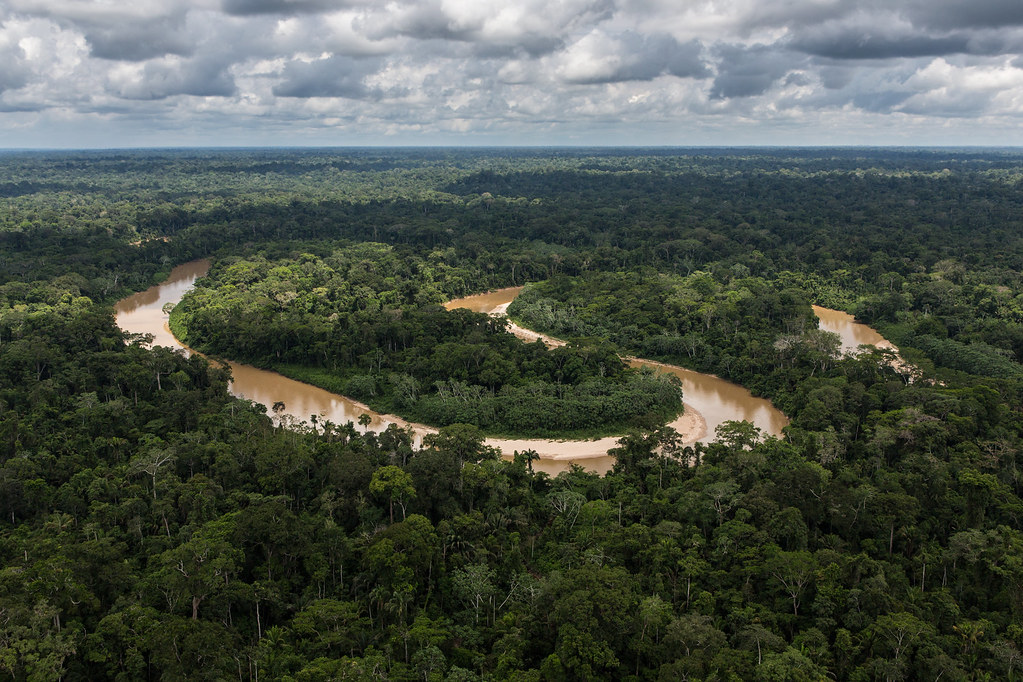
Photo: ConservationAmazonPeru-FS-001 by U.S. Forest Service, Public Domain Mark 1.0.

Author: Safe Ceremonies
User reviewed ceremonies