
What to expect at a psilocybin ceremony
Psilocybin is the main psychedelic compound in so-called magic mushrooms. It’s offered in many kinds of settings: group ceremonies, retreats abroad, one-to-one sessions with a guide, licensed service centers in a few US states, and clinical trials. The details differ, and so do the safety standards. The basic shape of the day is similar enough that you can know what to expect before you go.
This guide describes that shape. It doesn’t cover how much is given or how it’s prepared, which is the provider’s responsibility. For the legal side in the US, see our guide on psilocybin programs in Oregon and Colorado.
Preparation before the day
A careful provider will screen you first, with questions about your medicines, physical health, and your own and your family’s mental health history. Our guides on health screening and on medications explain why each question matters.
You should also have at least one conversation with the person who will be with you during the session. Research gives a sense of what thorough preparation looks like. In the safety guidelines Johns Hopkins researchers published for psilocybin studies, monitors spent at least eight hours over four or more meetings getting to know each volunteer before the first session, so that the volunteer would feel completely comfortable with them. Few ceremonies come close to that. You can still ask for a proper conversation about your history, your fears and what to do if things get hard.
Agree on touch during preparation. The same guidelines recommend practicing hand holding in advance, so that a reassuring hand feels familiar if you need one. You might want that, something else, or nothing at all. Say which, and ask how they’ll check with you during the session.
The room and the setup
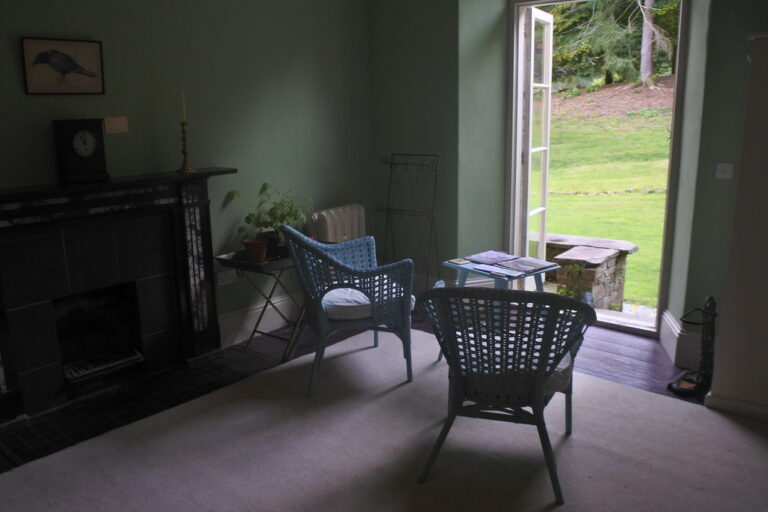
The Johns Hopkins guidelines recommend a room that feels like a living room rather than a clinic, because an overly clinical setting can increase anxiety. Many ceremonies use something similar: mats or mattresses, blankets and cushions, low light, and a bathroom close by. Eyeshades and headphones playing music are common, both in research and in ceremony, because they cut down distractions and the pressure to talk.
Group ceremonies tend to look different. You may be in a circle with other people, with a facilitator leading songs, drumming or prayers. That can feel supportive, and it can also be distracting when someone near you is having a hard time. Ask how many people will attend and how many staff will be there.
How long it lasts
In a 2023 study that compared psilocybin with LSD and mescaline in healthy volunteers, the effects of psilocybin peaked about two hours after it was taken and lasted around five hours on average. That study used measured doses of pure psilocybin in a lab. Mushrooms vary in strength, and some ceremonies serve more than once, so a ceremony may run longer. Plan to spend the whole day, and the evening after, with nothing else on your schedule.
What your body may do
The Johns Hopkins guidelines list dizziness, weakness, tremors, nausea, drowsiness and dilated pupils among the physical effects of psychedelics like psilocybin, along with moderate rises in pulse and blood pressure. In the 2023 comparison study, nausea and headache were among the most frequent complaints, and a few participants had severe headaches. Some people vomit, especially early on.
The rise in blood pressure and heart rate is usually modest, but it matters if you have a heart condition or high blood pressure. Tell the provider, and talk to your doctor, before you book.
What your mind may do
The experience changes how you see, hear and think. Colors and patterns may shift, music can feel overwhelming, time can stretch, and memories or emotions may surface with unusual force. Many people describe moments of deep meaning or connection. Others mostly feel confused, restless or flat. All of these are common.
Hard moments are common as well. A large online survey asked nearly 2,000 people about the most difficult experience they’d had with psilocybin mushrooms. About 39 percent rated it among the five most challenging experiences of their lives, and 11 percent said they had put themselves or others at risk of physical harm. Yet most also reported benefiting from it, and about a third counted it among their five most meaningful experiences.
The same survey found that risky behavior was more likely without physical comfort, without social support, and without an experienced guide present. Only about 2 percent of the people surveyed had taken mushrooms in conditions like those used in research. Those findings are an argument for choosing a setting with trained people and a comfortable room.
When fear arrives, the research guidelines suggest not fighting it. Volunteers were encouraged to surrender to the experience, trusting that their usual state of mind would return, and to approach a frightening image rather than flee from it. A guide sitting nearby, a hand to hold, or simply sitting up and opening your eyes can all help. If you’re struggling, tell someone.
What the people with you should be doing
The Johns Hopkins guidelines call for at least two monitors during a session, so that the volunteer is never alone, with one always in the room. Ceremonies vary, but the principle holds. Someone sober and trained should be with you the whole time, should go with you to the bathroom if you’re unsteady, and should know what to do in a medical emergency.
Some things need medical help, whatever the setting: chest pain, trouble breathing, a seizure, fainting with injury, or someone who can’t be woken. A center that would call these “part of the process” is not one to trust with your safety.
Consent still applies when you’re altered. Nobody should touch you in ways you didn’t agree to, ask you to undress, or invite you to a private session away from the group. Our guide on consent, touch and boundaries goes into this in depth.
Coming down
As the effects fade, most people feel tired, emotional or quietly elated, and some feel unsettled. This is usually a good time for food, water and a walk with someone, or for writing down what happened. Many groups hold a sharing circle in the evening or the next morning. You don’t have to speak, and you don’t have to accept anyone else’s view of your experience.
The Johns Hopkins guidelines advise volunteers not to drive or do anything potentially dangerous for the rest of the day, and arrange a follow-up meeting, usually the next day. Ask your provider what follow-up they offer.
The days and weeks after
Some people feel unsettled for days or weeks afterwards. In the survey of difficult experiences, about 8 percent of those asked said they had later sought treatment for psychological symptoms. A small number reported lasting psychotic symptoms. These were people describing their hardest experience, often without support, so the numbers don’t apply to every session. They are still a reason to plan support before you go.
Give yourself some quiet days. Talk with someone you trust. If something keeps troubling you, look for an integration circle or a therapist who knows this area. Fireside Project’s free psychedelic peer support line, 62-FIRESIDE (623-473-7433), takes calls and texts from 11 a.m. to 11 p.m. Pacific time every day, during an experience or after it. In the US, the 988 Suicide & Crisis Lifeline is available by call or text at 988.
Questions to ask the provider
- Who will be with me during the session, and what training do they have?
- How many participants will there be, and how many staff?
- How do you screen for medicines and mental health history?
- What happens if I’m frightened, or if I want to stop?
- What would you do in a medical emergency, and how far is the nearest hospital?
- How do you handle touch?
- What support do you offer the next day and in the weeks after?
More guides
- What psilocybin is
- Preparing your mind: setting an intention
- Health screening: why a good center asks about your health
- Psilocybin in Oregon and Colorado: the legal programs
- Ceremony vs licensed psychedelic therapy
- Integration after a ceremony: a practical guide
Reviews tell you how a provider handles the parts a website won’t show, such as how they responded to a hard moment and what follow-up looked like. You can search the Safe Ceremonies listings, including psilocybin and mushroom ceremonies and psychedelic-assisted therapy providers.
Sources
- Johnson MW, Richards WA, Griffiths RR (2008). Human hallucinogen research: guidelines for safety. Journal of Psychopharmacology. https://pmc.ncbi.nlm.nih.gov/articles/PMC3056407/
- Ley L, Holze F, Arikci D, et al. (2023). Comparative acute effects of mescaline, lysergic acid diethylamide, and psilocybin in a randomized, double-blind, placebo-controlled cross-over study in healthy participants. Neuropsychopharmacology, 48(11). https://pmc.ncbi.nlm.nih.gov/articles/PMC10517157/
- Carbonaro TM, Bradstreet MP, Barrett FS, et al. (2016). Survey study of challenging experiences after ingesting psilocybin mushrooms. Journal of Psychopharmacology. https://pmc.ncbi.nlm.nih.gov/articles/PMC5551678/
- Fireside Project, psychedelic peer support line. https://firesideproject.org/
- 988 Suicide & Crisis Lifeline. https://988lifeline.org/
Photo: couch throw pillows blankets table by unknown (rawpixel public-domain collection; Openverse lists no creator), CC0 1.0.

Author: Safe Ceremonies
User reviewed ceremonies