What is Kambo? The frog secretion, its effects and risks
Kambo, also called sapo, is the dried skin secretion of an Amazonian tree frog. In a Kambo session, a practitioner burns a few small dots on the skin and dabs the secretion onto them. Within minutes the body reacts strongly, usually with a racing heart, sweating, swelling and vomiting. The main effects typically pass in about 15 minutes.
Kambo is often listed alongside plant medicines, but it isn’t a psychedelic. It doesn’t produce visions. Its effects are physical, and the medical literature on it is mostly a list of things that went wrong. This guide explains what Kambo is, where the practice comes from, what happens in the body and what has been reported. It doesn’t cover how to get or apply it.
The frog and the tradition
The secretion comes from the giant monkey frog, Phyllomedusa bicolor, which lives across the Amazon in countries including Brazil, Peru, Bolivia, Colombia, Ecuador and Venezuela. A 2025 systematic review in Cureus describes its traditional use among Indigenous groups of the region: to strengthen the body’s defenses, to ward off misfortune (panema), and in rituals meant to improve success in hunting.
The secretion is collected from the frog, dried, and later applied to small burns made on the skin with a hot stick. The review notes that the site differs by sex in traditional practice: the arms for men and the legs for women.
A 2022 review of poisoning cases notes that the practice has spread from South America to other regions, including Europe and the United States. Case reports also come from Australia. Outside the Amazon it is usually offered by independent practitioners or at retreats.
What’s in it and what it does
The secretion is a mix of peptides, short chains of amino acids, that act on the body in different ways. The 2025 review names several, including phyllocaerulein, phyllomedusin, phyllokinin, dermorphin, deltorphin and sauvagine. Between them they excite the nervous system, relax the smooth muscle in blood vessel walls and have opioid-like effects, and the review says the main effects last about 15 minutes.
In practice, people describe and doctors report:
- Intense nausea, vomiting and often diarrhea.
- Heavy sweating and swelling.
- A fast heart rate together with a drop in blood pressure, which can bring on dizziness or fainting.
Some of these peptides have attracted scientific interest on their own. The 2022 review put it plainly: while some studies suggest individual peptides may relieve pain, taking the mixture together may have significant side effects. There are no clinical trials showing that a Kambo session treats any illness.
What practitioners claim, and what’s known
Kambo is often marketed as a detox, an immune boost or a “reset,” and sometimes as a treatment for depression, addiction, chronic pain or infections. The 2022 review found no clinical evidence behind these claims. “Purging toxins” is a description of vomiting, not a measured effect, and the US National Center for Complementary and Integrative Health has a whole page on why natural doesn’t necessarily mean safer.
Testimonials from people who felt better after a session are real experiences, and you can weigh them as that. They don’t tell you what the secretion did to your body, or what it might do to someone with a different health history.
Serious complications
Medical journals have published a steady stream of case reports. The 2022 review gathered 11 cases of acute poisoning in people aged 24 to 62, most of them women. Hospital stays ranged from an hour to three months, and averaged about a week. The 2025 review looked specifically at sudden deaths. Reported complications include:
- Severe hyponatremia, a dangerous drop in the blood’s sodium level, sometimes through a hormone imbalance called SIADH that makes the body hold on to water.
- Liver injury.
- Psychosis and seizures.
- Rupture of the esophagus from forceful vomiting, a condition called Boerhaave syndrome, reported in a healthy man in Australia in 2023.
- Sudden death, including from heart problems.
The water problem
Some practitioners ask people to drink a lot of water around a Kambo session, to help them vomit. That practice keeps turning up in the case reports.
- In the 2022 review, 3 of the 11 cases involved drinking several liters of water after the Kambo was applied.
- In a 2025 case report, a 35-year-old woman developed headache, vomiting and a fixed, dilated pupil within hours of a Kambo ritual. Scans showed swelling throughout her brain, and her sodium was severely low. The authors put this down to excess water intake, sodium lost through vomiting and a suspected hormonal effect of the peptides. She was declared brain dead.
- Another 2025 case report describes severe hyponatremia after a Kambo ritual and the difficulty doctors face in telling whether the water or the secretion itself caused it.
In these reports, low sodium showed up as headache, vomiting and neurological symptoms, which overlap with what people are told to expect from Kambo. That overlap is part of what makes it dangerous. Confusion, a severe headache, a seizure or drowsiness after a session are reasons to get emergency care, and to tell the hospital that you had Kambo and how much water you drank.
Who is at higher risk
The 2025 review suggests that pre-existing risk factors may make serious events more likely. A careful practitioner will ask about, and may turn you away for:
- Heart conditions, low or high blood pressure, or a history of fainting or stroke.
- Epilepsy or a history of seizures.
- Kidney or liver disease.
- Pregnancy or breastfeeding.
- Medicines that affect blood pressure, heart rhythm or the body’s salt and water balance.
- A recent ayahuasca ceremony or another substance on the same day or trip.
Our guide to medications and health conditions covers this in more detail, and your own doctor is the right person to check your medicines with.
A note on the law
The 2025 review notes that Australia classified Kambo as a poison in 2021 and that Brazil banned its commercial advertising in 2016. Elsewhere it is mostly unregulated, which means there is no licence and no outside check on the person applying it. Laws change, and this is a description, not legal advice.
Questions worth asking a practitioner
- What training do you have, and from whom?
- What health conditions and medicines do you screen for, and how?
- How much water will I be asked to drink, and over what time?
- How many points do you apply at a first session, and do you test with one first?
- Are you trained in first aid and resuscitation, and how far is the nearest hospital?
- Will Kambo be combined with anything else on the same day or trip?
More guides
- What to expect at a Kambo session
- Kambo vs bufo: two “frog medicines” that often get confused
- Medications and health conditions: who shouldn’t sit
- What a center’s emergency plan should cover
- Red flags: when to walk away
Reviews from past participants can show how a practitioner screens people and responds when someone reacts badly. You can search the Safe Ceremonies listings, starting with the Kambo category.
Sources
- Sacco MA, Gualtieri S, Spiliopoulou C, et al. (2025). Kambo administration and its association with sudden death: clinical and forensic perspectives from a systematic review. Cureus. https://pmc.ncbi.nlm.nih.gov/articles/PMC11833272/
- Sacco MA, et al. (2022). Kambo: natural drug or potential toxic agent? A literature review of acute poisoning cases. Toxicology Reports. https://pmc.ncbi.nlm.nih.gov/articles/PMC9061256/
- Tran CQ, Houston R, Marino MA, Schiraldi M, Miulli DE (2025). Shamanic Kambô frog hyponatremic toxicity leading to brain death: a case report. Cureus. https://pmc.ncbi.nlm.nih.gov/articles/PMC12154959/
- National Center for Complementary and Integrative Health. Natural doesn’t necessarily mean safer or better. https://www.nccih.nih.gov/health/know-science/natural-doesnt-mean-better
- Kelly T, Saponaro A, Longenbach J, et al. (2025). Severe hyponatremia and syndrome of inappropriate antidiuretic hormone secretion after Kambô ritual. Clinical Case Reports. https://pmc.ncbi.nlm.nih.gov/articles/PMC12495265/
- Darlington CR, Copertino N (2023). Boerhaave syndrome following the use of Kambo from the Amazonian Phyllomedusa bicolor tree frog in Australia. Oxford Medical Case Reports. https://pmc.ncbi.nlm.nih.gov/articles/PMC10120436/
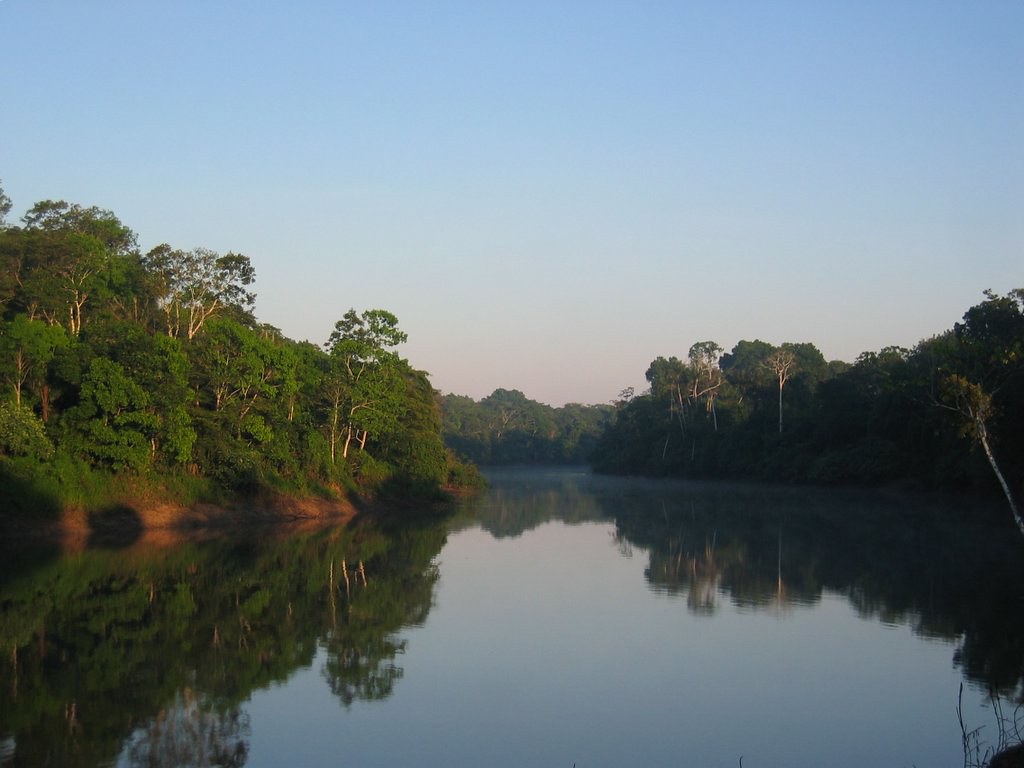
Photo: Morning in the Amazon… by markg6, CC BY 2.0.

Author: Safe Ceremonies
User reviewed ceremonies