Multi-day retreat or one-night ceremony? How to choose
Most ceremonies come in one of two shapes. There’s the single night or single day, often close to home, where you arrive, sit, sleep and leave the next morning. And there’s the retreat, which runs from a long weekend to two weeks or more, usually with several ceremonies and often in another country. Neither is safer by default. Each puts different demands on you and gives a center different chances to look after you well or badly.
This guide sets out the trade-offs so you can think through which fits your situation, and what to ask whichever you choose.
What each usually looks like
A one-night ceremony often starts in the late afternoon or evening with introductions and some time to settle in. The ceremony itself runs through the night or a good part of the day, and there may be a sharing circle the next morning before everyone goes home. Some groups meet regularly, so a one-night ceremony can also be part of an ongoing community.
A retreat usually adds arrival days, preparation talks, several ceremonies with rest days in between, and some time at the end to talk about what happened. Many include other activities, from meals and walks to bodywork or other practices. Some retreats offer more than one substance in the same stay.
These are generalizations. Formats vary widely, so ask any center for its actual schedule.
Screening and preparation
Good screening takes time: a health questionnaire that someone qualified actually reads, a conversation about your mental health and medications, and sometimes a check with your doctor. Safety guidelines for psychedelic research also stress building trust between the participant and the people who’ll sit with them, and preparing people for what the experience can be like. A retreat has more built-in days to do this well, though plenty don’t. A one-night ceremony can screen just as carefully, but the screening has to happen before the day, by phone, video or in person.
Either way, the test is the same: did someone ask you real questions, weeks before the ceremony, and were they willing to say no or wait? A center that screens you on arrival, after you’ve paid and traveled, has left itself very little room to turn you away.
How many ceremonies, and how close together
This is the biggest practical difference. A single ceremony is one experience you then go home and live with. A retreat might include three, four or more ceremonies in a week. For some people, sitting again a few days later helps them work with what came up. For others, the experiences pile on top of one another without time to absorb them.
Most published research on ceremonies follows people attending retreat centers. A 2026 review of 18 before-and-after studies, mostly of ayahuasca retreats, found improvements on average, alongside smaller groups of people with problems that persisted. We found no study that compares retreats directly with single ceremonies, and little on how the number of ceremonies affects safety. In the Global Ayahuasca Survey, people who had used ayahuasca more often, over their lifetime and recently, reported physical adverse effects more often. That’s an association in a survey, not proof that more ceremonies cause more harm, but it’s a reason to ask how many ceremonies a retreat includes and whether you can skip one.
A good retreat will tell you clearly that sitting out a ceremony is fine, and won’t treat it as failure or “resistance.” If a retreat offers more than one substance, each one needs its own screening, and you should know how many days separate them.
Rest, food and recovery
Ceremonies can leave you tired, emotional and physically drained, especially after vomiting or a sleepless night. On a retreat, rest days, regular meals and a quiet setting are part of the package, and you’re not going straight back to work or family. After a one-night ceremony you may be driving home, or back at your job, within hours. That can work if you plan for it: someone else to drive, a free day afterwards, and as few demands on you as possible.
Support during and after
In a large survey of people’s most difficult experiences with psilocybin mushrooms, risky behavior was more likely when physical comfort and social support were missing. The setting and the people around you matter during a ceremony, whatever its length.
Afterwards, the formats differ. A retreat gives you several days among people who understand what you’ve been through, which many find helpful, and staff who can see how you’re doing before you leave. Then the support usually ends when you fly home, often far from anyone who was there. A local ceremony leaves you closer to the people who ran it, and some local groups meet again, which can make follow-up easier. Ask any center what support it offers after you leave, for how long, and whether it costs extra.
A 2025 study that tracked 36 people’s mood before and after a four-day ayahuasca retreat found improvements on average, and about 5.5% showed some potentially meaningful worsening. A small minority having a harder time afterwards is exactly why follow-up matters in either format.
Distance, travel and getting out
A retreat abroad adds things a local ceremony doesn’t: a foreign health system, language barriers, remote locations, and the pressure of having spent a lot on flights. If something goes wrong, you may be hours from a hospital. If something feels wrong, leaving is harder when the nearest town is a boat ride away and your flight home is in ten days.
A local ceremony is easier to walk away from, and if you need medical care, you’re in a system you know. It also gives you less distance from daily life, which some people want and others don’t.
Whichever you choose, make leaving possible: keep your own phone, ID and some money, know how you’d get away without the center’s help, and tell someone outside where you’ll be and when you’ll check in.
Cost and time
A retreat costs more in total, once you add travel and time off work, though the price per ceremony may be lower. A single ceremony asks for less money and less time, which makes it easier to try once before committing to more. Watch for pressure either way: retreats that discount heavily for paying before screening, or local groups that push you to book the next ceremony before you’ve recovered from the last. Our guide on costs covers price red flags.
Questions to ask yourself
- Do I want one experience to absorb, or a more intensive stretch?
- How easily could I leave if something felt wrong?
- Who will I have around me in the weeks afterwards?
- Do I have medical or mental health needs that make being near home important?
- Can I take time off afterwards, not only during?
Questions to ask the center
- What’s the full schedule, and how many ceremonies are included?
- Can I sit out a ceremony without pressure or penalty?
- When and how do you screen, and who reviews it?
- How many staff are present during ceremonies, and at night?
- Where is the nearest hospital, and how would I get there?
- What support do you offer after I leave?
- What’s your refund policy if your screening rules me out?
If you’re struggling after any ceremony, Fireside Project’s free psychedelic peer support line, 62-FIRESIDE (623-473-7433), takes calls and texts. In the US, the 988 Suicide & Crisis Lifeline is available by call or text at 988.
More guides
- How to choose a ceremony center: a safety checklist
- Traveling abroad for a ceremony: a safety checklist
- What ceremonies cost, and when a price is a warning sign
- Integration after a ceremony: a practical guide
- The first week after a ceremony
- What to pack and how to prepare practically
Reviews from past participants often say the most about format: how the days were paced, whether sitting out was respected, and what happened after people went home. You can search the Safe Ceremonies listings, including ayahuasca and psilocybin and mushroom retreats, and integration and aftercare support near you.
Sources
- Johnson MW, Richards WA, Griffiths RR (2008). Human hallucinogen research: guidelines for safety. Journal of Psychopharmacology. https://pmc.ncbi.nlm.nih.gov/articles/PMC3056407/
- Bouso JC, Andión Ó, Sarris JJ, et al. (2022). Adverse effects of ayahuasca: results from the Global Ayahuasca Survey. PLOS Global Public Health. https://journals.plos.org/globalpublichealth/article?id=10.1371/journal.pgph.0000438
- Carbonaro TM, Bradstreet MP, Barrett FS, et al. (2016). Survey study of challenging experiences after ingesting psilocybin mushrooms. Journal of Psychopharmacology. https://pmc.ncbi.nlm.nih.gov/articles/PMC5551678/
- Sznitman SR, Behar YA, Dicker-Oren SD, et al. (2025). A prospective ecological momentary assessment study of an ayahuasca retreat. Psychopharmacology. https://pmc.ncbi.nlm.nih.gov/articles/PMC11861408/
- Haupt MJ, Carra S, Boehnke KF, Aday JS (2026). Preliminary effects of ayahuasca on mental and physical health: a systematic review of prospective studies. Progress in Neuro-Psychopharmacology and Biological Psychiatry. https://doi.org/10.1016/j.pnpbp.2026.111634
- Fireside Project, psychedelic peer support line. https://firesideproject.org/
- 988 Suicide & Crisis Lifeline. https://988lifeline.org/
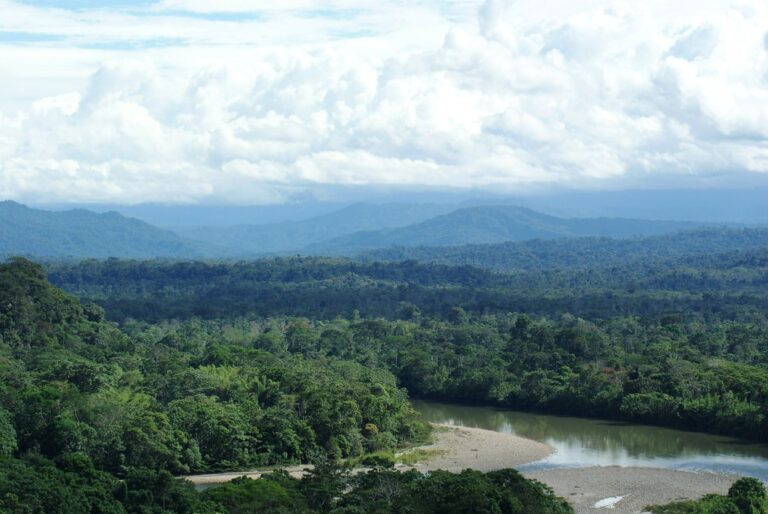
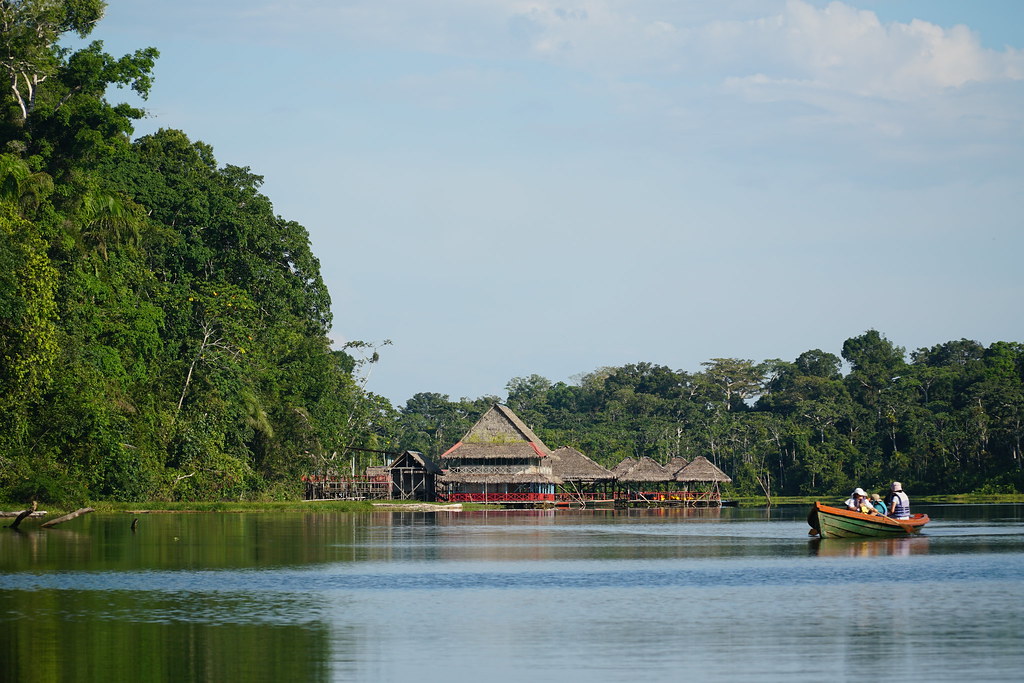
Photo: Amazon Lodge Adventures by Leon Beckert, CC BY-SA 2.0.

Author: Safe Ceremonies
User reviewed ceremonies