What to pack for a ceremony retreat
Packing for a retreat is mostly ordinary travel packing, with a few differences. You’ll spend long nights on a mat, possibly in the jungle or the mountains, in a state where you can’t easily fix a problem yourself. And the things that keep you safe, such as your documents, your phone and a way home, matter more than usual because you may be far from help.
This guide covers what to bring, what to leave behind, and the arrangements to make before you go. Ask your center for its own list too, since what it provides varies a lot.
Documents and money
- Your passport or ID, and a photo or photocopy of it kept separately.
- Your health insurance card and travel insurance documents.
- Copies of your prescriptions, including for glasses or medical supplies.
- A contact card with the names, phone numbers and addresses of someone at home and your emergency contact.
- The center’s full address and phone number, written down, plus the address of the nearest hospital or clinic.
- Enough cash to get yourself home or to a town without the center’s help, and a card as backup.
Several of these come straight from the CDC’s travel health packing list, which also recommends carrying a contact card for a family member or close contact at home. Keep your passport, phone and money in your own hands throughout the retreat. A center has no reason to hold them, and our guide on red flags explains why it’s a serious warning sign if one tries.
Insurance
The CDC points out that your regular health insurance may not cover care in another country. If you’re going somewhere remote, it suggests considering medical evacuation insurance, noting that emergency transport from a remote area to a good hospital could otherwise cost more than $100,000. Read the policy before you buy it, including any exclusions for illness or injury connected to drug or alcohol use, and ask the insurer directly if the wording is unclear.
Medicines
- Your prescription medicines, in their original containers, with enough for the whole trip plus a few extra days.
- A written list of every medicine and supplement you take, with doses, to give to the center.
- Any emergency medicines you rely on, such as an inhaler or an epinephrine auto-injector.
- A basic first-aid kit.
Be careful with over-the-counter medicines. Things that are harmless at home can interact with ceremony substances. A 2019 review of ayahuasca, for example, lists some painkillers and migraine medicines among the drugs that call for caution. Before you pack pain relievers, sleep aids, antihistamines, cold remedies, stomach medicines or supplements, ask the center and your doctor whether any of them are a problem, and tell the center about everything you bring. Our guide on medications and health conditions has more on this.
Clothes
Comfort and modesty matter more than style. Loose clothes you can sit and lie in for hours are best. The Chacruna Institute’s guide on sexual abuse in ayahuasca settings notes that nudity is not typical in ceremony, so you have no reason to bring or wear anything you’d feel exposed in.
- Several loose, comfortable outfits, including at least one you don’t mind getting dirty.
- Warm layers. Ceremony spaces get cold at night, especially in the mountains, and you may feel cold during the experience itself.
- A rain jacket in the tropics.
- A sun hat for daytime ceremonies or outdoor walks.
- Shoes that slip on and off easily, and sturdy shoes if there will be walking.
- A swimsuit if there’s water, though you shouldn’t swim while you’re under the influence.
For the ceremony itself
Ask what the center provides. Most supply a mat, a bucket and sometimes blankets and pillows. You might also want:
- A blanket or shawl of your own. Something familiar can be a real comfort at three in the morning.
- An eyeshade. Johns Hopkins safety guidelines for psychedelic research describe eyeshades and headphones as a way to cut down distractions during a session. Check whether your center allows them.
- A water bottle with a lid that won’t spill if knocked over.
- A small flashlight or headlamp with a dim or red setting, for getting to the toilet without disturbing others.
- Tissues and toilet paper.
- Lip balm and a small towel.
- A notebook and pen, for writing things down as soon as you can.
Health and comfort
- Insect repellent. The CDC recommends one with an active ingredient such as DEET or picaridin.
- Sunscreen with UVA and UVB protection, SPF 15 or higher, as the CDC suggests.
- Earplugs for sleeping in shared spaces.
- Hand sanitizer.
- Any personal hygiene items you’ll need. Remote centers may have no shop nearby.
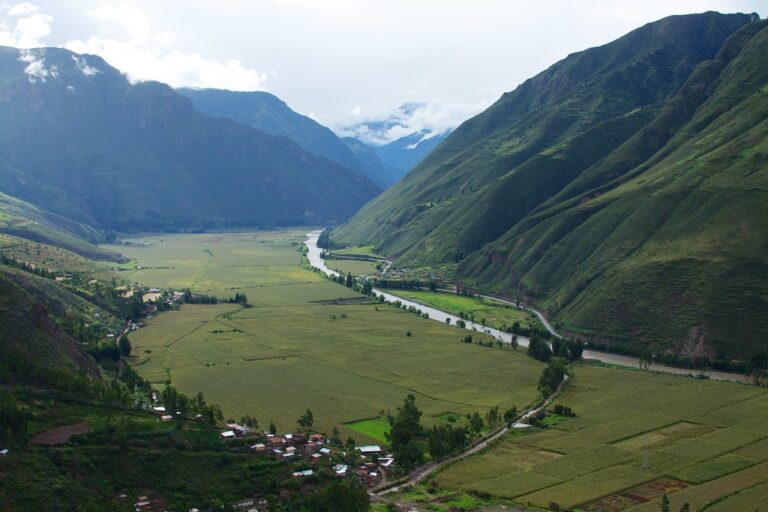
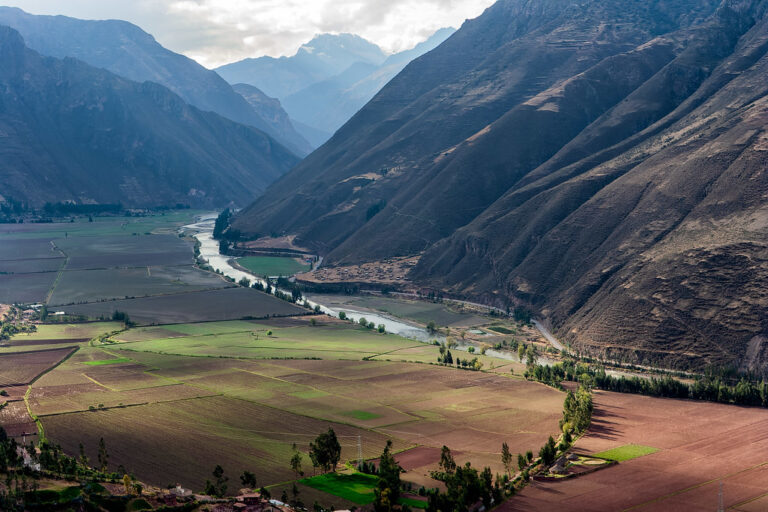
If you’re going to the Andes, read up on altitude before you go. The CDC’s guidance on high-altitude travel says that anyone sleeping at about 2,450 meters (8,000 feet) or higher without time to adjust is at risk of altitude illness, and Cusco sits at about 3,350 meters. Talk to a doctor before the trip, and plan a few days to adjust before any ceremony.
Phone and power
- A charged phone, a charger and a power bank. Power can be limited in remote places.
- Offline maps of the area, and the center’s location saved.
- Key numbers saved and written on paper: your emergency contact, the center, your embassy if you’re abroad, and the local emergency number.
- The Fireside Project’s peer support line, 62-FIRESIDE (623-473-7433), which is free and takes calls and texts from 11 a.m. to 11 p.m. Pacific time every day, during an experience or after it.
Most centers ask you to keep your phone off or away during ceremonies, which is reasonable. Keep it in your room, charged, rather than handing it over.
What to leave at home
- Alcohol and recreational drugs. Many centers ask you to avoid them for a period before and after a ceremony, and some substances can interact dangerously with ceremonial ones.
- Supplements and herbal products you haven’t cleared with the center and your doctor.
- Expensive jewelry, watches and anything you’d hate to lose.
- Work. Leave your laptop at home if you can, and set an out-of-office reply.
- Scented products, if the center asks. Some traditions avoid strong perfumes and smells.
Arrangements to make before you leave
- Tell someone at home where you’re going, who runs the retreat, and when you’ll check in. Agree what they’ll do if they don’t hear from you.
- Know how you’d leave on your own: transport options, the nearest town, and the cost.
- Arrange not to drive after a ceremony.
- Book time off after the retreat, not just during it. A day or two of rest at home makes a real difference.
- Line up support for afterwards, such as a friend, a therapist or an integration circle.
- Consider going with someone you trust. The Chacruna guide recommends going to ceremonies with trusted companions.
A one-page checklist
- Passport, copies, insurance card, prescription copies.
- Cash and a card.
- Medicines in original containers, and a written medicine list.
- Loose clothes, warm layers, rain jacket, hat, easy shoes.
- Blanket or shawl, eyeshade, water bottle, red flashlight, tissues.
- Insect repellent, sunscreen, earplugs, first-aid kit.
- Phone, charger, power bank, offline maps, numbers on paper.
- Notebook and pen.
- A check-in plan with someone at home.
More guides
- Preparing for your first ayahuasca ceremony
- Traveling abroad for a ceremony: a safety checklist
- Safety for women and solo travelers
- What a center’s emergency plan should cover
- The first week after a ceremony
Past participants often mention the practical side in reviews: the beds, the food, the weather, how far the nearest town was. You can search the Safe Ceremonies listings and read reviews of ayahuasca and San Pedro retreats before you book.
Sources
- Centers for Disease Control and Prevention. Pack smart. Travelers’ Health. https://wwwnc.cdc.gov/travel/page/pack-smart
- Centers for Disease Control and Prevention. Travel insurance. Travelers’ Health. https://wwwnc.cdc.gov/travel/page/insurance
- Centers for Disease Control and Prevention. CDC Yellow Book: High-altitude travel and altitude illness. https://www.cdc.gov/yellow-book/hcp/environmental-hazards-risks/high-altitude-travel-and-altitude-illness.html
- Hamill J, Hallak J, Dursun SM, Baker G (2019). Ayahuasca: psychological and physiologic effects, pharmacology and potential uses in addiction and mental illness. Current Neuropharmacology, 17(2). https://pmc.ncbi.nlm.nih.gov/articles/PMC6343205/
- Johnson MW, Richards WA, Griffiths RR (2008). Human hallucinogen research: guidelines for safety. Journal of Psychopharmacology. https://pmc.ncbi.nlm.nih.gov/articles/PMC3056407/
- Sinclair E, Labate BC (2019). Ayahuasca community guide for the awareness of sexual abuse (Chacruna Institute), via MAPS. https://maps.org/news/bulletin/ayahuasca-community-guide-for-the-awareness-of-abuse-2019/
- Fireside Project, psychedelic peer support line. https://firesideproject.org/
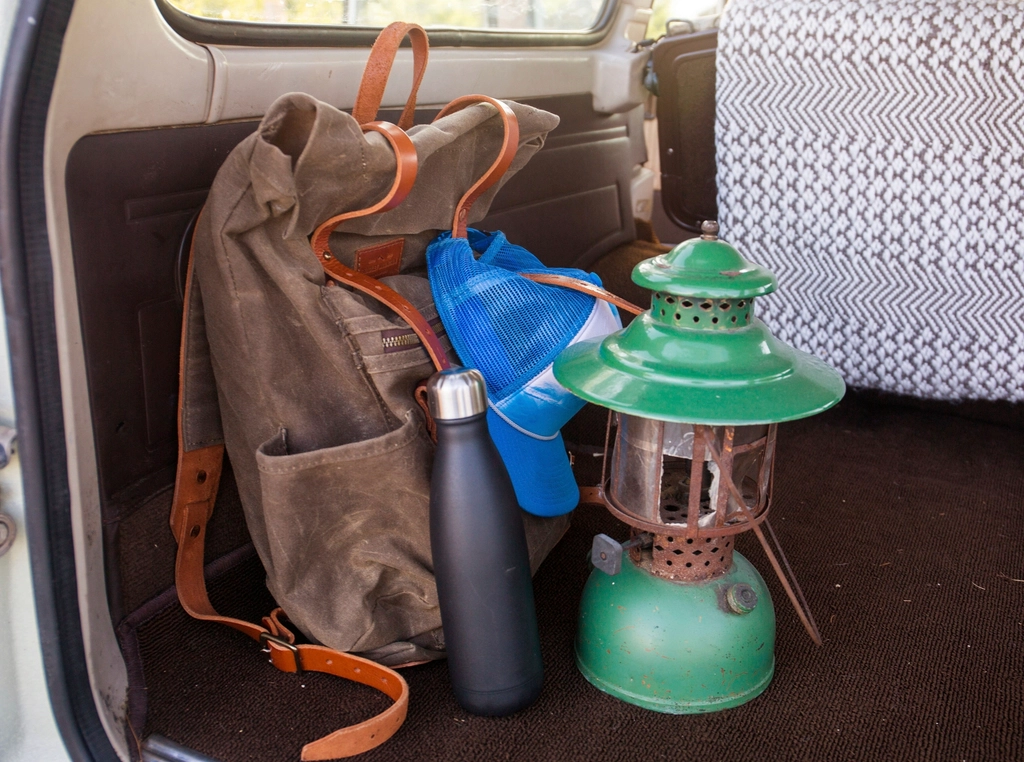
Photo: Free backpack hiking gear image by unknown (rawpixel public-domain collection; Openverse lists no creator), CC0 1.0.

Author: Safe Ceremonies
User reviewed ceremonies