What a cacao ceremony is, and what to expect
A cacao ceremony is a gathering where a group drinks a cup of thick, warm cacao together and then spends an hour or more in some kind of shared practice: a guided meditation, music, singing, journaling, a sharing circle, sometimes dance or breathwork. Cacao is not a psychedelic. You stay clear-headed throughout, and for many people it’s the gentlest way to find out whether ceremony of any kind suits them.
Gentle doesn’t mean there is nothing to think about. Cacao is a stimulant, a “cacao ceremony” can be the opening act of something much stronger, and the claims made about it range from modest to wild. This guide covers what usually happens, what’s in the cup, and how to tell a careful circle from a careless one.
Where it comes from
People in Mesoamerica were drinking cacao a very long time ago. Chemical traces of caffeine and theobromine in pottery from Puerto Escondido, in northern Honduras, show cacao drinks were being made there by at least 1100 BC. The archaeologists behind that work think the early drinks were probably fermented, and that they were served at celebrations such as weddings and births. Cacao later became an important food, gift and offering among Maya and Aztec peoples.
The format you’ll find at most retreats and wellness studios today is much newer. A circle of strangers each drinking a cup and then meditating together draws on that history, but it’s largely a modern blend, often led by people from outside the cultures where cacao was first used. That doesn’t make it worthless. It does mean you can reasonably ask a facilitator where their practice comes from and who taught them, and a straight answer (“I trained with this teacher, and I added these parts myself”) is a good sign.
What usually happens
Circles vary a lot, but a typical evening runs something like this:
- You arrive, take off your shoes, and find a cushion or mat. There may be an altar with flowers or candles.
- The facilitator explains the plan, any ground rules (no phones, what’s shared stays in the room), and what to do if you need a break.
- The cacao is served, often with an invitation to set an intention or to drink in silence.
- The main practice follows: meditation, live music, singing, writing, movement or a guided visualisation.
- Many circles end with a chance to share a few words, and you can always pass.
Most last between one and three hours. At a retreat, a cacao circle is often the first evening’s activity, used to bring a group together before anything else happens.
What’s in the cup
“Ceremonial cacao” usually means a block of ground cacao paste, melted into hot water, sometimes with spices or a little sweetener. It’s thicker and more bitter than a mug of hot chocolate, and stronger, because it hasn’t been diluted with milk and sugar.
The two active compounds that matter are theobromine and caffeine. Cacao contains a lot more theobromine than caffeine. A 2015 review in Frontiers in Pharmacology gives a sense of the ratio: the amounts found in 50 g of dark chocolate are about 19 mg of caffeine and 250 mg of theobromine. Theobromine is a milder stimulant than caffeine, and the review’s authors describe its effects in people as different in kind from caffeine’s. It also stays in the body longer.
For most people that adds up to warmth, mild alertness, and sometimes a feeling of being more open or talkative. Some people feel very little. Others feel jittery, get a headache or feel queasy, especially on an empty stomach or if they don’t usually have much caffeine.
What cacao won’t do
You’ll hear cacao described as a “heart opener,” a “plant teacher,” or a way to “release blocked energy.” Those are beliefs, and you can take them or leave them. Claims about your health are a different matter. A circle that says one cup will heal trauma, cure depression or “detox” your body is making a promise it has no way to back up.
If a circle tells you cacao is “a medicine” in the same breath as telling you to stop a prescribed one, leave. Our guide on grounded or “woo woo” groups explains how to tell beliefs from claims.
Who should be careful
Because cacao contains caffeine and a related stimulant, the cautions that apply to strong coffee apply here too. The US Food and Drug Administration lists signs of too much caffeine as a fast heart rate, insomnia, anxiety and jitters, an upset stomach, nausea and headache. It also says that people who are pregnant, take certain medications or have certain medical conditions should talk to a health care provider about how much caffeine is right for them.
Talk to your doctor or pharmacist before a ceremony if any of these apply:
- You have a heart rhythm problem, high blood pressure or another heart condition.
- You’re pregnant or breastfeeding.
- You take a prescription medicine, especially for your heart, blood pressure, mood or anxiety.
- Caffeine tends to set off panic, migraines or reflux for you.
- You’re already drinking a lot of coffee, tea or energy drinks that day.
A careful facilitator will ask some of these questions before serving you, and will be fine with you drinking half a cup, or none. Many circles offer a lighter serving for first-timers. If you’re told everyone must finish the cup, that’s a small but telling sign of how the group treats your choices.
When cacao is the opening act
Cacao is often paired with other practices, and that’s where the risk can change. A cacao ceremony on a retreat schedule might be followed by fast breathwork, a sound bath, ecstatic dance or a kambo session. Some events pair cacao with psychedelic mushrooms or other substances and don’t make this clear in the listing.
Before you go, ask for the full plan. Each practice brings its own risks and should have its own screening. Fast breathing, for example, has safety rules that a gentle cacao circle doesn’t need; our guide to breathwork types and safety covers them. If anything turns up on the night that wasn’t described when you booked, you can say no, and that is one of the clearest red flags to watch for.
Questions to ask before you go
- What will happen, start to finish, and how long will it last?
- Will anything besides cacao be served or offered?
- Where does your cacao come from, and how strong is a serving?
- Do you ask about health conditions and medicines before serving?
- Can I drink less, or skip the cacao and still join the circle?
- What’s your background? Who taught you, and for how long have you led circles?
- Is there any touch, bodywork or partner exercise? How do you ask for consent?
- What happens if someone feels unwell or gets upset during the circle?
What a good circle looks like
Good cacao circles tend to be modest about what they offer. The facilitator tells you what’s planned, asks about your health, lets you set your own pace and doesn’t promise a breakthrough. The room feels welcoming to people who are skeptical or new. Sharing is optional. Nobody leans on you to book a more expensive retreat on the way out.
Prices are usually modest too, from donation-based community circles to a set fee similar to a yoga workshop. A high price for a cacao circle doesn’t mean higher quality, and our guide on ceremony costs and price red flags explains when a price itself is a warning.
A few practical tips
- Eat something light beforehand, unless the facilitator has a good reason to ask you not to.
- Skip your afternoon coffee if the circle is in the evening, so your total caffeine stays reasonable and you can sleep afterwards.
- Bring water, a layer to keep warm and, if you like, a notebook.
- If you’re sensitive to stimulants, ask for a small serving the first time.
- Give yourself an easy evening afterwards; some people find it hard to settle.
Cacao is a farmed crop, and what growers are paid for it varies a great deal. If ethics matter to you, ask a facilitator how their cacao is sourced and what the growers are paid. Our guide on reciprocity and sustainability looks at that side of plant ceremonies.
More guides
- Sound healing and sound baths: what to expect
- Breathwork: the main types and how to do it safely
- Grounded or “woo woo”? How to read a group’s beliefs and how it talks about healing
- Preparing your mind: setting an intention
- Indigenous traditions and respectful practice
Past participants’ reviews are a good way to learn what a circle is really like: how big it was, what was served and how the facilitator handled questions. You can search the Safe Ceremonies listings and browse places that offer cacao ceremonies, often alongside sound healing.
Sources
- University of California, Berkeley (2007). Chocolate drinks, probably fermented ones, popular long before previously thought, says anthropologist. News release on Henderson JS, Joyce RA, et al., Proceedings of the National Academy of Sciences. https://newsarchive.berkeley.edu/news/media/releases/2007/11/13_cacao.shtml
- Martínez-Pinilla E, Oñatibia-Astibia A, Franco R (2015). The relevance of theobromine for the beneficial effects of cocoa consumption. Frontiers in Pharmacology, 6, 30. https://doi.org/10.3389/fphar.2015.00030
- US Food and Drug Administration. Spilling the beans: how much caffeine is too much? https://www.fda.gov/consumers/consumer-updates/spilling-beans-how-much-caffeine-too-much
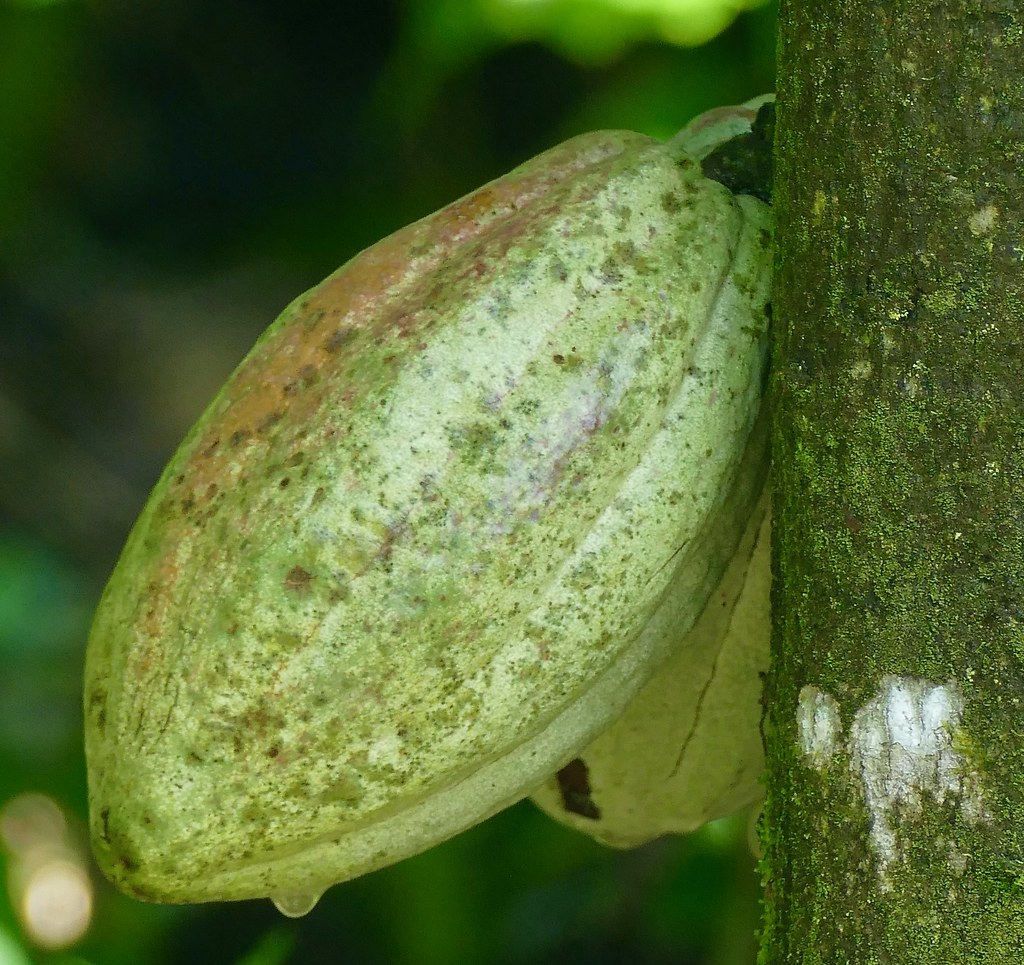
Photo: Cacao Tree (Theobroma cacao) pod … by Bernard DUPONT, CC BY-SA 2.0.

Author: Safe Ceremonies
User reviewed ceremonies