Ceremony safety for women and solo travelers
Plenty of people go to ceremonies and retreats on their own, and plenty of women go without any trouble. Going alone does change some things. Nobody who knows you is in the room, you may be far from home in a place you don’t know, and you may be relying on the center for transport, food, a bed and medical help all at once. A little planning puts some of that control back in your hands.
Most of this guide applies to anyone traveling solo. Some of it is specific to women, because sexual abuse in ceremony settings is a documented problem and women are most often the people targeted.
Know the risks you’re planning for
The UK government’s travel advice for Peru, one of the most popular countries for ayahuasca retreats, warns that people have become seriously ill and in some cases died after taking part in these ceremonies, that retreats are usually far from populated areas where medical help is hard to reach, and that there have been reports of sexual assault during ceremonies.
The Chacruna Institute’s community guide on sexual abuse in ayahuasca settings says taking part alone with a healer has been a common setting for abuse, and that additional psychoactive substances, inside or outside the ceremony, sometimes feature in those situations. These risks aren’t limited to Peru or to ayahuasca, and they shape most of the advice below.
Choosing a place
When you’ll be on your own, the way a center is run matters even more. Look for:
- Group ceremonies, not private sessions alone with one healer.
- Women on the staff, present at every ceremony. The Chacruna guide notes that many reputable places now make sure experienced women are there to support female participants.
- A written code of conduct covering touch and relationships with participants, which the center sends you before you book.
- At least one staff member who stays sober through each ceremony.
- Clear answers about where you’ll sleep, who else shares the space and whether doors lock.
- A named person you can go to with a complaint about a facilitator.
- Reviews from past participants, including women who went alone. The Chacruna guide recommends checking a center’s reputation through review sites, past participants and other experienced people.
Be careful with places that only offer private sessions, are vague about who will be present, or present a single charismatic healer as the whole offering.
If you can, go with a friend. The Chacruna guide’s first suggestion is to take part alongside people you know. If that isn’t possible, consider a group retreat with a set program over a one-person arrangement.
Before you travel
The UK Foreign Office’s advice for women traveling abroad suggests researching your destination, including whether women traveling there have had unwanted attention, and talking to people who’ve been. Practical steps worth taking:
- Read your government’s travel advice for the country, including its safety and health pages.
- Give someone at home the center’s name, address, phone number and the names of the people running it.
- Agree check-in times with that person, and what they should do if you miss one.
- Save your embassy or consulate’s contact details and the local emergency number.
- Get travel insurance, read what it says about medical evacuation, and carry the policy details.
- Plan how you’d leave without the center’s help: the nearest town, a taxi or bus, and enough money for the trip.
- If the center is collecting you from the airport, confirm the driver’s name in advance.
Keep your phone, passport, bank card and some cash with you. A center may ask you to hand in your phone for the ceremony itself. That can be reasonable if it’s stored safely and returned straight afterwards. Handing over your passport or the only means of paying your way home is a different matter.
At the retreat
Arrival is a good moment to check the place matches what you were told. Notice how many staff there are, whether women are among them, where you’ll sleep and who else is staying nearby.
Outside the ceremony, look after your drinks. The UK government’s advice on Peru recommends buying your own drinks and keeping sight of them, and its advice for women abroad warns that drugs used in rape also work in non-alcoholic drinks such as tea and coffee, and are usually colorless and tasteless. If you feel strange, sick or drunk after very little, tell someone you trust and get to a safe place.
Be cautious about anything offered beyond what you agreed to when you booked: another substance, a private session, a late-night “special healing.” The Chacruna guide warns that abuse often happens during individual healing sessions and that some healers present sex as a route to healing or spiritual power.
During the ceremony
- Choose a spot near other participants and where staff can see you.
- Agree in advance how you’ll signal for help, and who will come.
- If you need to leave the room, ask a female staff member or another participant to come with you.
- Say “no” or “stop” clearly if anyone touches you in a way you didn’t agree to. You can say it as often as you need to.
- You don’t have to talk to, hug or sit close to anyone, during the ceremony or after it.
Our guide on consent, touch and boundaries goes into what to agree beforehand and what’s reasonable on the night.
Attention and attraction
Strong feelings can come up during and after ceremonies, including feelings of closeness to a facilitator. The Chacruna guide advises not being ashamed of these feelings, but recognizing that they may be temporary. It lists warning signs in a healer: comments on your looks, being overly touchy, or telling you his wife doesn’t mind him sleeping with other women.
It also places the responsibility clearly with the healer or facilitator, who should not enter into relationships with participants in the healing context. Give yourself time after the retreat, with the effects fully worn off, before making any decision about a relationship that started there.
LGBTQ+ travelers
Attitudes and laws differ from country to country. The UK Foreign Office publishes advice for LGBT+ travelers alongside its country pages, and many governments do the same. Ask the center directly how it welcomes LGBTQ+ participants, and look for reviews from people who’ve been.
If something goes wrong
- Get to a safe place, near other people, and away from the person involved.
- Contact your emergency person at home and tell them where you are.
- If you’ve been assaulted, you can report it to the local police. Your embassy or consulate can help you find medical care and support, and explain how reporting works in that country.
- Write down what happened as soon as you’re able, and keep messages and receipts.
- Fireside Project’s free psychedelic peer support line, 62-FIRESIDE (623-473-7433), takes calls and texts from 11 a.m. to 11 p.m. Pacific time every day. In the US, the 988 Suicide & Crisis Lifeline answers calls and texts at 988.
Leaving early costs money, and it may feel like failing. It isn’t. If you don’t feel safe, go.
A short checklist
- I’ve read reviews from past participants, including women and people who went alone.
- Ceremonies are in groups, and women are on staff for every one.
- The center sent me its code of conduct on touch and relationships.
- Someone at home has the center’s details and my check-in times.
- I have my own phone, passport, bank card and cash, and a way to leave on my own.
- I have insurance details and my embassy’s contact information.
- I know who I’d tell if a staff member crossed a line.
More guides
- Consent, touch and boundaries in ceremony
- Traveling abroad for a ceremony: a safety checklist
- Red flags: when to walk away
- What a center’s emergency plan should cover
- Ayahuasca in Peru: what to know before you go
Reviews from people who went alone are some of the most useful you’ll find. You can search the Safe Ceremonies listings by place and type of ceremony, such as ayahuasca or San Pedro and huachuma, and read what past participants say about staff, safety and how they were treated. If you’ve been to one on your own, your review could help someone else feel safer going.
Sources
- Foreign, Commonwealth & Development Office (UK). Peru travel advice: safety and security. Checked 8 October 2026. https://www.gov.uk/foreign-travel-advice/peru/safety-and-security
- Foreign, Commonwealth & Development Office (UK). Advice for women travelling abroad. Last updated 8 September 2026. https://www.gov.uk/guidance/advice-for-women-travelling-abroad
- Chacruna Institute for Psychedelic Plant Medicines. Ayahuasca community guide for the awareness of sexual abuse. https://chacruna.net/community/ayahuasca-community-guide-for-the-awareness-of-sexual-abuse/
- Sinclair E, Labate BC (2019). Ayahuasca community guide for the awareness of sexual abuse (Chacruna Institute), via MAPS. https://maps.org/news/bulletin/ayahuasca-community-guide-for-the-awareness-of-abuse-2019/
- Fireside Project, psychedelic peer support line. https://firesideproject.org/
- 988 Suicide & Crisis Lifeline. https://988lifeline.org/
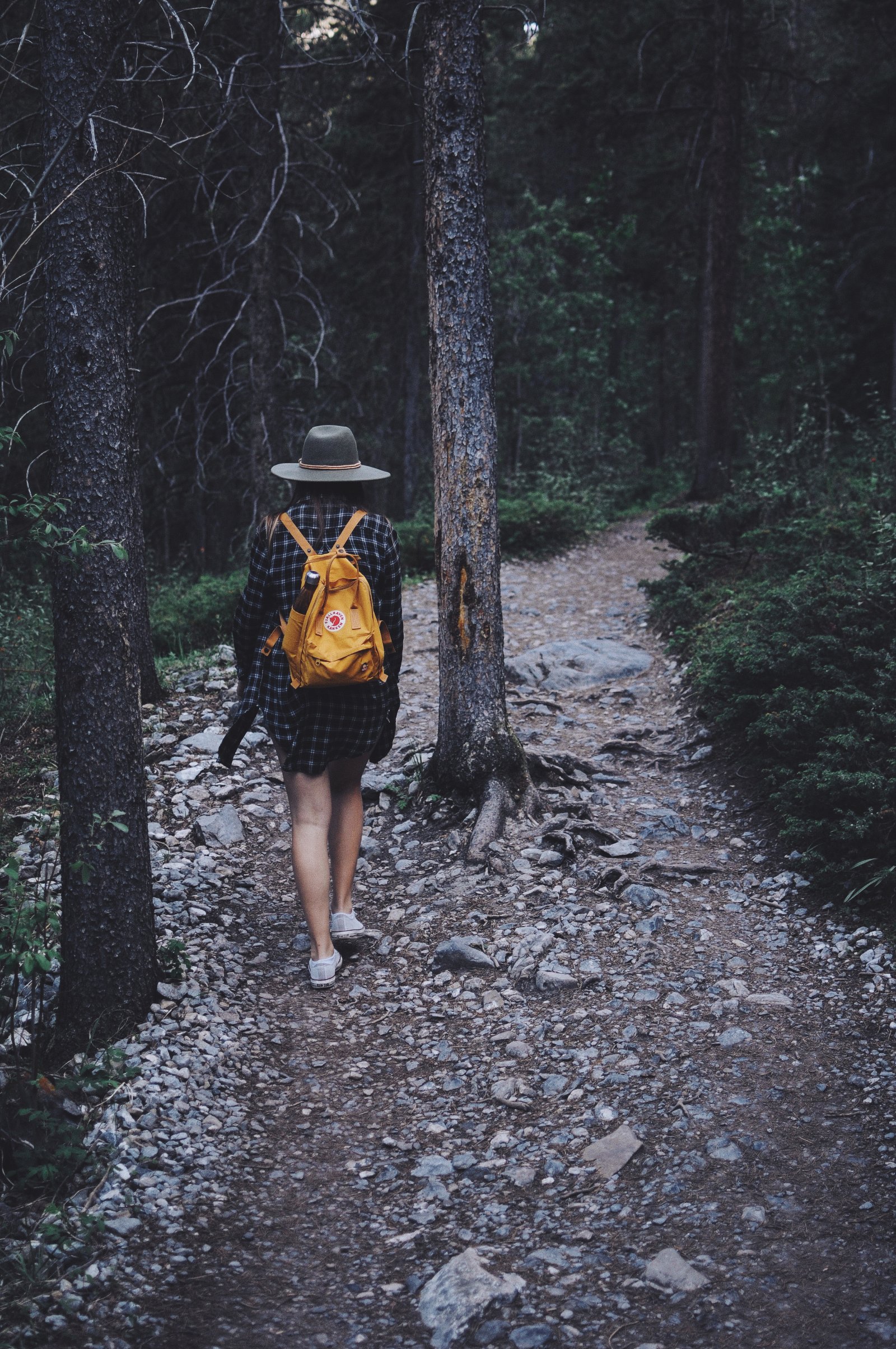
Photo: Hiking on a rocky forest trail by Ezra Jeffrey emcomeau, CC0 1.0.

Author: Safe Ceremonies
User reviewed ceremonies