Sound baths and sound healing: what to expect
At a sound bath you lie down, close your eyes if you want to, and listen while someone plays instruments around you for about an hour. Nothing is swallowed, smoked or inhaled. The “bath” is the sound itself: long, overlapping tones from singing bowls, gongs, chimes, drums and sometimes a voice.
“Sound healing” is the wider label. It covers group sound baths, one-to-one sessions where bowls are placed on or near your body, and sound sessions woven into yoga classes, cacao circles and retreats. This guide explains what to expect, what the research says so far, and the few real safety points, most of which come down to volume and consent.
What usually happens
A group sound bath often goes like this:
- You arrive and set up a mat, with blankets, a pillow and sometimes an eye mask. Many studios provide them.
- The practitioner explains what’s going to happen and how to get comfortable, and may lead a short breathing or relaxation exercise.
- The playing starts and usually runs for 45 to 75 minutes. Instruments get louder and softer, and the practitioner may walk around the room.
- The sound fades and there are a few minutes of silence before people sit up slowly.
- Some groups share a few words afterwards. Many just drink water and head home.
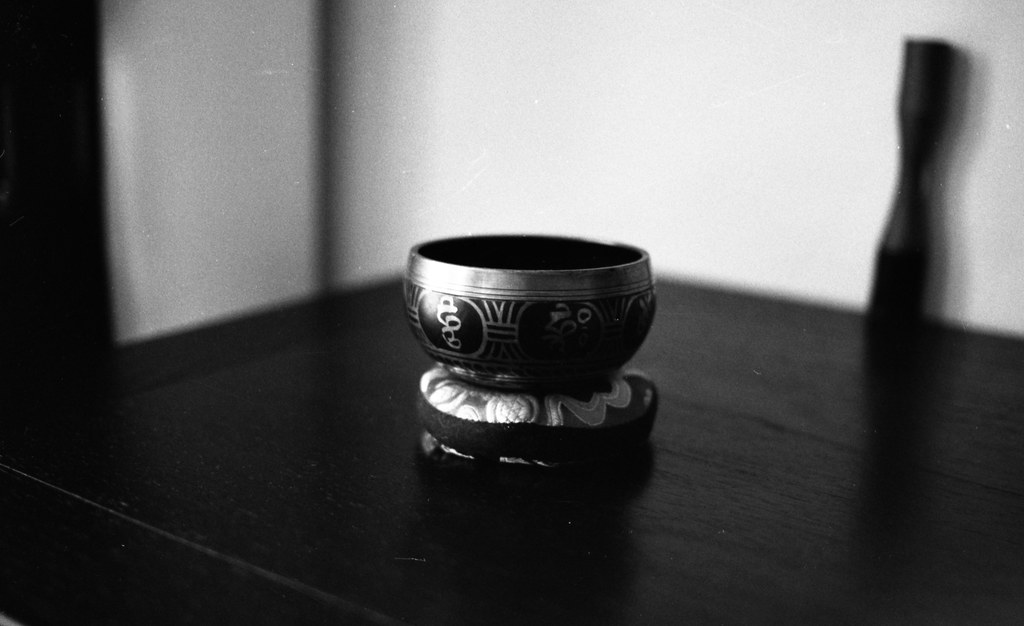
The instruments you’re most likely to hear are metal singing bowls (often called Tibetan or Himalayan bowls), quartz crystal bowls, large gongs, chimes, frame drums, rattles, tuning forks and sometimes a monochord or other drone instrument.
What it can feel like
Most people describe a sound bath as relaxing. Many drift in and out of sleep, and it’s common to hear someone snoring. Some people see colours or images behind their eyelids, feel the vibration in their chest, or find memories and feelings coming up unexpectedly. Some find it boring, or get restless, or find a particular sound unpleasant. All of that is normal.
You’re allowed to move, sit up, open your eyes, put a hand over an ear or leave quietly. A good practitioner will say so at the start.
What the research says
The research on sound baths is small and early. The most cited study is a 2016 observational study of 62 adults in California who joined a singing bowl meditation. Afterwards they reported less tension, anger, fatigue and depressed mood, and people who had never tried it before reported a bigger drop in tension than people who had. The authors pointed out the study’s biggest limitation themselves: there was no control group, so it can’t separate the effect of the bowls from the effect of lying down quietly for an hour.
A 2025 systematic review gathered 19 clinical studies of singing bowls published between 2008 and 2024, including nine randomised controlled trials. The reviewers concluded that singing bowls may help with anxiety, depression, sleep quality and some measures of thinking in various patient groups, and called for more research before firm claims can be made.
So it’s reasonable to expect a sound bath to help you relax for a while, the way a good meditation class or a quiet walk might. There is no good evidence that it treats an illness. Claims like “repairs your DNA,” “heals at the cellular level” or “this frequency cures anxiety” go well beyond any study. When a practitioner uses that kind of language, our guide on grounded or “woo woo” groups can help you read it.
Volume and your hearing
Bowls are usually gentle. Gongs can be very loud, especially up close, and some practitioners play them hard for long stretches.
The US National Institute on Deafness and Other Communication Disorders says that sounds at or below 70 decibels are unlikely to cause hearing loss even after long exposure, while long or repeated exposure at or above 85 decibels can cause it. The louder the sound, the less time it takes to do damage. Its advice is simple: wear earplugs for loud activities, and if you can’t protect yourself, move away from the sound.
In practice:
- Choose a spot away from the gong, especially the first time.
- Bring earplugs. Foam or musician’s earplugs still let you hear the sound, just less of it.
- If you have tinnitus, sensitivity to sound or a hearing condition, tell the practitioner beforehand and ask how loud it gets.
- If something hurts your ears, cover them or move. You don’t need permission.
Bowls on the body and other touch
In some sessions the practitioner places a bowl on your chest, belly or back and strikes it, or moves a tuning fork near your body. Others offer light touch or hands-on energy work.
All of this should happen only with your clear permission, asked before the session and checked again in the moment. You can agree to sound and refuse touch. If you have a medical device such as a pacemaker, a recent injury, pain, or you’re pregnant, mention it and ask what the practitioner will do differently. If a practitioner touches you without asking, or you feel uneasy about it, you can stop the session. Our guide on consent, touch and boundaries covers this in more detail.
Lying still in a dark room
For most people, lying with eyes closed in a dim room full of strangers is restful. For some, especially people with trauma, it can feel exposed. Some practical choices help:
- Set up near the door or a wall, wherever you feel safest.
- Keep your eyes open, or sit against a wall instead of lying down.
- Tell the practitioner if you don’t want anyone walking close to you.
- Bring support for your back or knees if lying on the floor is uncomfortable.
If strong feelings come up, you can sit up, breathe, open your eyes and look around the room. A practitioner should be able to tell you what they’ll do if someone becomes upset, and where you can go for a few minutes if you need a break.
When a sound bath is part of something bigger
Sound is often added to other practices: a cacao circle, a fast breathwork session, a yoga class, or the music during a psychedelic ceremony. The sound part is rarely the risky part. What matters is what else is on the schedule, and whether each practice has its own screening and plan. Ask for the full program before you book. If you’re offered a substance at what was advertised as “just a sound bath,” you can say no, and it’s worth writing a review about.
Choosing a practitioner
Sound healing isn’t a licensed profession in most places. Trainings range from a weekend course to longer programs, and anyone can call themselves a sound healer. That’s not a reason to avoid it, since the practice is low-risk. It does mean you should judge the person rather than the certificate.
Questions worth asking:
- How long have you been leading sound baths, and where did you train?
- How loud does it get, and where should I sit if I’m sensitive to sound?
- Is there any touch, or anything placed on the body? How do you ask?
- Is anything else offered during the session, such as cacao, breathwork or a substance?
- What do you do if someone gets upset or feels unwell?
- What do you say sound healing can and can’t do?
Good answers are plain and modest. A practitioner who says “most people find it relaxing, some fall asleep, and it isn’t a treatment for anything” is being straight with you.
What to bring
- Comfortable, warm clothes and socks. Rooms can get cool when you lie still.
- Earplugs, in case it’s louder than you like.
- A water bottle.
- Your own blanket, pillow or mat if you’d rather not use shared ones.
- A little time afterwards. Many people feel drowsy for a while, so don’t plan a long drive straight after if you tend to get sleepy.
More guides
- What a cacao ceremony is, and what to expect
- Breathwork: the main types and how to do it safely
- Consent, touch and boundaries in ceremony
- Grounded or “woo woo”? How to read a group’s beliefs and how it talks about healing
- How to read reviews (and how reviews work on Safe Ceremonies)
Reviews can tell you things a studio’s website won’t, like how loud the gong was, how big the group was and whether touch was offered with consent. You can search the Safe Ceremonies listings for sound healing, and for places that pair it with yoga or cacao.
Sources
- Goldsby TL, Goldsby ME, McWalters M, Mills PJ (2016). Effects of singing bowl sound meditation on mood, tension, and well-being: an observational study. Journal of Evidence-Based Complementary & Alternative Medicine, 22(3). https://pmc.ncbi.nlm.nih.gov/articles/PMC5871151/
- Cai Y, Yang G, Liu Y, et al. (2025). Therapeutic effects of singing bowls: a systematic review of clinical studies. Integrative Medicine Research, 14(2), 101144. https://doi.org/10.1016/j.imr.2025.101144
- National Institute on Deafness and Other Communication Disorders. Noise-induced hearing loss. https://www.nidcd.nih.gov/health/noise-induced-hearing-loss
Photo: Singing bowl by tjmills1520, CC BY-SA 2.0.

Author: Safe Ceremonies
User reviewed ceremonies