What happens in an ayahuasca ceremony
Most people arrive at their first ayahuasca ceremony with a head full of other people’s stories, some beautiful and some frightening. Very few have a clear picture of the practical side: where you’ll sit, how long it lasts, what happens when you need the toilet, or who comes if you’re struggling. This guide describes a typical night so that fewer things catch you off guard.
Ceremonies differ a great deal between traditions, churches and retreats. Some follow Amazonian healing practice, some follow the rituals of Brazilian ayahuasca churches, and some are newer blends. Use this as a general picture, and ask your center how its own ceremonies run.
Before it starts
Ceremonies usually begin after dark. Earlier in the day, or on the day before, there’s often a group meeting where the facilitator explains the rules, describes what to expect and answers questions. This is a good moment to check that they have your medicine list, to mention any change in your health, and to agree on touch.
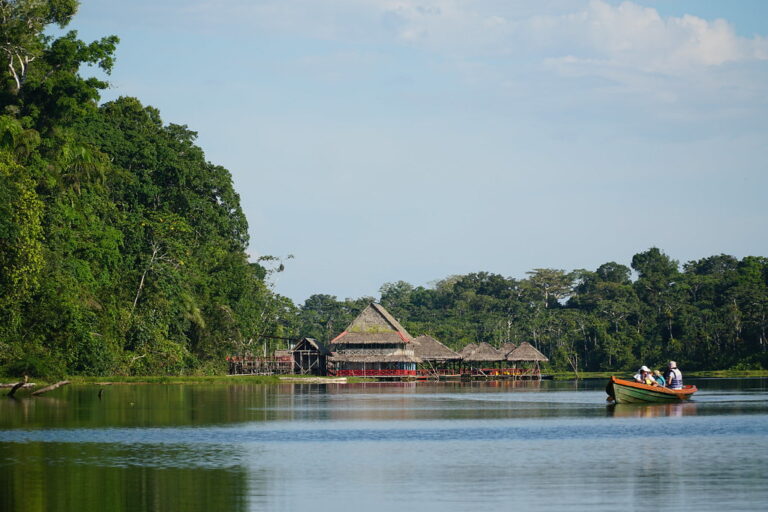
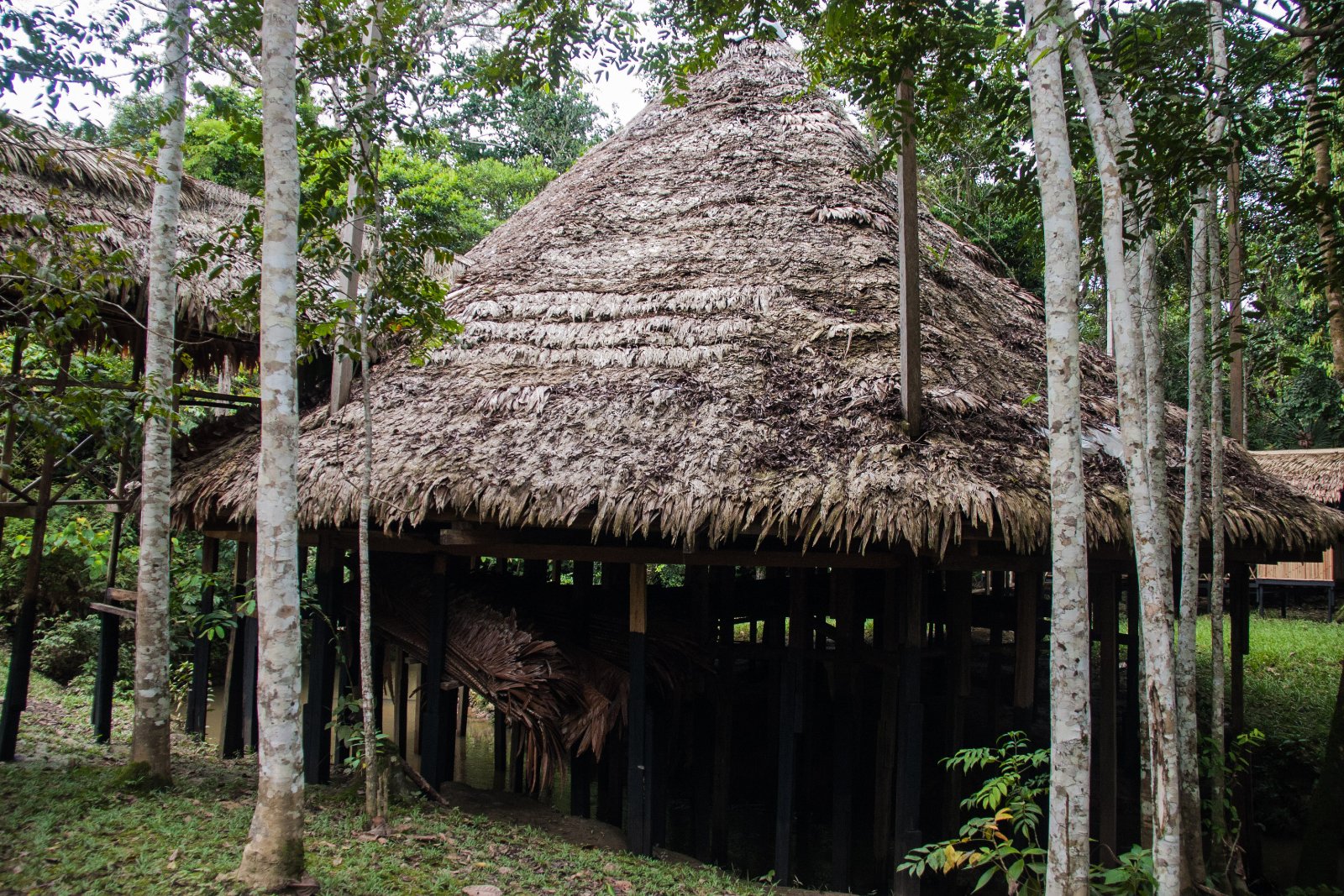
The ceremony space might be a round wooden building with a thatched roof, called a maloca in parts of the Amazon, a hall in a retreat center or a room in a house. You’ll usually have a mat or mattress, a blanket, a pillow and a bucket for vomiting, arranged in a circle or in rows. Find the toilets in daylight and learn the route to them. Some centers give out flashlights, often with a dim red light, so people can move around without disturbing others.
The rules usually cover staying in your place, staying quiet, not touching other participants, how to ask for help and when you can leave the space. Phones are usually not allowed inside.
How the night unfolds
The facilitator usually opens with a prayer, a song or a few words, then serves the brew to each person in turn. The lights go down. After that, much of the night is spent in darkness and near silence, broken by the facilitator’s songs (called icaros in Amazonian traditions), music, or prayers and hymns in church settings.
In research, effects begin around 40 minutes after drinking, peak between one and two hours, and fade by roughly four hours, according to a 2019 review in Current Neuropharmacology. A ceremony often runs longer than that, because many facilitators offer a second serving partway through and close the ceremony with everyone together. You can decline a second serving. Saying no is always allowed, and a good facilitator will respect it without argument.
Some facilitators call participants to the front, one at a time, for an individual healing: songs sung close to you, tobacco smoke blown over you, or a hand placed on your head or shoulders. You can say no to this too, and you can ask in advance exactly what it involves.
What your body may do
Ayahuasca is physically hard work for most people. The Global Ayahuasca Survey, which gathered responses from thousands of people in more than 50 countries, found that about seven in ten reported at least one physical adverse effect. Vomiting or nausea was reported by 62 percent, headache by about 18 percent and fainting by about 4 percent. A little over 1 percent reported fits or seizures, and just over 2 percent said they needed medical attention afterwards.
Diarrhea is also common. Some people tremble or feel weak or dizzy, effects that safety guidelines for psychedelic research list as typical of this class of substances. Heart rate and blood pressure rise, though in research settings the increases were modest. Many traditions call vomiting “purging” and see it as cleansing, so nobody will be surprised if you use your bucket all night.
Moving around can be hard. Your balance may be off and the room may be dark. Ask a helper to walk with you to the toilet rather than going alone, especially if you feel faint.
What your mind may do
The mental effects vary widely from person to person and from night to night. People describe vivid images with eyes closed, strong emotions, memories coming back with unusual clarity, a sense of meeting presences or spirits, deep calm, confusion, or fear. Some people see very little and mostly feel things in their body. All of these are common.
Fear is one of the most common hard moments. You may feel you’re dying, going mad or that it will never end. The guidelines Johns Hopkins researchers wrote for psychedelic research suggest that the best response to fear is usually to stop fighting it, trusting that your normal state of mind will return, and to move towards a frightening image rather than away from it. If that’s too much, call a helper. Sitting up, a hand on your shoulder, some water, or a few words of reassurance often help.
What staff should be doing
On a well-run night, the facilitator leads and one or more helpers move around the room. Their job is to:
- Watch everyone, all night, including people who are quiet.
- Help people to the toilet and back.
- Sit with anyone who is frightened or crying.
- Empty buckets and hand out water and tissues.
- Stop anyone from wandering off alone or getting hurt.
- Recognize a medical problem and act on it.
Respect for your body is part of that job. The Chacruna Institute’s guide on sexual abuse in ayahuasca settings notes that nudity is not typical in ceremony and that healers don’t customarily ask people to remove their underwear. It advises being especially alert during individual healings, where, it says, women are especially vulnerable. If anyone touches you in a way you didn’t agree to, say no loudly and call another member of staff.
When it’s an emergency
Vomiting, crying and shaking are expected. Some things are signs that someone needs medical help, whatever the spiritual reading of the moment:
- A seizure, or someone who can’t be woken.
- Chest pain or trouble breathing.
- Fainting with injury, or fainting that keeps happening.
- Vomiting that won’t stop, especially with confusion or weakness.
- Severe agitation, a racing heart and a rising body temperature, especially in someone who takes an antidepressant. MedlinePlus lists these among the signs of serotonin syndrome, a potentially life-threatening reaction, and the 2019 review warns that ayahuasca combined with an SSRI could cause it. Some of its other signs, such as nausea and diarrhea, look like an ordinary ceremony night, which is one more reason staff need your full medicine list.
The survey found that physical adverse effects were more common when ayahuasca was taken without supervision, which is one reason trained, sober staff matter. Our guide on what a center’s emergency plan should cover explains what to look for before you book.
Closing and the next morning
Ceremonies usually close with a final song or prayer, and the lights come up a little. Some people sleep in the ceremony space and others return to their rooms with help. You shouldn’t drive, swim or go anywhere alone until the effects have fully passed.
Many centers hold a sharing circle the next morning, where each person can talk about their night. You don’t have to share, and you don’t have to accept anyone’s interpretation of what you went through. Eat something simple, drink water, rest, and write down what you remember while it’s fresh.
The weeks after
The survey found that more than half of respondents reported adverse mental health effects in the weeks or months afterwards. Nearly nine in ten of them saw these as part of a positive process of growth, and about 12 percent sought professional help. Drinking in a religious setting was linked to fewer of these problems, and having an anxiety disorder to more.
Plan some quiet days, and have someone to talk to. Fireside Project’s free psychedelic peer support line, 62-FIRESIDE (623-473-7433), takes calls and texts from 11 a.m. to 11 p.m. Pacific time every day. In the US, the 988 Suicide & Crisis Lifeline is available by call or text at 988.
More guides
- Preparing for your first ayahuasca ceremony
- The ayahuasca diet (dieta) explained
- Consent, touch and boundaries in ceremony
- What a center’s emergency plan should cover
- The first week after a ceremony
- What ayahuasca is
Reviews are where you’ll learn how a center actually runs its nights: how many helpers there were, how they handled a hard moment, and what happened the morning after. You can search the Safe Ceremonies listings, browse ayahuasca centers, and find integration and aftercare for the weeks after.
Sources
- Hamill J, Hallak J, Dursun SM, Baker G (2019). Ayahuasca: psychological and physiologic effects, pharmacology and potential uses in addiction and mental illness. Current Neuropharmacology, 17(2). https://pmc.ncbi.nlm.nih.gov/articles/PMC6343205/
- Bouso JC, Andión Ó, Sarris JJ, et al. (2022). Adverse effects of ayahuasca: results from the Global Ayahuasca Survey. PLOS Global Public Health, 2(11). https://journals.plos.org/globalpublichealth/article?id=10.1371/journal.pgph.0000438
- Johnson MW, Richards WA, Griffiths RR (2008). Human hallucinogen research: guidelines for safety. Journal of Psychopharmacology. https://pmc.ncbi.nlm.nih.gov/articles/PMC3056407/
- MedlinePlus, US National Library of Medicine. Serotonin syndrome. https://medlineplus.gov/ency/article/007272.htm
- Sinclair E, Labate BC (2019). Ayahuasca community guide for the awareness of sexual abuse (Chacruna Institute), via MAPS. https://maps.org/news/bulletin/ayahuasca-community-guide-for-the-awareness-of-abuse-2019/
- Fireside Project, psychedelic peer support line. https://firesideproject.org/
- 988 Suicide & Crisis Lifeline. https://988lifeline.org/
Photo: Maloca en Iquitos by Apollo, CC BY 2.0.

Author: Safe Ceremonies
User reviewed ceremonies