Preparing for your first ayahuasca ceremony
A first ayahuasca ceremony usually gets booked weeks or months ahead, and most of the work that keeps you safe happens in that gap. The ceremony itself is mostly out of your hands once it starts. What you can control is the place you choose, what you tell it, the arrangements you make and the support you line up for afterwards.
This guide walks through that preparation in rough order, from the first conversation with a center to the week after you come home. It doesn’t cover how ayahuasca is made or how much is served. Those are the center’s job, and a good one will explain its own practice when you ask.
Start with your health and your medicines
The most important preparation is honest screening, and it starts as soon as you’re thinking seriously about going. Ayahuasca usually combines a plant containing DMT with a vine containing harmine and harmaline, which block an enzyme called MAO-A. That makes it risky alongside some common medicines. A 2019 review in Current Neuropharmacology warned that combining ayahuasca with an SSRI antidepressant could cause serotonin syndrome, and listed tricyclic antidepressants, opiates, some painkillers and migraine drugs among the medicines that call for caution.
Before you book, make a full list of what you take: prescriptions, over-the-counter medicines, supplements, and anything recreational. Give the whole list to the center and expect detailed questions about it. If a medicine is a problem, the decision about stopping or changing it belongs to the doctor who prescribed it, never to the center. Stopping some medicines suddenly is dangerous in its own right. Our guide on medications and health conditions goes into this in more depth.
Mental health history matters as well. The same review concluded that ayahuasca doesn’t appear to trigger lasting psychosis in the general population, but could bring on psychosis in people who are already predisposed, and it cited case reports of manic episodes in people with existing conditions. Tell the center about any history of psychosis, bipolar disorder or mania, in you or in close family. A center that turns you down for this is doing its job.
The US Centers for Disease Control and Prevention’s travel guidance for Peru notes that ayahuasca is commonly offered to tourists there, that its safety for that kind of use hasn’t been established, and that people taking psychoactive medicines should ask their doctor about interactions. That advice holds wherever you go.
Check the center before you commit
Your first ceremony is the one where you know least about what normal looks like, so the center’s practices carry more weight. Before you pay, find out who will lead and who will assist, how many participants there will be per staff member, what training staff have in first aid, and how far the nearest hospital is. Ask how they handle someone who is in medical trouble and someone who is frightened. Our guides on choosing a center, the questions to ask before you book, and red flags cover all of this.
Setting makes a measurable difference. The Global Ayahuasca Survey collected answers from thousands of people in more than 50 countries. It found that taking ayahuasca without supervision was linked to more physical adverse effects, and that drinking in a religious setting was linked to fewer mental health problems afterwards. That doesn’t mean every religious group is safe. It does suggest that structure, experienced people and a clear framework help.
Know what the night will ask of your body
Ayahuasca is physically demanding. In the Global Ayahuasca Survey, about seven in ten people reported at least one physical adverse effect, and vomiting or nausea was by far the most common, reported by 62 percent. Headache was reported by about 18 percent and fainting by about 4 percent. A little over 2 percent said they needed medical attention afterwards. Many traditions treat vomiting as cleansing and expect it, so you’ll usually be given a bucket and told where the toilets are.
Effects of a single drink typically begin around 40 minutes after drinking and peak between one and two hours, according to the 2019 review, with heart rate and blood pressure rising modestly. Ceremonies often last much longer than that, since many run through most of the night. If you have a heart condition or high blood pressure, that is something to raise with your doctor and the center during screening. Our guide on what happens in an ayahuasca ceremony describes the night itself.
The diet and other rules
Most centers will send you a list of foods and activities to avoid in the days or weeks before. Common items include alcohol, pork, heavily salted or spicy food, aged or fermented foods, recreational drugs and sex. Some of these come from the pharmacology of MAO inhibitors, and some come from Amazonian tradition. Follow the center’s list, ask what each rule is for, and tell them if a rule clashes with a health need such as diabetes. Our guide to the ayahuasca diet explains where these rules come from and which parts matter most for safety.
Prepare your mind
You don’t need to arrive calm or certain. It helps to arrive with some idea of why you’re going. In a prospective study of people planning to take a psychedelic, those who reported clear intentions beforehand were more likely to have mystical-type experiences, and people who felt prepared and in a positive frame of mind were less likely to have a challenging experience. The sample was self-selected and the findings are early, so treat them as a hint rather than a rule.
Practical ways to prepare include writing down what you hope to understand, reading plain accounts of what ceremonies are like, and talking through your fears with the facilitator before the night. Ask what you can do if you feel overwhelmed, whether you can sit up or step outside with a helper, and how the team will check on you. Our guide on setting an intention covers this in more detail.
Practical arrangements
- Tell someone outside the retreat where you’ll be, who runs it and when you’ll check in, and agree what they’ll do if they don’t hear from you.
- Keep your own passport, phone and some money, and know how you’d leave without the center’s transport.
- Arrange not to drive after the ceremony. Plan for someone else to get you home, or stay put until the next day at least.
- Take time off around the ceremony. Rushing back to work the next morning leaves no room for rest or reflection.
- Consider going with a friend you trust. The Chacruna Institute’s guide on sexual abuse in ayahuasca settings recommends going with trusted companions.
- Pack loose, modest clothing. The same guide notes that nudity is not typical and that healers don’t customarily ask people to remove their underwear.
On the day
Follow the center’s instructions about eating on the day of the ceremony and ask if anything is unclear. Arrive early enough to see the space in daylight, find the toilets, and meet the people who will be helping. Confirm again that the facilitator has your medicine list and knows about any health conditions. If anything has changed since screening, such as a new prescription, a cold or a recent panic attack, say so before the ceremony begins.
Agree on touch in advance. You can say that you’re fine with a hand on your shoulder but don’t want anyone to touch you anywhere else without asking, or that you’d prefer no touch at all. A good facilitator will welcome this and tell you how they’ll check in with you during the night.
Plan for the days after
The survey found that more than half of respondents reported adverse mental health effects in the weeks or months after drinking, such as feeling disconnected or emotionally raw. Most saw these as part of a positive process, and about 12 percent sought professional help. Plan a few quiet days afterwards, with sleep, food and people you can talk to. Find out in advance what follow-up the center offers.
If you need to talk something through, Fireside Project’s free psychedelic peer support line, 62-FIRESIDE (623-473-7433), takes calls and texts from 11 a.m. to 11 p.m. Pacific time every day. In the US, the 988 Suicide & Crisis Lifeline is available by call or text at 988.
A short checklist
- List every medicine and supplement you take, and discuss it with your prescriber.
- Complete the center’s screening honestly, including mental health and family history.
- Confirm who leads, how many staff there are, and what the emergency plan is.
- Read the center’s diet and rules, and ask what each one is for.
- Write down why you’re going.
- Arrange transport, check-ins with someone at home, and time off afterwards.
- Agree on touch and on how to ask for help during the night.
- Know where you’ll get support in the weeks after.
More guides
- What happens in an ayahuasca ceremony
- The ayahuasca diet (dieta) explained
- Medications and health conditions: who shouldn’t sit
- Preparing your mind: setting an intention
- What to pack and how to prepare practically
- Questions to ask before you book
Past participants’ reviews are one of the best ways to see how a center handles screening, hard nights and aftercare. You can search the Safe Ceremonies listings, browse ayahuasca centers, and look for integration and aftercare support near home.
Sources
- Hamill J, Hallak J, Dursun SM, Baker G (2019). Ayahuasca: psychological and physiologic effects, pharmacology and potential uses in addiction and mental illness. Current Neuropharmacology, 17(2). https://pmc.ncbi.nlm.nih.gov/articles/PMC6343205/
- Bouso JC, Andión Ó, Sarris JJ, et al. (2022). Adverse effects of ayahuasca: results from the Global Ayahuasca Survey. PLOS Global Public Health. https://journals.plos.org/globalpublichealth/article?id=10.1371/journal.pgph.0000438
- Haijen ECHM, Kaelen M, Roseman L, et al. (2018). Predicting responses to psychedelics: a prospective study. Frontiers in Pharmacology. https://pmc.ncbi.nlm.nih.gov/articles/PMC6225734/
- Centers for Disease Control and Prevention. CDC Yellow Book: Peru. https://www.cdc.gov/yellow-book/hcp/americas-caribbean/peru.html
- Sinclair E, Labate BC (2019). Ayahuasca community guide for the awareness of sexual abuse (Chacruna Institute), via MAPS. https://maps.org/news/bulletin/ayahuasca-community-guide-for-the-awareness-of-abuse-2019/
- Fireside Project, psychedelic peer support line. https://firesideproject.org/
- 988 Suicide & Crisis Lifeline. https://988lifeline.org/
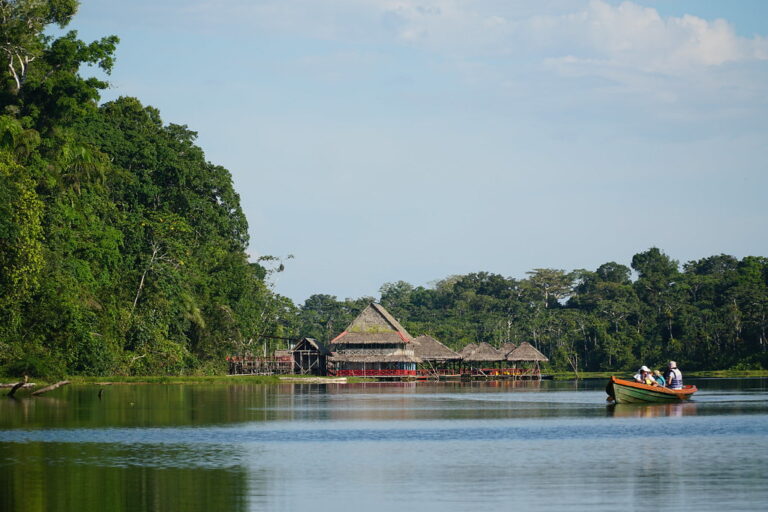
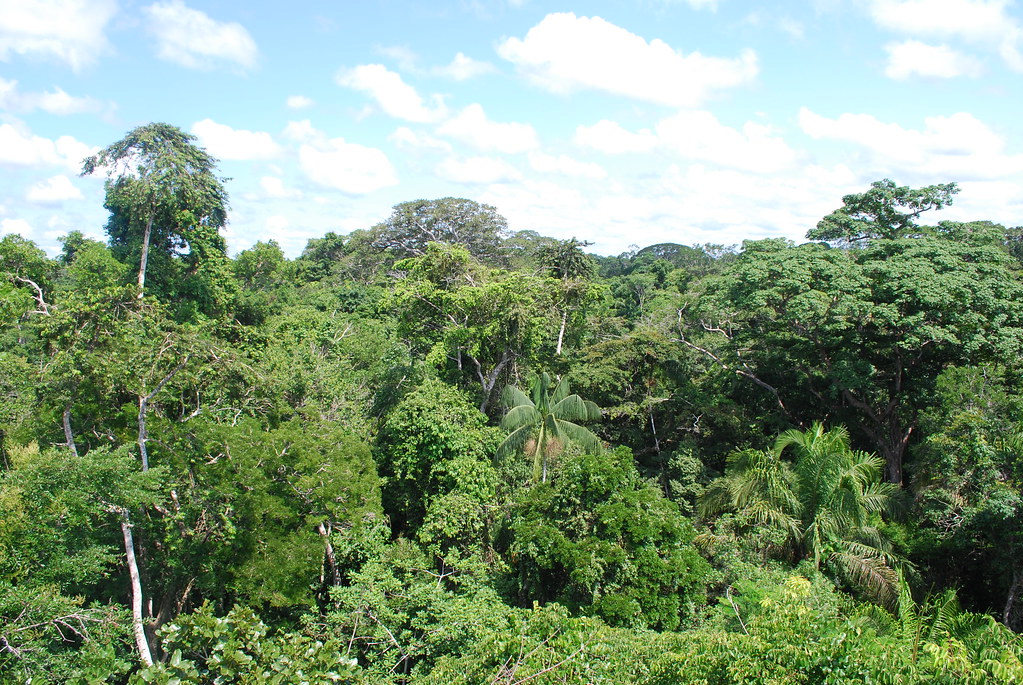
Photo: Amazon rainforest near Puerto Maldonado by Ivan Mlinaric, CC BY 2.0.

Author: Safe Ceremonies
User reviewed ceremonies