What is peyote? Mescaline, history and conservation
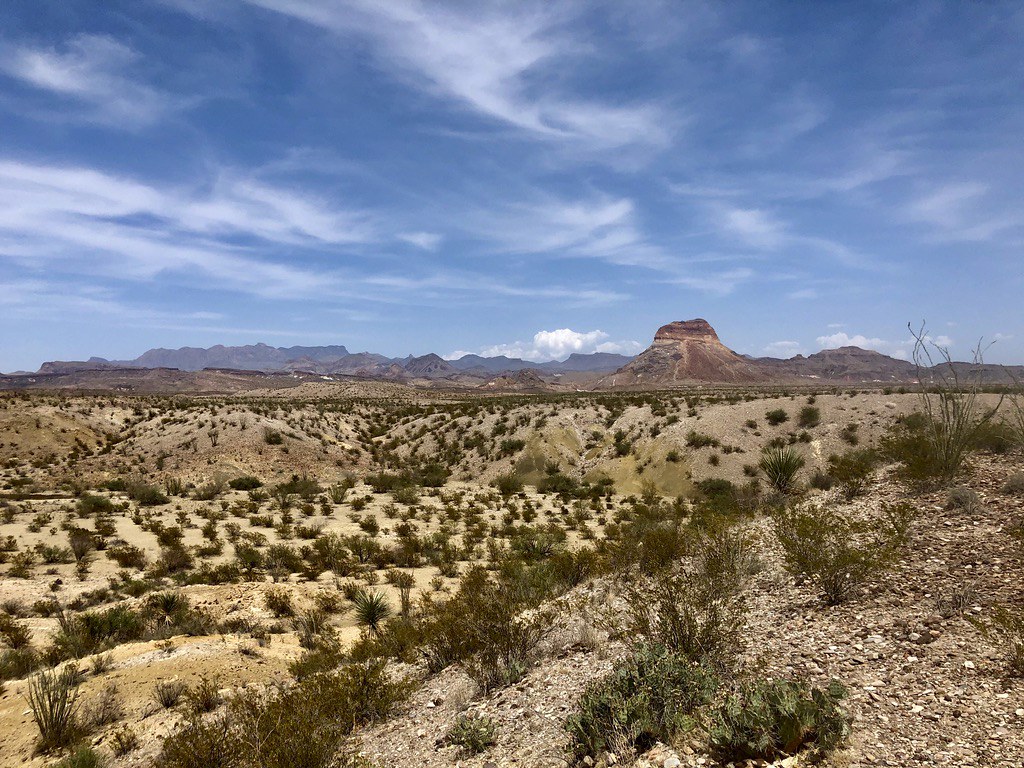
Peyote is a small, spineless cactus that grows in the Chihuahuan Desert region of south Texas and northern Mexico. Its main psychoactive compound is mescaline. For Indigenous peoples of North America it has been a sacrament for thousands of years, and today it is central to the Native American Church.
Peyote is also slow-growing, wild-harvested and in decline. Of all the plants listed on Safe Ceremonies, it is the one where the question “should I?” is as much about the plant and the people who hold it sacred as about your own safety. This guide covers what peyote is, its history, what’s known about mescaline, and the conservation problem. It doesn’t cover doses, sourcing or preparation.
The plant
Peyote’s scientific name is Lophophora williamsii. It grows low to the ground, often in the shelter of shrubs. A 2022 field study in Mexico found that young peyote depends on these “nurse” plants to get established, so clearing desert scrub harms peyote even when nobody touches the cactus itself.
It grows slowly. United Plant Savers, a plant conservation group, says a new peyote plant can take anywhere from three to fifteen years to reach reproductive maturity. Its range covers southern Texas along the Mexican border and several states in northern Mexico.
Mescaline
Mescaline is a phenethylamine, a different chemical family from psilocybin and DMT, though it acts on the same serotonin 5-HT2A receptor as the other classic psychedelics. It is also found in the San Pedro (huachuma) cactus of the Andes, and it can be made in a lab.
Mescaline’s effects last a long time. A 2021 survey paper describes them as typically lasting 8 to 12 hours, and in a 2023 Swiss lab study that compared three psychedelics in the same volunteers, mescaline’s effects lasted about 11 hours on average, longer than LSD or psilocybin. In that study the experiences themselves were broadly similar across the three drugs. A peyote ceremony in the Native American Church traditionally runs through the night.
A very long history
In 2005, researchers radiocarbon-dated two peyote specimens from an archaeological collection, probably from Shumla Cave No. 5 in Texas, to between 3780 and 3660 BC, about 5,700 years ago. Chemical analysis still found mescaline in them. The authors described them as the oldest plant drug ever to yield a major active compound on analysis, and as evidence that Native North Americans knew peyote’s effects at least that long ago.
In 1990, a US Supreme Court decision, Employment Division v. Smith, left it uncertain whether religious peyote use was legally protected. Congress responded in 1994 by amending the American Indian Religious Freedom Act. The amendment finds that ceremonial peyote use has been integral to many Indian people’s way of life for centuries, and makes the use, possession and transport of peyote by a member of an Indian tribe, for bona fide traditional ceremonial purposes, lawful under federal and state law.
That protection applies to members of federally recognized tribes. It doesn’t cover non-Native people or retreats. This is a description of the statute, not legal advice, and other laws apply in Mexico and elsewhere.
What research has found
Mescaline has been studied far less than psilocybin, and almost no modern clinical trials exist.
- A 2005 study compared 61 Native American Church members who used peyote regularly with comparison groups and found no evidence of psychological or cognitive deficits linked to religious peyote use. Former heavy drinkers in the study showed marked deficits by comparison.
- A 2021 online survey of 452 people who had used mescaline outside clinical settings found that most of those with depression, anxiety, PTSD or alcohol or drug problems reported improvement. The authors called for controlled trials. They also noted that 83% of respondents were white and 76% male, so the sample tells you little about Indigenous use.
- A 2023 review in Neuropharmacology concluded that mescaline appears safe to consume, with most intoxications mild and easily treated, and argued it deserves clinical study.
None of this makes peyote a treatment for anything. No regulator has approved mescaline as a medicine.
Known risks
- A long experience. Eight to twelve hours is a long time to be in an altered state, and you won’t be fit to drive or look after yourself for all of it.
- Nausea and other physical effects. NIDA lists nausea, headaches and heart rate changes among the physical effects of psychedelics, and Johns Hopkins safety guidelines note moderate rises in pulse and blood pressure.
- Psychological risks: fear, confusion and, in people with a personal or family history of psychosis or bipolar disorder, the possibility of longer-lasting problems. That is why research studies exclude those groups.
- Interactions with medicines. A 2024 systematic review of drug interactions with classic psychedelics, mescaline among them, found that other drugs can weaken the effects, strengthen them or leave them unchanged, depending on the combination. Bring a full list of your medicines to screening, and don’t stop any of them without the person who prescribed them.
- Uncertain material. Wild-harvested or informally sold cactus has no reliable label, so its strength is a guess.
Why conservation matters
United Plant Savers reports that peyote is listed as Vulnerable on the IUCN Red List of threatened species, and that it is under special protection in Mexico. The main threats it names are poor harvesting and habitat loss. Careful harvesters cut only the top of the plant so the root can regrow. Rising demand has brought in harvesters who take more of the plant, and that has caused a steady decline. Development along the US-Mexico border adds to the pressure on habitat.
In 2021 the National Council of Native American Churches and the Indigenous Peyote Conservation Initiative published an open letter asking the psychedelic and decriminalization movements to leave peyote out of their policy efforts. The letter warns that peyote could face extinction within 30 years and describes a conservation program led by Native communities, including habitat restoration, nurseries and a homesite in the peyote habitat of south Texas. It asks that the Native American Church and the Indigenous peoples with historical and cultural ties to peyote chart its legal future.
For someone who isn’t part of those communities, there are practical ways to respect this:
- Be wary of any retreat offering peyote to non-Native paying guests, and ask where its peyote comes from.
- San Pedro, an Andean cactus that also contains mescaline, comes from different traditions and has its own guide on this site.
- Read the open letter linked below. It explains how to support Indigenous-led conservation.
Questions worth asking a center
- Where does your peyote come from, and who harvested it?
- What is your relationship to the Native American Church or another Indigenous peyote tradition?
- How do you screen for heart conditions, mental health history and medicines?
- Who stays awake and sober through the whole night, and what happens in an emergency?
More guides
- San Pedro (huachuma): what to expect
- Reciprocity and sustainability: the plants and the people behind them
- Indigenous traditions and respectful practice
- Types of psychedelics: a plain overview
- A short history of ceremonial plant use
Reviews from past participants can tell you how a group talks about the plants it uses and the traditions they come from, as well as how it handles safety. You can search the Safe Ceremonies listings, including the peyote and iboga and San Pedro and huachuma categories.
Sources
- Schwertner-Charão L, Delgado Martínez R, Treviño-Carreón J, et al. (2022). Interactions between facilitator species and Lophophora williamsii (Cactaceae) in a rosetophyllus desert scrub in México. Journal of Arid Environments, 205. https://europepmc.org/article/AGR/IND607813811
- United Plant Savers. Peyote (Lophophora williamsii). https://unitedplantsavers.org/peyote-lophophora-williamsii-2/
- Agin-Liebes G, Haas TF, Lancelotta R, et al. (2021). Naturalistic use of mescaline and self-reported psychiatric improvements (title shortened). ACS Pharmacology & Translational Science, 4(2). https://pmc.ncbi.nlm.nih.gov/articles/PMC8033766/
- Ley L, Holze F, Arikci D, et al. (2023). Comparative acute effects of mescaline, lysergic acid diethylamide, and psilocybin in a randomized, double-blind, placebo-controlled cross-over study in healthy participants. Neuropsychopharmacology, 48(11). https://pmc.ncbi.nlm.nih.gov/articles/PMC10517157/
- El-Seedi HR, De Smet PA, Beck O, Possnert G, Bruhn JG (2005). Prehistoric peyote use: alkaloid analysis and radiocarbon dating of archaeological specimens of Lophophora from Texas. Journal of Ethnopharmacology, 101(1-3). https://pubmed.ncbi.nlm.nih.gov/15990261/
- 42 U.S. Code § 1996a. Traditional Indian religious use of peyote (Legal Information Institute, checked October 2026). https://www.law.cornell.edu/uscode/text/42/1996a
- Halpern JH, Sherwood AR, Hudson JI, Yurgelun-Todd D, Pope HG (2005). Psychological and cognitive effects of long-term peyote use among Native Americans. Biological Psychiatry, 58(8). https://pubmed.ncbi.nlm.nih.gov/16271313/
- Vamvakopoulou IA, Narine KAD, Campbell I, Dyck JRB, Nutt DJ (2023). Mescaline: the forgotten psychedelic. Neuropharmacology, 222. https://pubmed.ncbi.nlm.nih.gov/36252614/
- Halman A, Kong G, Sarris J, Perkins D (2024). Drug-drug interactions involving classic psychedelics: a systematic review. Journal of Psychopharmacology, 38(1). https://pmc.ncbi.nlm.nih.gov/articles/PMC10851641/
- National Institute on Drug Abuse (2026). Psychedelic and dissociative drugs. https://nida.nih.gov/research-topics/psychedelic-dissociative-drugs
- Johnson MW, Richards WA, Griffiths RR (2008). Human hallucinogen research: guidelines for safety. Journal of Psychopharmacology. https://pmc.ncbi.nlm.nih.gov/articles/PMC3056407/
- National Council of Native American Churches and Indigenous Peyote Conservation Initiative (2021). Open letter to the psychedelic movement regarding peyote in policy efforts and how to be an ally to Indigenous peoples of North America. Chacruna Institute. https://chacruna.net/ipci_open_letter_psychedelic_movement_peyote_decriminalization/
Photo: Big Bend NP by Navin75, CC BY-SA 2.0.

Author: Safe Ceremonies
User reviewed ceremonies