Plant medicine laws around the world: a plain overview
People often ask which countries are “legal” for ayahuasca or mushrooms. The honest answer is that very few countries have a clear law that says yes, a few have a clear law that says no, and a large number have no specific law at all. Where a retreat sits in that picture affects who oversees it, what happens if something goes wrong, and what risks you take on by traveling there.
This guide gives a plain overview. It was checked on 2026-10-08. This is not legal advice. Drug laws change, enforcement varies within a single country, and a sentence in a guide can’t cover your circumstances. Before you travel, read your own government’s travel advice for the country and, if your position matters, speak to a lawyer there.
The international treaties
Most national drug laws rest on three UN treaties. For psychedelics, the one that matters most is the 1971 Convention on Psychotropic Substances. It places DMT, psilocybin, psilocin and mescaline in Schedule I, its most restricted category, which limits them to medical and scientific purposes. Countries that sign the treaty have to pass their own laws to enforce it.
The treaty lists chemical compounds, not the plants and fungi that contain them. ICEERS, a nonprofit that tracks the legal status of ayahuasca, notes that the International Narcotics Control Board has confirmed the ayahuasca brew itself is not under international control. The EU’s drugs agency makes a similar point about mushrooms: psilocybin and psilocin are controlled under the 1971 Convention, but European countries interpret the control of the mushrooms themselves in many different ways. Ketamine, for its part, is not scheduled in the UN conventions at all.
The result is that each country decides for itself how to treat the plants, and the answers differ widely.
Three broad approaches
ICEERS groups national approaches to ayahuasca into three kinds. The same pattern roughly fits other plant medicines too.
Use permitted in certain settings
A small number of countries allow ayahuasca in defined circumstances. Brazil, the United States and Canada allow religious use by specific churches. Peru treats traditional use as part of the national cultural heritage. In the US, that permission comes from court rulings and individual exemptions, not from a general law, as our guide to ayahuasca in the US explains.
Specific prohibition
A few countries ban the plants outright. According to ICEERS, France’s lists of controlled substances include the plants used to make ayahuasca, and Russia’s law prohibits plants that contain scheduled psychoactive substances.
No specific law
Many countries have no law that addresses ayahuasca directly. ICEERS calls this a legal void. It doesn’t mean “legal.” In these countries a prosecutor can still argue that the brew counts as a preparation containing DMT, and people have been prosecuted in several of them, including Portugal, Mexico, Israel and Spain. ICEERS reports that Spain has recorded the highest number of legal incidents involving ayahuasca in recent years. Many cases involve receiving the brew by post or carrying it across a border.
Psilocybin mushrooms
Mushrooms follow the same logic, with even more variation. The EU’s drugs agency describes several approaches across Europe. Some countries list the mushrooms themselves as controlled. Some treat them as the controlled compounds in another form. Some ban them only when grown or sold for the purpose of getting high. Some treat fresh mushrooms differently from dried or prepared ones. In a number of countries the law is simply unclear because so few cases have reached court.
Medical access
Separately from ceremonies, a handful of places now allow psychedelics in medical or regulated settings:
- In Australia, authorized psychiatrists have been able to prescribe MDMA for post-traumatic stress disorder and psilocybin for treatment-resistant depression since 1 July 2023.
- In the US, Oregon and Colorado run state-licensed psilocybin programs, and New Mexico passed a medical psilocybin law in 2025. Federal law still lists psilocybin in Schedule I.
- In the European Union, the EU’s drugs agency reported in 2024 that no classic psychedelic had been approved for treating mental health conditions. Esketamine, a form of ketamine sold as Spravato, is approved for adults with treatment-resistant depression.
These programs are narrow. They cover particular substances, conditions and prescribers, and none of them makes a retreat or ceremony in that country legal.
Popular destinations at a glance
Our country guides go into more detail. In brief:
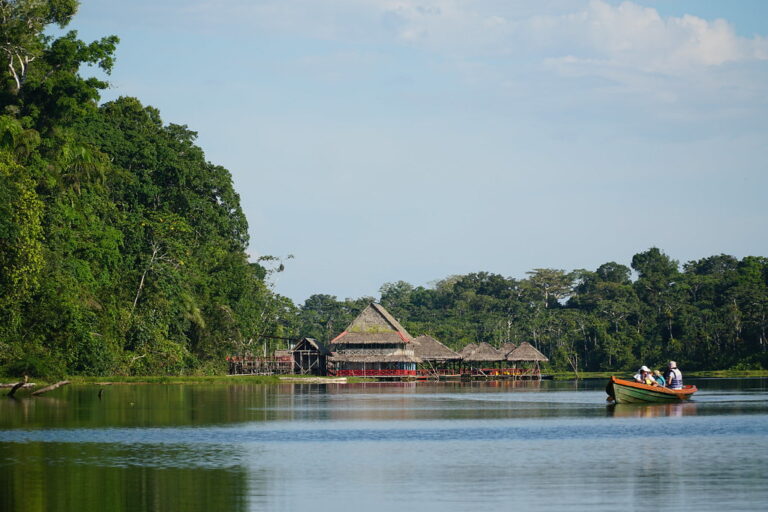
- Peru recognizes the traditional use of ayahuasca as national cultural heritage. That recognition doesn’t amount to a licensing system for retreats, and the UK government’s travel advice for Peru describes the brew as unregulated.
- Colombia has no legislation that specifically addresses ayahuasca, known there as yagé. Its status is shaped indirectly by laws recognizing Indigenous peoples’ rights, which leaves room for ambiguity, especially for non-Indigenous practitioners.
- Costa Rica has dozens of retreats operating in what local reporting describes as a legal gray area. Ibogaine is illegal there, and the authorities treat drug possession and trafficking severely.
What a gray area means for you
When a country neither permits nor bans a practice, nobody licenses the people doing it. There’s no inspection, no required training, no rule about medical staff and no official body to complain to. Researchers who interviewed 49 retreat organizations across the Americas, published in 2026, found wide variation in safety practices and little oversight. About two thirds had someone with medical or emergency training on site at least occasionally, which leaves a third that didn’t, and 29 of the 49 said facilitators took psychedelics during ceremonies.
A gray area can also make a center reluctant to call the police or an ambulance, and it can leave you with little recourse if you’re harmed. None of this means every center in such a country is unsafe. It means you have to do the checking yourself, because no one else is required to.
Crossing borders
The legal risk usually rises sharply at the border. Whatever the rules where the ceremony happens, your home country’s law applies when you return, and the countries you pass through apply their own. The UK government’s travel advice for Peru, for example, points out that the brew offered to tourists contains DMT, which is a Class A drug in the UK.
- Don’t carry any ceremonial substance home, even a small amount, even if you were told it’s legal where you got it.
- Don’t post or ship it, or agree to receive it by mail.
- Never carry a package for someone else.
- Read your own government’s advice for every country on your route.
How to check the current law
- Read your government’s travel advice for the country. The US State Department and the UK Foreign Office both publish country pages, and several mention ayahuasca by name.
- Look at ICEERS’s resources on ayahuasca and the law for background and known cases.
- Ask the center directly what the legal basis for its work is, and how it handles emergencies given that basis.
- If the answer matters to you, get advice from a lawyer in that country.
More guides
- Is ayahuasca legal in the US? The religious-use cases
- Psilocybin in Oregon and Colorado: the legal programs
- Traveling abroad for a ceremony: a safety checklist
- Ayahuasca in Peru: what to know before you go
- Ayahuasca in Colombia: what to know before you go
- Ayahuasca in Costa Rica: what to know before you go
Where the law offers little oversight, reviews from past participants carry more weight. You can search the Safe Ceremonies listings by place and practice, including ayahuasca, psilocybin and mushrooms and peyote and iboga.
Sources
- ICEERS. Ayahuasca and the law. https://www.iceers.org/ayahuasca-legal-status/
- European Union Drugs Agency. Hallucinogenic mushrooms drug profile. https://www.euda.europa.eu/publications/drug-profiles/hallucinogenic-mushrooms_en
- European Union Drugs Agency (2024). Frequently asked questions: therapeutic use of psychedelic substances. https://www.euda.europa.eu/publications/frequently-asked-questions-faq/faq-therapeutic-use-psychedelic-substances_en
- Rodríguez-Pérez L. Legal status of ayahuasca (yagé) in Colombia: some considerations from three primary sources. https://www.bialabate.net/blog-archive/news/legal-status-of-ayahuasca-yage-in-colombia-some-considerations-from-three-primary-sources
- The Tico Times (2026). Costa Rica psychedelic retreat industry under scrutiny after tourist death. https://ticotimes.net/2026/08/27/costa-rica-psychedelic-retreat-tourist-death
- UK Foreign, Commonwealth & Development Office. Peru travel advice: safety and security. https://www.gov.uk/foreign-travel-advice/peru/safety-and-security
- UK Foreign, Commonwealth & Development Office. Costa Rica travel advice: safety and security. https://www.gov.uk/foreign-travel-advice/costa-rica/safety-and-security
- McGuire AL, et al. (2026). Reported safety practices of publicly advertised psychedelic retreats. JAMA Network Open. https://pmc.ncbi.nlm.nih.gov/articles/PMC12780929/
- New Mexico Legislature. SB 219 (2025), Medical Psilocybin Act. https://www.nmlegis.gov/Legislation/Legislation?chamber=S&legType=B&legNo=219&year=25
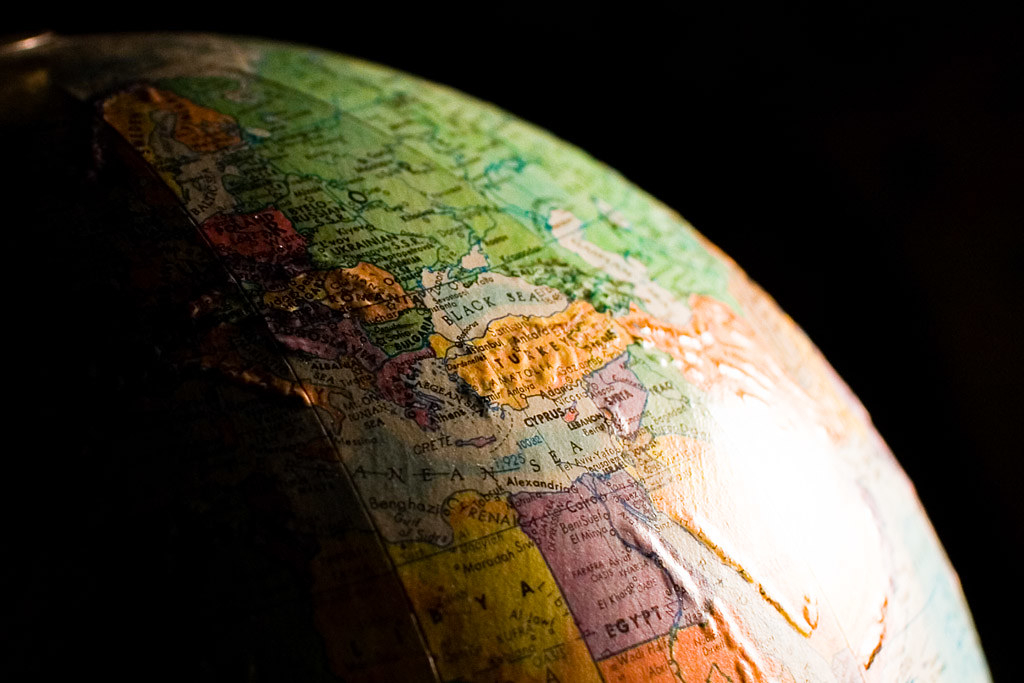
Photo: Old Globe by ToastyKen, CC BY 2.0.

Author: Safe Ceremonies
User reviewed ceremonies