Ayahuasca in Peru: what to know before you go
Peru is the country most people think of when they think of an ayahuasca retreat. Centers cluster around Iquitos and Pucallpa in the Amazon, around Tarapoto in the north, and in the Sacred Valley near Cusco, where San Pedro ceremonies are common too. The choice ranges from family-run places led by Indigenous healers to large lodges with Western staff and long programs.
Popularity doesn’t mean oversight. This guide covers the legal position, what has gone wrong in the past, the health and travel risks specific to Peru, and what to check before you book. It was checked on 2026-10-08. This is not legal or medical advice. Laws and travel conditions change, so read your government’s latest travel advice before you go.
The legal position
Peru recognizes the traditional use of ayahuasca by Indigenous peoples as part of its national cultural heritage, according to ICEERS, a nonprofit that tracks ayahuasca law worldwide. That recognition protects a tradition. It isn’t a licensing system for retreats. There is no national register of ayahuasca centers, no required training for the people who lead ceremonies, and no inspection regime aimed at them.
The UK government’s travel advice for Peru puts it plainly. It says the brew offered to tourists is unregulated and that little is known about how it affects existing medical conditions. It adds that people have become seriously ill and in some cases died after taking part. The same advice notes that the brew contains DMT, a Class A drug in the UK, which matters if you’re thinking of bringing anything home. Don’t.
Known incidents
Serious incidents in Peru are rare compared with the number of people who attend ceremonies there, but they have happened, and the patterns are worth knowing.
- In December 2015, during a ceremony at a center near Iquitos, a 26-year-old British man attacked another participant with a kitchen knife, and the other man fatally stabbed him. Police released the second man after concluding he had acted in self-defense.
- In April 2018, an 81-year-old Shipibo-Konibo healer was shot dead in the Ucayali region. A Canadian man suspected of the killing was then killed by a group of local people. Prosecutors said they suspected a dispute over money.
- In June 2025, a 41-year-old American died during a ceremony at a lodge in the Loreto region near Iquitos. A forensic pathologist described a reaction affecting several organs, and prosecutors said they were examining whether the organizers were qualified to run the ceremony.
The UK travel advice also notes reports of sexual assault during ceremonies. The Chacruna Institute’s guide on sexual abuse in ayahuasca settings describes common patterns, such as private “healing” sessions away from the group and claims that sex with a healer is part of the cure. Our guide on consent, touch and boundaries covers this in more depth.
What these cases have in common is a lack of basic safeguards: no screening that catches a person in crisis, no one sober and trained to manage a dangerous situation, and no quick way to reach medical help.
Distance from help
Many Amazon retreats are deliberately remote. The UK advice points out that this makes it hard to get medical attention. Before you book, find out exactly where the center is, how long it takes to reach the nearest hospital, and how you’d get there at three in the morning. A boat that needs a driver, or a road that floods in the rainy season, changes the answer.
Recent research shows how much safety arrangements vary. In a 2026 study, researchers interviewed 49 organizations that advertise psychedelic retreats, including some in Peru. About two thirds had someone with medical or emergency training on site at least occasionally, and 29 of the 49 said facilitators took psychedelics during ceremonies themselves.
Health and travel practicalities
- See a travel health clinic well before your trip. The US Centers for Disease Control and Prevention recommends yellow fever vaccination for travelers to areas below 2,300 meters in many regions of Peru, including Loreto, Ucayali, Madre de Dios and San Martín, and preventive medicine against malaria for certain areas east of the Andes. Dengue is also a risk.
- Tell both your travel doctor and the retreat about every medicine you take, including malaria tablets and anything prescribed for the trip. A good center will want to screen for these. Our guide to medications and health conditions explains why.
- If you’re going to Cusco or the Sacred Valley, the altitude is a real risk. The UK advice describes altitude sickness as a serious risk in parts of Peru, including Cusco and Puno. Give yourself time to adjust before any ceremony.
- Check your travel insurance. Many policies don’t cover events that happen after you’ve taken drugs or other substances, and medical evacuation from the Amazon is expensive.
- Read the regional warnings. The UK advises against all but essential travel to areas near the Peru-Colombia border along the Putumayo River and to the VRAEM valleys, and warns that armed criminals on the Amazon River have targeted solo travelers and foreigners.
Choosing a center in Peru
The questions in our guides to choosing a center and asking before you book apply everywhere. In Peru, a few deserve extra attention.
Who leads the ceremonies
Ask who the healer or healers are, how they trained and in what tradition, and how long they have worked with this center. Ask whether they drink during ceremonies, and who stays sober. If the center describes a lineage, ask how you could confirm it. A center that changes healers often, or can’t tell you who will lead your ceremony, is harder to trust.
Medical cover and emergencies
Ask whether anyone on staff has medical or emergency training, whether they’ll be present during ceremonies, and what equipment they have. Ask how far the nearest clinic and the nearest hospital are, how a sick person would be moved there at night, and whether the center has done it before.
What else is on the program
Many Peruvian retreats offer other practices alongside ayahuasca, such as Kambo, tobacco preparations or San Pedro. Each carries its own risks, and screening for one doesn’t cover the next. Ask for the full program before you pay, and say no to anything you didn’t agree to in advance.
Getting there and leaving
Ask how you’ll be met and by whom, and keep your own passport, phone and money. Make sure you could leave the center on your own if you needed to. Share the center’s name, address and your dates with someone at home, and agree a time to check in.
Respecting the people behind the tradition
Ayahuasca use in Peru comes from Amazonian Indigenous peoples, including the Shipibo-Konibo, whose healers work at many centers. Some centers share income fairly with the healers and their communities and some don’t. It’s reasonable to ask how the healers are paid and whether the center supports their communities. Our guide to reciprocity and sustainability looks at this more closely.
More guides
- Traveling abroad for a ceremony: a safety checklist
- Plant medicine laws around the world: a plain overview
- Preparing for your first ayahuasca ceremony
- Safety for women and solo travelers
- San Pedro (huachuma): what to expect
- Reciprocity and sustainability: the plants and the people behind them
Reviews from people who have been to a center are one of the few independent checks available in Peru. You can search the Safe Ceremonies listings and read past participants’ reviews in the ayahuasca and San Pedro and huachuma categories.
Sources
- ICEERS. Ayahuasca and the law. https://www.iceers.org/ayahuasca-legal-status/
- UK Foreign, Commonwealth & Development Office. Peru travel advice: safety and security. https://www.gov.uk/foreign-travel-advice/peru/safety-and-security
- UK Foreign, Commonwealth & Development Office. Peru travel advice: regional risks. https://www.gov.uk/foreign-travel-advice/peru/regional-risks
- UK Foreign, Commonwealth & Development Office. Peru travel advice: health. https://www.gov.uk/foreign-travel-advice/peru/health
- UK Foreign, Commonwealth & Development Office. Foreign travel insurance. https://www.gov.uk/guidance/foreign-travel-insurance
- Centers for Disease Control and Prevention. Travelers’ health: Peru. https://wwwnc.cdc.gov/travel/destinations/traveler/none/peru
- TheJournal.ie (2015). British man killed in Peru “during shamanic ceremony.” https://www.thejournal.ie/?p=2510557
- Tierney A (2018). Peru prosecutors say Canadian killed by lynch mob may have shot ayahuasca shaman. Vice. https://www.vice.com/en/article/peru-prosecutors-say-canadian-killed-by-lynch-mob-may-have-shot-ayahuasca-shaman/
- AFP via Swissinfo (2025). La fiscalía investiga la muerte de un estadounidense tras consumir ayahuasca en la Amazonía peruana. https://www.swissinfo.ch/spa/la-fiscal%C3%ADa-investiga-la-muerte-de-un-estadounidense-tras-consumir-ayahuasca-en-la-amazon%C3%ADa-peruana/89474970
- Sinclair E, Labate BC (2019). Ayahuasca community guide for the awareness of sexual abuse (Chacruna Institute), via MAPS. https://maps.org/news/bulletin/ayahuasca-community-guide-for-the-awareness-of-abuse-2019/
- McGuire AL, Neitzke-Spruill L, Robinson JO, et al. (2026). Reported safety practices of publicly advertised psychedelic retreats. JAMA Network Open. https://pmc.ncbi.nlm.nih.gov/articles/PMC12780929/
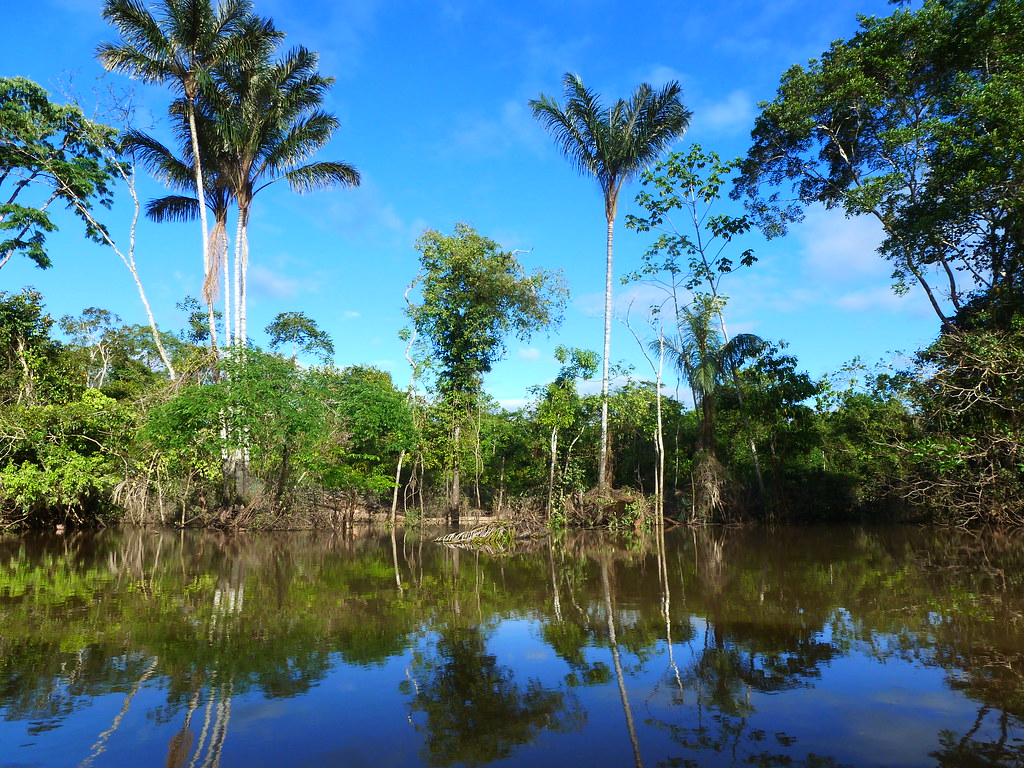
Photo: Amazon river, Peru by Global Water Forum, CC BY 2.0.

Author: Safe Ceremonies
User reviewed ceremonies