Is ayahuasca legal in the US? The religious-use cases
Ayahuasca ceremonies are advertised openly in many US cities, often by groups calling themselves churches. That can give the impression that ayahuasca is legal, or legal as long as it’s religious. The real picture is narrower than that, and it matters for you as a participant, because a group’s legal position shapes how it operates, how open it can be with you, and what happens if something goes wrong.
This guide describes what federal law says, what the courts have decided, and how the exemption process works. It was checked on 2026-10-08. This is not legal advice. Laws and court rulings change, and they vary from state to state. If your own legal position matters to you, speak to a lawyer who practices in this area.
The starting point: DMT is a Schedule I drug
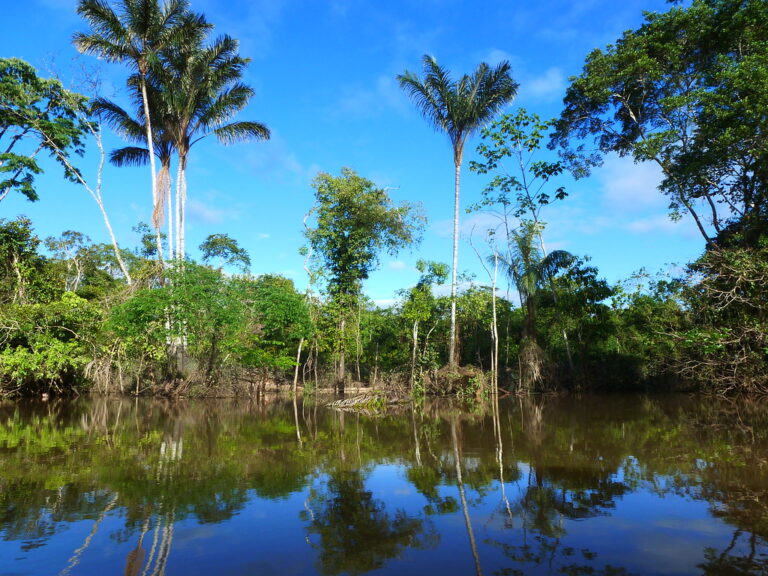
Ayahuasca is a brew usually made from the Banisteriopsis caapi vine and the leaves of a plant that contains DMT, most often Psychotria viridis. Federal law doesn’t list ayahuasca by name. It lists DMT. Under the federal Controlled Substances Act, DMT sits in Schedule I, the category for drugs the government considers to have a high potential for abuse and no accepted medical use. The DEA’s regulations list it alongside psilocybin, mescaline, ibogaine, 5-MeO-DMT and MDMA.
Because the brew contains DMT, possessing, importing or serving it is treated under federal law the same way as possessing or distributing DMT itself. There is no general federal exemption for ceremonial or spiritual use. The exceptions that exist come from a specific religious-freedom law and a handful of court cases and agency decisions.
How religious freedom entered the picture
In 1990, in Employment Division v. Smith, the US Supreme Court held that the Constitution’s free exercise clause doesn’t require exemptions from a neutral law that applies to everyone. The case involved two men fired for taking peyote in a Native American Church ceremony and then denied unemployment benefits.
Congress responded in 1993 with the Religious Freedom Restoration Act, known as RFRA. Under RFRA, the federal government may not substantially burden a person’s religious exercise, even through a law that applies to everyone, unless it shows that the burden furthers a compelling government interest and is the least restrictive way of doing so. In 1994 Congress also amended the American Indian Religious Freedom Act to protect the use, possession and transport of peyote by members of federally recognized tribes for traditional ceremonial purposes. That peyote protection is specific to peyote and to tribal members. It doesn’t extend to ayahuasca.
Gonzales v. O Centro Espírita Beneficente União do Vegetal (2006)
The União do Vegetal, or UDV, is a religion that began in Brazil and drinks a tea it calls hoasca as its sacrament. In 1999 US Customs seized a shipment of the tea headed for the church’s US members, and the government threatened prosecution. The church sued under RFRA.
The government argued it had three compelling interests: protecting members’ health and safety, preventing the tea from being diverted to people outside the church, and complying with the 1971 UN Convention on Psychotropic Substances. It also argued that the Controlled Substances Act couldn’t allow any exceptions.
On 21 February 2006 the Supreme Court ruled unanimously for the church, in an opinion by Chief Justice Roberts. It held that the government hadn’t shown a compelling interest in applying the law to this particular church’s sacramental use. The Court pointed out that the law already carried an exception for peyote use by the Native American Church, which undercut the claim that no exception was possible. It found the treaty argument too general without specific evidence.
What the ruling did and didn’t decide is worth being clear about. It applied RFRA to one church’s sincere religious practice, based on the evidence in that case. It didn’t make ayahuasca legal, and it didn’t create a rule that any group calling itself religious may serve it.
Church of the Holy Light of the Queen v. Mukasey (2009)
The second major case involved Santo Daime, another Brazilian religion that uses ayahuasca, which it calls Daime tea, as a sacrament. Federal agents had arrested the Oregon church’s leader and seized its supply in 1999. The church and a second Santo Daime church in Portland sued.
On 18 March 2009, Judge Owen Panner of the US District Court for the District of Oregon ruled that RFRA protected the churches’ sacramental use. Relying heavily on the UDV decision, he found that the government’s evidence about the risks of pure DMT and LSD was of limited relevance to drinking the tea in a religious ceremony, and that the government hadn’t shown the tea was being diverted. The court allowed the churches to import and drink their sacrament subject to reasonable restrictions, including rules on storing and keeping track of their supply.
The DEA petition process
After the court cases, the DEA published guidance on how a religious group can petition for an exemption from the Controlled Substances Act under RFRA. The current version dates from November 2020. A petitioner has to describe its religion’s history, beliefs, membership and leadership, explain how the controlled substance is used in its practice, and give details about the substance, the amounts involved and where it will be stored, used and obtained.
For many years this process produced no exemptions. Chacruna, a nonprofit that works on psychedelic policy and Indigenous plant traditions, reported in 2022 that no church had obtained an exemption through a petition since RFRA was passed. In one well-documented case, a Florida ayahuasca church waited about four years before the DEA denied its petition in April 2021. The DEA questioned whether the group’s beliefs were sincerely religious and described it as a healing center. A federal court dismissed the church’s challenge in 2022.
That changed in May 2025, when the DEA granted an exemption to a church through the petition process, the first reported grant of its kind. The approval came with conditions about how the church stores and tracks its ayahuasca. Chacruna reported in June 2025 that this remained the only petition the DEA had granted, despite dozens filed over eight years, and that two other churches had reached settlements with the federal government in 2024 and 2025. Litigation over how the DEA handles petitions was continuing at the time of writing.
What “we’re a church” does and doesn’t mean
Putting the pieces together, the groups with clear federal protection are a small number: those covered by the court rulings, settlements or a DEA exemption. Everyone else serving ayahuasca in the US is operating without a federal exemption, whatever they call themselves. Some groups believe they could defend themselves under RFRA if they were ever prosecuted. That is a legal argument they would have to win, case by case, on questions such as whether their beliefs are sincere and religious. It isn’t a permission they already have.
For you as a participant, a few practical points follow from this:
- A “church” label, a membership fee or a signed membership form doesn’t by itself make a ceremony legal.
- If a group says it has an exemption or a court order, you can ask which one, and what conditions come with it.
- Groups operating without legal clarity may be reluctant to call emergency services. Ask directly what they would do in a medical emergency, and walk away if the answer is vague. Our guide to a center’s emergency plan covers what a good answer sounds like.
- Participants are rarely the focus of enforcement, but the risk isn’t zero, and it rises if you take ayahuasca home or ship it.
State and city laws
State law adds another layer. RFRA binds the federal government. Some states have their own religious-freedom laws, which work differently and have their own case law.
Colorado’s Proposition 122, approved by voters in 2022, removed state criminal penalties for personal use and possession of DMT by adults 21 and over, along with psilocybin, psilocin, ibogaine and mescaline (but not peyote). It didn’t permit sales, and the state’s licensed healing centers can serve only psilocybin and psilocin for now. Several US cities have also passed measures making natural psychedelics a low priority for police. None of these state or local measures changes federal law, under which DMT remains in Schedule I.
Our guide to psilocybin in Oregon and Colorado describes the two state programs in detail.
Questions worth asking a US ayahuasca group
- What is your legal basis for serving ayahuasca? Do you hold an exemption or a court order, or are you relying on a religious-freedom argument?
- Who is legally responsible for the ceremony, and what happens to participants if the group is investigated?
- Will you call 911 in an emergency? Has that ever happened, and how was it handled?
- Do you ask participants to keep the ceremony secret? Why?
A group with a clear, honest answer, even if the answer is “we have no exemption and here is the risk,” is easier to trust than one that says “it’s legal, we’re a church” and changes the subject.
More guides
- Church, retreat, underground circle or clinic: what the differences mean
- Psilocybin in Oregon and Colorado: the legal programs
- Plant medicine laws around the world: a plain overview
- What a center’s emergency plan should cover
- What ayahuasca is
Whatever a group’s legal position, past participants can tell you how it handled screening, safety and hard nights. You can search the Safe Ceremonies listings and read reviews in the ayahuasca and integration and aftercare categories.
Sources
- Employment Division v. Smith, 494 U.S. 872 (1990). Legal Information Institute, Cornell Law School. https://www.law.cornell.edu/supremecourt/text/494/872
- Gonzales v. O Centro Espírita Beneficente União do Vegetal, 546 U.S. 418 (2006). Legal Information Institute, Cornell Law School. https://www.law.cornell.edu/supct/html/04-1084.ZS.html
- Church of the Holy Light of the Queen v. Mukasey, 615 F. Supp. 2d 1210 (D. Or. 2009). CourtListener. https://www.courtlistener.com/opinion/2482682/church-of-the-holy-light-of-the-queen-v-mukasey/
- Beyer S (2009). A victory for Santo Daime (includes quotations from the ruling). Singing to the Plants. https://singingtotheplants.com/2009/03/a-victory-for-santo-daime/
- 21 CFR 1308.11, Schedule I. Legal Information Institute. https://www.law.cornell.edu/cfr/text/21/1308.11
- 42 U.S. Code 1996a, traditional Indian religious use of peyote. Legal Information Institute. https://www.law.cornell.edu/uscode/text/42/1996a
- 21 CFR 1307.31, Native American Church. Legal Information Institute. https://www.law.cornell.edu/cfr/text/21/1307.31
- Drug Enforcement Administration (2020). Guidance regarding petitions for religious exemption from the Controlled Substances Act pursuant to the Religious Freedom Restoration Act. https://www.deadiversion.usdoj.gov/GDP/(DEA-DC-5)(EO-DEA-007)(Version2)RFRA_Guidance_(Final)_11-20-2020.pdf
- Chacruna Institute (2022). New ayahuasca legal developments in the US: Soul Quest and Arizona Yagé federal court cases. https://chacruna.net/soul-quest-arizona-yage-assembly-federal-court-cases/
- Hoots A (2025). Sacred Plant Alliance to sue DEA over religious exemption process. Chacruna Institute. https://chacruna.net/?p=129461
- DoubleBlind (2025). How a church got a DEA religious exemption to serve ayahuasca. https://newsletter.doubleblindmag.com/p/here-s-how-church-of-gaia-beat-the-dea-to-serve-ayahuasca
- Ballotpedia. Colorado Proposition 122 (2022). https://ballotpedia.org/Colorado_Proposition_122,_Decriminalization_and_Regulated_Access_Program_for_Certain_Psychedelic_Plants_and_Fungi_Initiative_(2022)
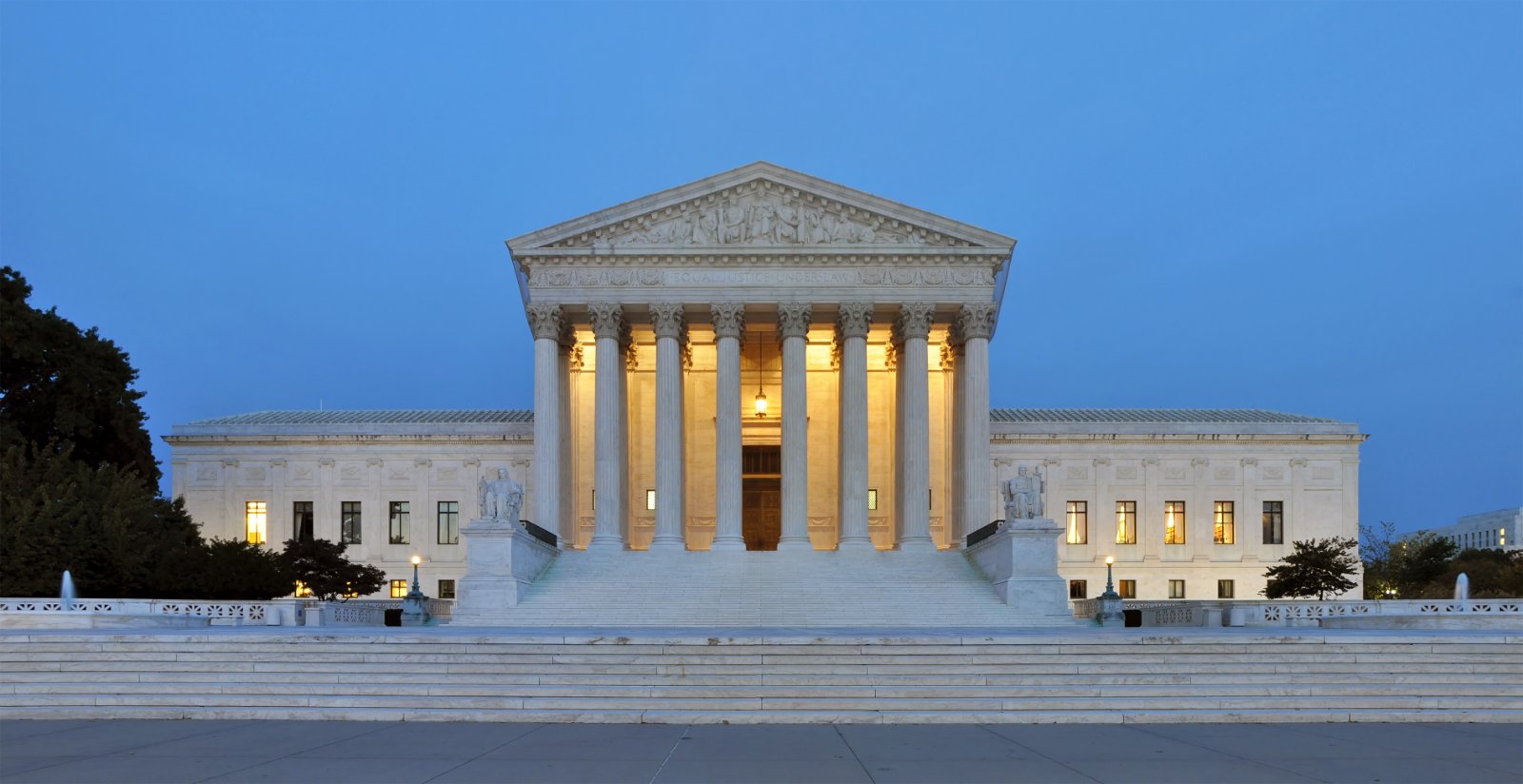
Photo: Panorama of United States Supreme Court Building at Dusk by Joe Ravi, CC BY-SA 3.0.

Author: Safe Ceremonies
User reviewed ceremonies