How psychedelics work in the brain: what’s known so far
Ceremony websites often explain psychedelics with confident phrases: the medicine “rewires your brain,” “resets your default mode network,” “grows new neurons.” Some of these borrow real research. Most stretch it well past what the studies showed.
This guide sets out what scientists can say with some confidence, what is suggested by early or animal research, and what is still unknown. It focuses on the classic psychedelics, such as psilocybin, DMT, LSD and mescaline. Other substances offered in ceremonies, such as ketamine, MDMA, ibogaine and Kambo, work in different ways, and our guide to the types of psychedelics covers those.
Where it starts: one serotonin receptor
Serotonin is one of the brain’s chemical messengers, and it acts through several different types of receptor. Classic psychedelics act mainly on one of them, the 5-HT2A receptor, by switching it on.
The strongest evidence for this comes from blocking studies. A review in Pharmacological Reviews by the pharmacologist David Nichols describes a human study in which the drug ketanserin, which blocks the 5-HT2A receptor, prevented psilocybin’s effects. If the receptor is blocked, the experience largely doesn’t happen.
Getting the molecule to that receptor is a separate story for each substance. Psilocybin is converted in the body into psilocin, which is the active form. DMT swallowed on its own is broken down by enzymes in the gut and liver before it reaches the brain, which is why ayahuasca pairs it with a vine that blocks one of those enzymes. These differences explain why durations range from minutes to half a day.
What changes across the brain
The receptor is only the first step. Researchers have used brain scans to see how the effect spreads.
A 2012 study in the Proceedings of the National Academy of Sciences scanned volunteers given psilocybin and found decreases in blood flow and activity, strongest in “hub” regions that connect different brain networks. One of these is the default mode network, a set of regions linked to self-reflection, thinking about the past and planning. The US National Institute on Drug Abuse (NIDA) describes psychedelics as disrupting communication in this network, which may relate to the loosening of the sense of self that people describe.
A 2024 study in Nature looked at this more closely. Researchers scanned seven healthy adults about 18 times each, before, during and after psilocybin, and compared it with a stimulant. Psilocybin disrupted the brain’s normal patterns of connection more than three times as much as the stimulant, and the effect was strongest in the default mode network. People’s brain changes tracked how intense their experience felt. One change, a weaker link between part of the hippocampus and the default mode network, lasted for weeks. The authors were careful to say that their volunteers were not depressed, and that testing whether this explains any treatment effect will need studies in patients.
A 2020 review in Nature Reviews Neuroscience pulled this kind of research together. It proposed that changes in how people experience themselves, process emotion and relate to others may explain why psychedelics could help in psychiatry, and it presented this as a road map for research, not a settled account.
Brain imaging can show that something changed and where. It can’t yet tell you what a change means for any one person’s mood or life.
Plasticity: what the cell research found
“Neuroplasticity” is the brain’s ability to change its connections. It’s the source of most “rewiring” claims.
A widely cited 2018 study in Cell Reports found that several psychedelics increased the growth of branches and spines on neurons, the structures where connections form, in rat neurons grown in a dish and in living animals. The authors saw this as a promising lead for developing new medicines.
That is real and interesting science. It is also cell and animal work. It doesn’t show that a ceremony rewires your brain, which way any change goes, or whether a change is good for you. A brain that is more open to change for a while can be changed by whatever happens next, the helpful and the harmful alike. That is one reason the setting and the weeks afterwards matter.
Set and setting
“Set” is your mindset going in: your expectations, mood and history. “Setting” is the place, the people and what they do. Researchers treat both as part of how a psychedelic works.
Safety guidelines written by Johns Hopkins researchers note that studies with more preparation and more interpersonal support during the drug’s action found fewer bad reactions and more positive experiences. In a large survey of people’s most difficult psilocybin mushroom experiences, risky behavior was more likely when physical comfort and social support were missing. The same compound can produce a very different night depending on who is in the room and how they behave.
This is also why researchers worry about expectation. A 2021 review of psychedelic trials argued that most participants can tell whether they received a psychedelic, and that high hopes going in probably make treatment effects in trials look bigger than they are. If a center tells you exactly what the medicine will do for you, that expectation becomes part of what you take.
What happens in the body
- Heart and blood pressure: the Johns Hopkins guidelines note that psychedelics can moderately raise pulse and blood pressure, which is why studies screen out people with high blood pressure or heart disease.
- Toxicity and addiction: the same guidelines describe classic psychedelics as having relatively low physiological toxicity, with no evidence of organ damage, and as not producing compulsive drug-seeking. NIDA says they don’t typically lead to addiction.
- Tolerance: the Nichols review notes that taking LSD daily leads to an almost complete loss of effect by the fourth day, and that tolerance carries over between classic psychedelics.
- Interactions: because these substances act on the serotonin system, they can interact with medicines that do too. Ayahuasca’s enzyme-blocking vine adds its own interaction risks.
Low physical toxicity doesn’t mean low risk. The main dangers are psychological and behavioral: panic, confusion, accidents while affected, and, in people who are vulnerable, longer-lasting problems such as psychosis.
What scientists don’t know yet
- Whether the brain changes seen in scans cause any lasting benefit, or just come along with the experience.
- Whether the subjective experience itself is needed for any benefit, or whether the drug’s effects on cells could do the job alone.
- How long any changes last, and how they differ from person to person.
- How findings from screened volunteers in a lab apply to people in a ceremony, who are often less screened and less supported.
How to use this when choosing a center
Be wary of confident brain claims. “Resets your nervous system” or “rewires trauma in one night” goes well past the evidence. A grounded center will describe what people have reported and what is still uncertain. It will also take seriously the parts of the science that point to what it controls: screening, preparation, a calm setting, enough trained people, and support in the weeks after, when your mind may still be unusually open to change.
More guides
- Types of psychedelics: a plain overview
- Psychedelic research: the studies worth knowing
- Grounded or “woo woo”? How to read a group’s beliefs
- Preparing your mind: setting an intention
- Integration after a ceremony: a practical guide
Reviews from past participants are where you’ll see how a center handles set and setting in practice: how it prepared people, who was in the room and what support followed. You can search the Safe Ceremonies listings, including psychedelic-assisted therapy and integration and aftercare.
Sources
- Nichols DE (2016). Psychedelics. Pharmacological Reviews, 68(2). https://pmc.ncbi.nlm.nih.gov/articles/PMC4813425/
- Dinis-Oliveira RJ (2017). Metabolism of psilocybin and psilocin: clinical and forensic toxicological relevance. Drug Metabolism Reviews, 49(1). https://pubmed.ncbi.nlm.nih.gov/28074670/
- Barker SA (2018). N,N-dimethyltryptamine (DMT), an endogenous hallucinogen: past, present, and future research to determine its role and function. Frontiers in Neuroscience. https://pmc.ncbi.nlm.nih.gov/articles/PMC6088236/
- Carhart-Harris RL, Erritzoe D, Williams T, et al. (2012). Neural correlates of the psychedelic state as determined by fMRI studies with psilocybin. Proceedings of the National Academy of Sciences, 109(6). https://pmc.ncbi.nlm.nih.gov/articles/PMC3277566/
- National Institute on Drug Abuse (2026). Psychedelic and dissociative drugs. https://nida.nih.gov/research-topics/psychedelic-dissociative-drugs
- Siegel JS, Subramanian S, Perry D, et al. (2024). Psilocybin desynchronizes the human brain. Nature, 632. https://pmc.ncbi.nlm.nih.gov/articles/PMC11291293/
- Ly C, Greb AC, Cameron LP, et al. (2018). Psychedelics promote structural and functional neural plasticity. Cell Reports, 23(11). https://pmc.ncbi.nlm.nih.gov/articles/PMC6082376/
- Johnson MW, Richards WA, Griffiths RR (2008). Human hallucinogen research: guidelines for safety. Journal of Psychopharmacology. https://pmc.ncbi.nlm.nih.gov/articles/PMC3056407/
- Carbonaro TM, Bradstreet MP, Barrett FS, et al. (2016). Survey study of challenging experiences after ingesting psilocybin mushrooms. Journal of Psychopharmacology. https://pmc.ncbi.nlm.nih.gov/articles/PMC5551678/
- Muthukumaraswamy SD, Forsyth A, Lumley T (2021). Blinding and expectancy confounds in psychedelic randomized controlled trials. Expert Review of Clinical Pharmacology, 14(9). https://pubmed.ncbi.nlm.nih.gov/34038314/
- Vollenweider FX, Preller KH (2020). Psychedelic drugs: neurobiology and potential for treatment of psychiatric disorders. Nature Reviews Neuroscience, 21(11). https://pubmed.ncbi.nlm.nih.gov/32929261/
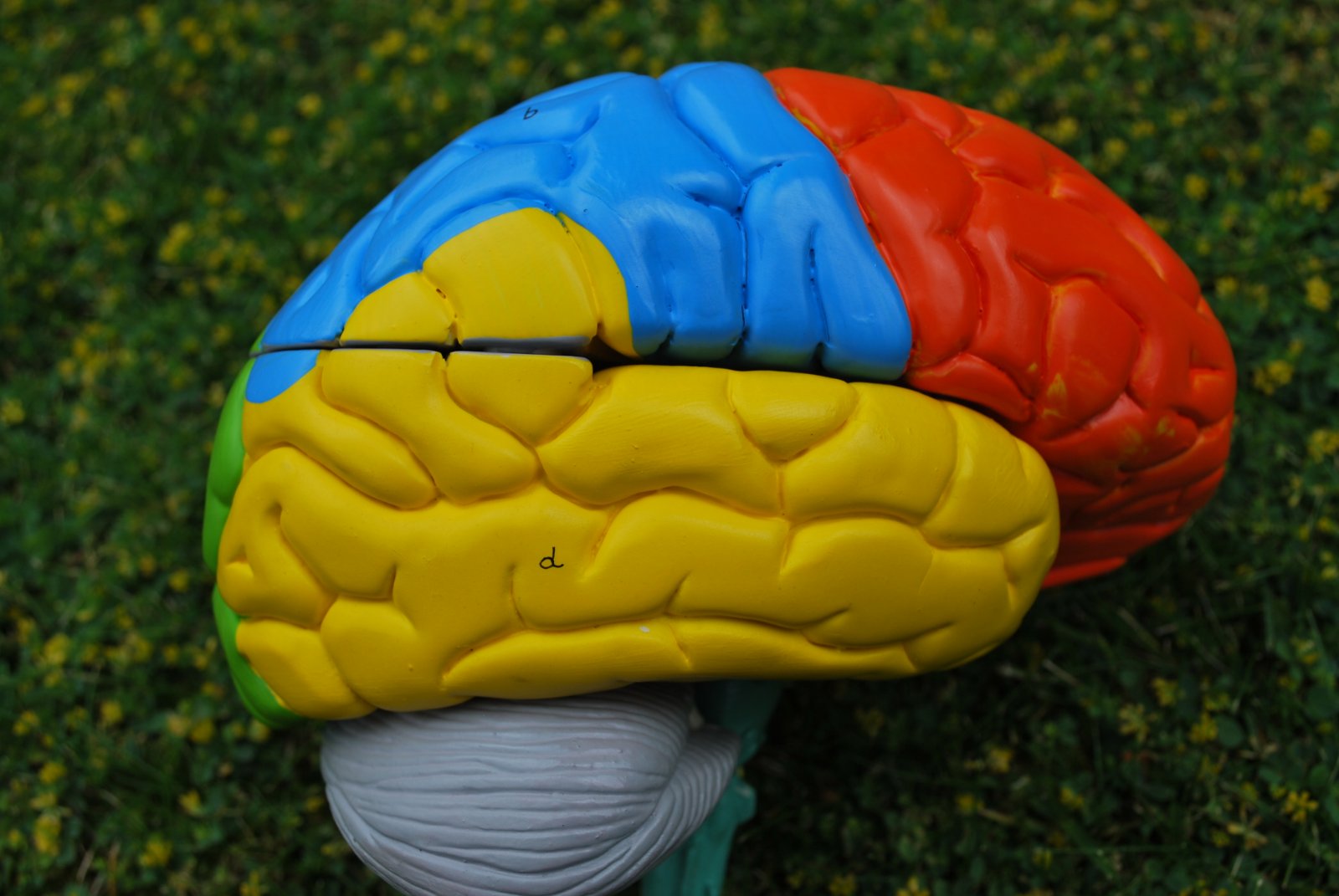
Photo: Brain model 12 by John Campbell, CC BY 2.0.

Author: Safe Ceremonies
User reviewed ceremonies