Indigenous traditions and respectful ceremony practice
Many of the practices offered at ceremony centers began with Indigenous peoples: ayahuasca in the Amazon, peyote in North America, San Pedro in the Andes, mushrooms in Mexico, Kambo in the western Amazon, iboga in Gabon. Outside interest has brought money and attention to some communities. It has also brought pressure on scarce plants and animals, patents on traditional knowledge, and ceremonies sold far from the people who kept them alive.
Respect here is more than a feeling. It shows up in which center you choose, what you ask, what you buy and where your money goes. This guide draws as far as possible on what Indigenous organizations themselves have said, and it isn’t the last word: the people best placed to speak for a tradition are the people it belongs to.
There’s no single “Indigenous tradition”
Marketing often talks about “ancient shamanic wisdom” as if it were one thing. In reality there are hundreds of distinct peoples, languages and practices, and they differ from each other as much as any two religions do. An Amazonian healer in Peru, a Native American Church leader in Oklahoma and a Bwiti initiate in Gabon belong to entirely different traditions. Some ceremonies offered today, such as smoking the secretion of the Sonoran Desert toad, have no established Indigenous history at all.
So the first respectful question is a specific one: whose tradition is this? A center that can name the people, the place and how its facilitators learned is giving you something you can check. One that only says “ancient” and “sacred” is giving you branding.
What Indigenous organizations have asked
On peyote, the position is clear. In 2020, the presidents of the four largest Native American Church organizations and the Indigenous Peyote Conservation Initiative asked decriminalization campaigns to leave peyote out of their efforts. They explained that peyote is already scarce for Native people, that it grows naturally in the US only in a small area of south Texas, and that wider demand could fuel illegal harvesting. They also asked non-Indigenous groups not to name the Native American Church or the Initiative as supporters without permission.
A 2021 open letter from the same organizations went further. It noted that peyote takes years to mature in the ground and faces overharvesting and habitat loss, and asked supporters to listen to and defer to Indigenous leadership, back existing Native-led conservation, respect traditional knowledge and accept that these processes take time.
On Kambo, a 2022 scientific review records that the Katukina people challenged the patenting of the frog secretion’s compounds in 2003 and demanded a share of any benefits. Between 2002 and 2018, eleven international patents drawing on that traditional knowledge were granted, all of them to countries in the northern hemisphere, while formal benefit-sharing remained unresolved.
Governments and international bodies have also weighed in. In 2008, Peru’s National Institute of Culture declared the traditional knowledge and uses of ayahuasca by native Amazonian communities part of the nation’s cultural heritage, explicitly distinguishing them from Western uses taken out of context, consumerist or commercial. The United Nations Declaration on the Rights of Indigenous Peoples, adopted in 2007, recognizes Indigenous peoples’ right to their traditional medicines and to the conservation of their vital medicinal plants and animals, and their right to maintain, control and protect their traditional knowledge, including knowledge of the properties of plants and animals.
Practical ways to show respect
Choose carefully
- Ask which tradition a ceremony comes from and how the people leading it learned. Listen for specifics: names of places, teachers and peoples.
- Ask how the center works with the community the tradition comes from. Are Indigenous people leading ceremonies, or only appearing in the photos? Are they paid fairly and treated as colleagues?
- Be cautious with centers that mix elements from many traditions into one package and call it all “ancient.”
Think about the plants and animals
- Don’t seek out peyote. Native American Church leaders have asked the public to leave it to the communities that depend on it.
- If a center uses toad secretion, ask where it comes from. Researchers describe the Sonoran Desert toad as under severe ecological pressure from demand and habitat loss.
- Iboga grows mostly in Gabon and has been under pressure from illegal harvesting. In 2022, Gabon completed the first phase of a legal export arrangement under the Nagoya Protocol, an international treaty on sharing the benefits of genetic resources with the communities they come from. Ask any iboga provider where its supply comes from.
- Avoid buying ceremonial materials online from unknown sellers. Kambo, for example, is sold online with no regulation, and nothing shows that the money reaches the peoples who developed its use.
Think about where your money goes
Ask what share of a retreat’s price reaches the community whose tradition it draws on. If you want to give something back, Indigenous-led and Indigenous-directed funds are one route. The Chacruna Institute’s Indigenous Reciprocity Initiative of the Americas, launched in 2021, passes donations to Indigenous partner organizations that decide for themselves how to use them, with no strings attached, and lets donors give directly to those partners. Our guide on reciprocity and sustainability looks at this in more detail.
Behave as a guest
- Ask before photographing or recording anything, especially songs, prayers and ceremony spaces. Some are not meant to be shared.
- Accept that some ceremonies are closed to outsiders, and that some knowledge won’t be explained to you.
- Be careful about what you do with what you learn. A retreat, or even several, doesn’t make someone a holder of a tradition, and leading ceremonies without that grounding can put other people at risk.
Respect doesn’t replace safety
Respecting a tradition doesn’t mean treating everyone who claims to represent it as beyond question. Indigenous and non-Indigenous facilitators alike can be careful or careless, honest or abusive. The Chacruna Institute’s community guide on sexual abuse in ayahuasca settings was written because abuse happens in these settings, by Indigenous and Western healers alike, who use the power of their role to exploit participants.
The same standards apply everywhere: health screening, consent, enough staff, a plan for emergencies and support afterwards. Asking about those things is not disrespectful. A healer or center that treats safety questions as an insult to the tradition has told you something important.
Respect also means not romanticizing. Indigenous communities are living communities with their own debates, disagreements and changes, not living museums. Treating people as symbols, however admiring, is its own way of not listening to them. The Chacruna guide also notes that some abusers take advantage of the romanticized ideas that visitors bring about healers.
Questions to ask a center
- Which people and tradition does this practice come from?
- Who leads the ceremonies, and how did they learn?
- What is your relationship with the community the tradition comes from?
- Where do the plants or other materials come from, and how are they harvested?
- How does the community benefit from what I’m paying?
- What are your rules about photos and recordings?
More guides
- Reciprocity and sustainability: the plants and the people behind them
- A short history of ceremonial plant use
- What peyote is, and why conservation matters
- Leadership, lineage and cult warning signs
- Grounded or “woo woo”? How to read a group’s beliefs
- Consent, touch and boundaries in ceremony
Reviews from past participants can show how a center talks about its tradition and treats the people behind it. You can search the Safe Ceremonies listings, including ayahuasca, San Pedro and huachuma and peyote and iboga listings.
Sources
- National Council of Native American Churches and Indigenous Peyote Conservation Initiative (2020). Native American statement regarding decriminalization of peyote. Chacruna. https://chacruna.net/native-american-statement-regarding-decriminalization-of-peyote/
- National Council of Native American Churches and Indigenous Peyote Conservation Initiative (2021). Open letter to the psychedelic movement regarding peyote in policy efforts and how to be an ally to Indigenous peoples of North America. Chacruna. https://chacruna.net/ipci_open_letter_psychedelic_movement_peyote_decriminalization/
- Nogueira TAC, Kaefer IL, Sartim MA, et al. (2022). The Amazonian kambô frog Phyllomedusa bicolor: current knowledge on biology, phylogeography, toxinology, ethnopharmacology and medical aspects. Frontiers in Pharmacology. https://pmc.ncbi.nlm.nih.gov/articles/PMC9582840/
- Labate BC (2008). Ayahuasca is declared cultural patrimony of Peru (with the text of National Directorial Resolution No. 836/INC). https://www.bialabate.net/blog-archive/news/ayahuasca-is-declared-cultural-patrimony-of-peru
- United Nations (2007). United Nations Declaration on the Rights of Indigenous Peoples, Articles 24 and 31. https://www.un.org/development/desa/indigenouspeoples/wp-content/uploads/sites/19/2018/11/UNDRIP_E_web.pdf
- Ermakova AO, Dunbar F, Rucker J, Johnson MW (2022). A narrative synthesis of research with 5-MeO-DMT. Journal of Psychopharmacology. https://pmc.ncbi.nlm.nih.gov/articles/PMC8902691/
- Lerer L, Reynolds E, Varia J, Blakolmer K, Lerer B (2023). Incilius alvarius cell-based synthesis of 5-methoxy-N,N-dimethyltryptamine. Psychedelic Medicine. https://pmc.ncbi.nlm.nih.gov/articles/PMC11658656/
- Lucid News (2022). Gabon takes first step toward legal export of sustainable iboga. https://www.lucid.news/gabon-takes-first-step-toward-legal-export-of-sustainable-iboga/
- Chacruna Institute. Indigenous Reciprocity Initiative of the Americas. https://chacruna.net/indigenous-reciprocity-initiative-of-the-americas/
- Sinclair E, Labate BC (2019). Ayahuasca community guide for the awareness of sexual abuse (Chacruna Institute), via MAPS. https://maps.org/news/bulletin/ayahuasca-community-guide-for-the-awareness-of-abuse-2019/
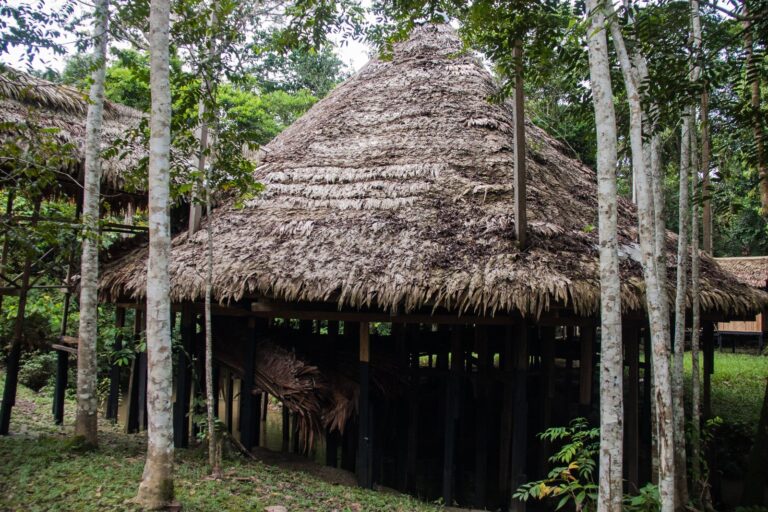
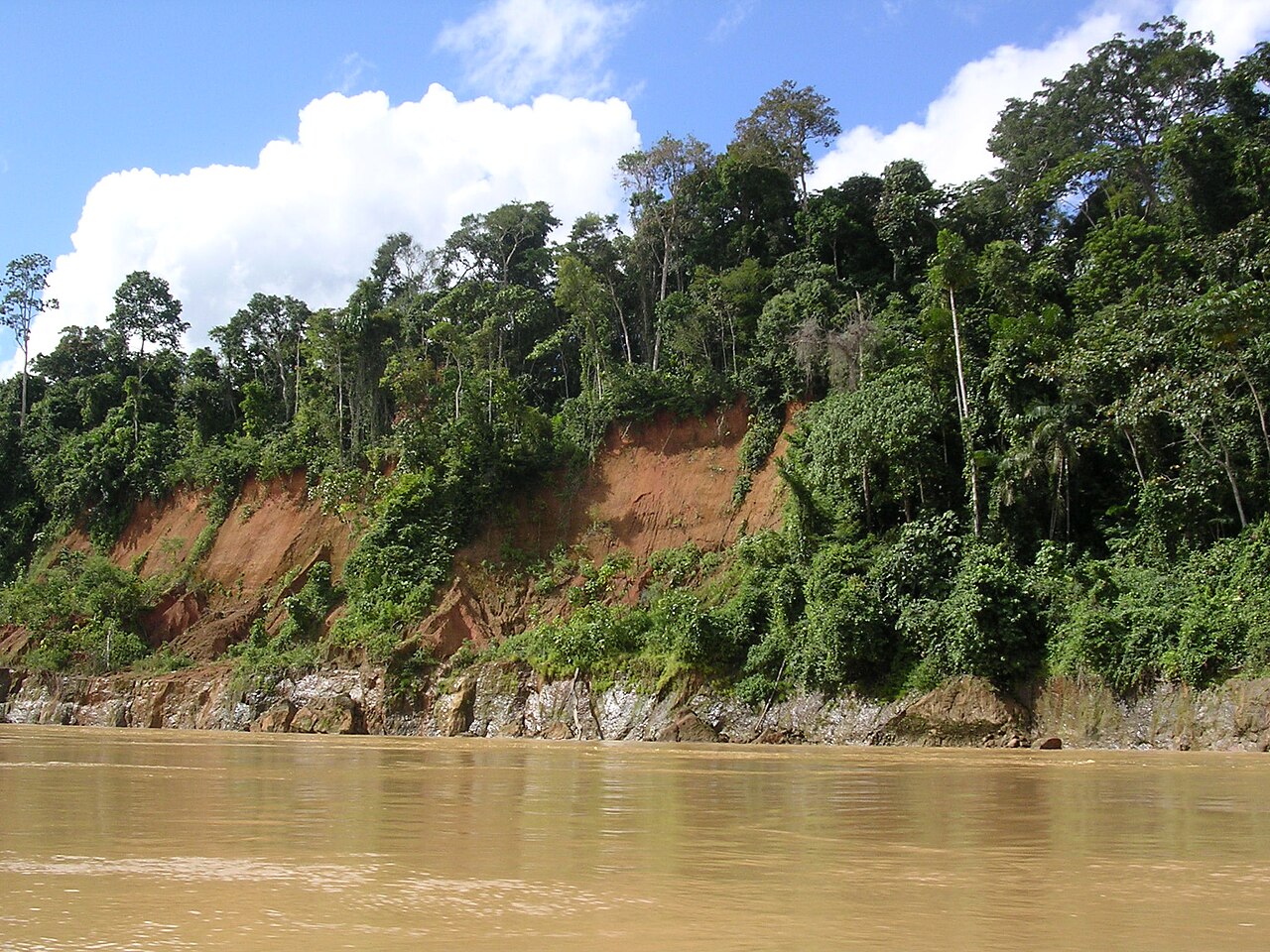
Photo: Rio Madre de Dios, Peru by Roosevelt Garcia, Public domain.

Author: Safe Ceremonies
User reviewed ceremonies