Ayahuasca traditions: Shipibo, Santo Daime, UDV and more
Read a few ayahuasca listings and you’ll see the same words again and again: Shipibo lineage, curandero, Santo Daime, UDV, church, traditional ceremony. They describe very different things. One group may sing hymns in Portuguese and dance for hours in uniform. Another may sit in the dark while a single healer sings. A third may combine pieces of several traditions with music of its own.
This guide is a plain overview of the traditions you’re most likely to meet and why it’s worth asking a group about the lineage it claims. It doesn’t rank them. Each is a living practice that belongs to real communities.
One brew, many peoples
Ayahuasca is a Quechua word usually translated as “vine of the soul” or “vine of the dead.” The brew goes by many other names, including yagé, caapi, natem, hoasca, daime and vegetal. A 2019 review in Current Neuropharmacology traces its use back to Indigenous peoples of the Amazon basin, and describes how it later spread to mestizo populations in Peru, Colombia and Ecuador and, from the 1930s, to new religions in Brazil.
When Peru declared ayahuasca part of its national cultural heritage in 2008, the resolution called ritual sessions one of the basic pillars of identity for Amazonian peoples. It also set out to tell that traditional use apart from what it called Western uses out of context, consumerist and commercial.
“Indigenous ayahuasca tradition” is not one thing. Many different Amazonian peoples use the brew, each with its own language, songs, roles and rules. What follows is one well documented example, not a template for all of them.
Indigenous practice: the Shipibo-Konibo as one example
The Shipibo-Konibo are an Indigenous people of about 45,000 who live mainly along the Ucayali River in eastern Peru. The ethnomusicologist Bernd Brabec de Mori, who spent several years among them, puts their fame with researchers and visitors down partly to how easy their region is to reach from the city of Pucallpa. Among themselves, he writes, their ayahuasca specialists call themselves médicos.
Song sits at the center of their healing. Brabec de Mori describes three kinds of song used in ayahuasca sessions: bewá and mashá, which grew out of other Shipibo song forms, and ikaro, a form he says arrived from the north with Kichwa, Kukama and Spanish-speaking settlers along with the use of ayahuasca itself. Each healer has a personal repertoire learned from teachers, often a father, grandfather or uncle, and through long training retreats. In 2016 Peru’s Ministry of Culture declared the íkaros of the Shipibo-Konibo-Xetebo people part of the nation’s cultural heritage.
In a session the healer drinks, waits for the brew to take effect and then sings. When visitors also drink, the healer leads the singing, and participants may hum or sing along if the healer allows it.
Practice has also changed. Brabec de Mori reports that sessions in which everyone present drinks, visitors included, moved to the center of things as tourism grew. He also argues that the popular idea of healers “singing” the people’s geometric kené designs began as a European researcher’s hypothesis in the 1980s and was later taken up by some Shipibo themselves. That is one researcher’s reading of a debated history. It still shows that living traditions change, and that “ancient and unchanged” is a claim you can ask about.
Mestizo vegetalismo
Much of what visitors to Peru meet comes from mestizo healers rather than from a single Indigenous people. In two 1984 papers, the anthropologist Luis Eduardo Luna described practitioners in and around Iquitos known as vegetalistas, or simply maestros. They work with certain plants they call doctores, or plant teachers. Their belief is that if they keep to isolation and a prescribed diet, these plants teach them how to diagnose and treat illness, usually through melodies called icaros.
Retreats that follow this style typically have one maestro leading the ceremony and singing icaros, and many ask participants to follow a diet, or dieta, before and after. Indigenous and mestizo practice have borrowed from each other for a long time (Brabec de Mori’s account of the ikaro is one example), so a center that calls itself Shipibo may also use mestizo forms, and the reverse.
The Brazilian ayahuasca religions
Brazil is the one place where non-Indigenous religions grew up around the brew. A 2006 report in Pesquisa FAPESP, the magazine of São Paulo’s research foundation, described three main ones, by then active in about 20 countries.
Santo Daime
Santo Daime was founded in the 1930s in Acre, in the Brazilian Amazon, by Raimundo Irineu Serra, a rubber tapper who had moved there from Maranhão. It calls the brew daime and its ceremonies “works.” Hymns are the heart of a work. Everyone sings them in unison from a set hymnal, to march, waltz and mazurka rhythms, usually with guitar and maracas.
Concentration works, on the 15th and 30th of each month, are seated, with long silences. Dance works mean hours of simple, synchronized steps, and festival works can last all night. Members wear uniforms, men and women are placed in separate areas, and participants are expected to avoid sex and alcohol for a time before and after. After the founder died in 1971 the movement split into several lines, and from the 1990s groups formed in Europe, Japan and the United States.
União do Vegetal (UDV)
The UDV was founded in 1961 on the border between Brazil and Bolivia by José Gabriel da Costa, known as Mestre Gabriel, another rubber tapper. It calls the tea hoasca or vegetal. The US Supreme Court described it in 2006 as a Christian Spiritist sect based in Brazil, with an American branch of about 130 people at the time.
Pesquisa FAPESP called the UDV the most austere of the three. A 2018 study of its members describes regular sessions twice a month, starting at 8 p.m. and finishing by midnight. Members come forward in order of rank to receive a cup from the mestre, the leader, and the session includes teachings, questions from participants, songs and periods of silence. The teachings are passed on partly through chamadas, chanted “calls” carrying the founder’s teaching. The church is led by a body of mestres and a council, and it is strict about alcohol, tobacco and other drugs.
Barquinha
Barquinha, “the little boat,” was founded in 1945 in the same part of Acre by a former follower of Santo Daime’s founder. Its members call themselves sailors of a sacred sea. It draws on Catholic saints and, more than the other two, on Afro-Brazilian umbanda, with an emphasis on freeing people from troubling spirits.
Newer churches and neo-shamanic groups
Outside South America, many ceremonies are run by groups that belong to none of these lineages. Researchers describe a wide spread of Indigenous-styled neo-shamanic ceremonies around the world, which keep the basic shape of a traditional ceremony while adding their own elements: guitar or didgeridoo, smudging, dance or readings. A study in Estonia found that ayahuasca use there happened mainly in neo-shamanic group ceremonies, and a study in Uruguay compared one such group with a Santo Daime church.
Some of these groups describe themselves as churches. Some are branches of Santo Daime or the UDV, and a Santo Daime church in Oregon won a federal court ruling in 2009. Others are new organizations founded by someone who trained with a healer in South America, or who has built a practice of their own. Neo-shamanic is a fair description rather than an insult. The ceremony is newer and more personal, so the person leading it matters even more.
The legal position of each kind of group varies and changes. Our guide on ayahuasca and US law describes the court cases.
Why the claimed lineage is worth asking about
A lineage tells you what you’re signing up for. Hours of hymns and dancing in uniform are a very different night from a quiet session with one healer. A lineage also tells you who the leader answers to. A mestre in an established church sits inside a structure with councils and rules. A solo facilitator may answer to nobody.
Lineage claims are also easy to make and hard to check. A Chacruna Institute guide on sexual abuse in ayahuasca settings notes that many Western people hold highly romanticized views of shamans, that in native communities ayahuasqueros are seen as ordinary men with varying degrees of healing talent, and that some healers have learned to take advantage of those romantic notions. Asking can help separate a real teaching relationship from a marketing line. It is also a question of respect, which our guide on Indigenous traditions and respectful practice covers in more depth.
How to ask respectfully
Ask out of curiosity, not as a test. Most people who lead ceremonies with care are glad to talk about where their practice comes from. Some questions that work:
- Who did you learn from, where, and for how long?
- Are you still in touch with your teacher or their community, and do they know about your work?
- Do you belong to a wider church or organization? Who do the leaders answer to?
- What will the ceremony be like: the music, how long it lasts, whether people sit or dance, and what you ask of participants beforehand?
- If you combine traditions, which parts come from where, and which are your own?
- Does any of what participants pay go back to the community you learned from?
Good answers are specific and modest, and “this part is my own approach” is a perfectly good answer. Some traditions keep certain ritual details private, and that deserves respect. Who taught someone, and where, shouldn’t be secret. Be wary of a vague “ancient lineage,” claims of being a chosen heir, or anger at the question itself. Our guide on leadership, lineage and cult warning signs goes into this further.
Lineage doesn’t replace safety
No tradition makes screening, sober staff, an emergency plan or aftercare optional. In the Global Ayahuasca Survey, people whose setting was one of the Brazilian churches reported fewer adverse effects than those in other settings. The authors caution that this may partly reflect differences between the people who choose each setting rather than the setting itself. Whatever the tradition, ask the same safety questions you would ask anywhere else.
More guides
- Indigenous traditions and respectful practice
- Leadership, lineage and cult warning signs
- A short history of ceremonial plant use
- What happens in an ayahuasca ceremony
- The ayahuasca diet (dieta) explained
- Reciprocity and sustainability: the plants and the people behind them
On Safe Ceremonies you can search the listings by place and read how past participants describe a group’s ceremonies, music and leaders. Start with the ayahuasca category, and look at integration and aftercare for support afterwards.
Sources
- Hamill J, Hallak J, Dursun SM, Baker G (2019). Ayahuasca: psychological and physiologic effects, pharmacology and potential uses in addiction and mental illness. Current Neuropharmacology, 17(2). https://pmc.ncbi.nlm.nih.gov/articles/PMC6343205/
- Labate BC (2008). Ayahuasca is declared cultural patrimony of Peru (with the text of National Directorial Resolution No. 836/INC). https://www.bialabate.net/blog-archive/news/ayahuasca-is-declared-cultural-patrimony-of-peru
- Brabec de Mori B (2012). Song patterns and sung designs: the invention of tradition among Amazonian Indians as a response to researchers’ inquiries. In Richter P (ed.), Musical Traditions: Discovery, Inquiry, Interpretation and Application. Budapest: HAS Research Centre for the Humanities. https://static.uni-graz.at/fileadmin/gewi-zentren/Sysmus/Dokumente/bbdm/2012_SPSD.pdf
- Actualidad Ambiental (22 June 2016). Ministerio de Cultura declaró a los íkaros como Patrimonio Cultural. https://www.actualidadambiental.pe/ministerio-de-cultura-declaro-a-los-ikaros-como-patrimonio-cultural/
- Luna LE (1984). The concept of plants as teachers among four mestizo shamans of Iquitos, northeastern Peru. Journal of Ethnopharmacology, 11(2). https://pubmed.ncbi.nlm.nih.gov/6492831/
- Luna LE (1984). The healing practices of a Peruvian shaman. Journal of Ethnopharmacology, 11(2). https://pubmed.ncbi.nlm.nih.gov/6387284/
- Pesquisa FAPESP (May 2006). The battle of the plants. https://revistapesquisa.fapesp.br/en/wp-json/wp/v2/posts/23696
- Hartogsohn I (2021). Set and setting in the Santo Daime. Frontiers in Pharmacology. https://pmc.ncbi.nlm.nih.gov/articles/PMC8129555/
- Barnard GW (2013). Santo Daime. World Religions and Spirituality Project. https://wrldrels.org/2016/10/08/santo-daime/
- Gonzales v. O Centro Espírita Beneficente União do Vegetal, 546 U.S. 418 (2006). Opinion of the Court, Legal Information Institute, Cornell Law School. https://www.law.cornell.edu/supct/html/04-1084.ZO.html
- Centro Espírita Beneficente União do Vegetal. The origin of the UDV. https://udv.org.br/en/udv-creation/the-origin-of-the-udv/
- Barbosa PCR, Tófoli LF, Bogenschutz MP, et al. (2018). Assessment of alcohol and tobacco use disorders among religious users of ayahuasca. Frontiers in Psychiatry, 9. https://www.frontiersin.org/articles/10.3389/fpsyt.2018.00136/full
- Edelman S, Bromley DG (2012). União do Vegetal (UDV). World Religions and Spirituality Project. https://wrldrels.org/?p=3345
- Perkins D, Schubert V, Simonová H, et al. (2021). Influence of context and setting on the mental health and wellbeing outcomes of ayahuasca drinkers: results of a large international survey. Frontiers in Pharmacology. https://pmc.ncbi.nlm.nih.gov/articles/PMC8097729/
- Kaasik H, Kreegipuu K (2020). Ayahuasca users in Estonia: ceremonial practices, subjective long-term effects, mental health, and quality of life. Journal of Psychoactive Drugs, 52(3). https://doi.org/10.1080/02791072.2020.1748773
- Apud I, Scuro J, Rodríguez L, et al. (2023). Ayahuasca, personality and acute psychological effects in neo-shamanic and religious settings in Uruguay. Journal of Psychoactive Drugs, 55(5). https://doi.org/10.1080/02791072.2023.2261017
- Sinclair E, Labate BC (2019). Ayahuasca community guide for the awareness of sexual abuse (Chacruna Institute), via MAPS. https://maps.org/news/bulletin/ayahuasca-community-guide-for-the-awareness-of-abuse-2019/
- Bouso JC, Andión Ó, Sarris JJ, et al. (2022). Adverse effects of ayahuasca: results from the Global Ayahuasca Survey. PLOS Global Public Health, 2(11). https://journals.plos.org/globalpublichealth/article?id=10.1371/journal.pgph.0000438
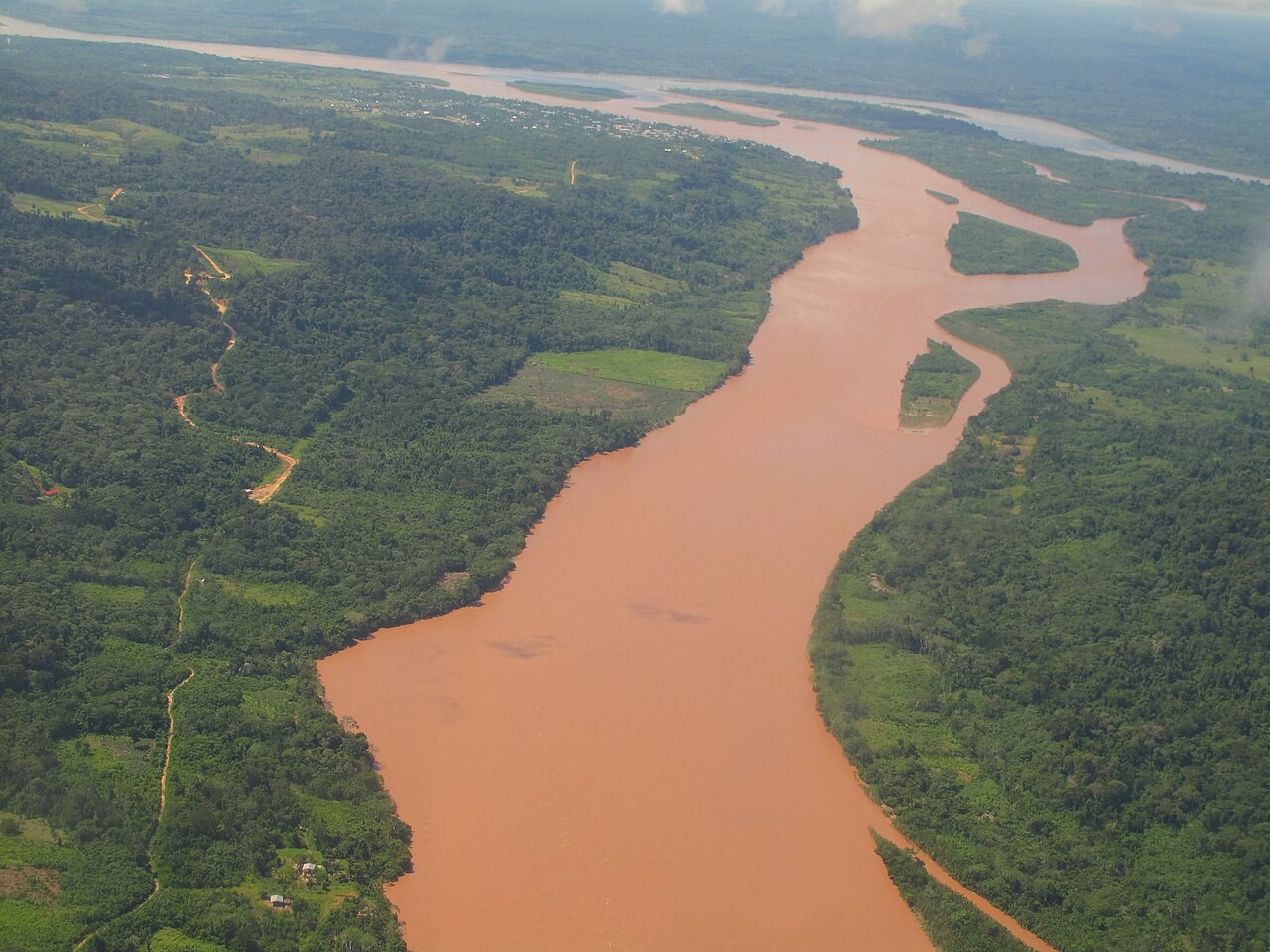
Photo: Atalaya (Peru) Rios Tambo+Ucayali by Maurice Chédel, Public domain.

Author: Safe Ceremonies
User reviewed ceremonies