What are iboga and ibogaine? Uses, research and heart risks
Iboga is a shrub from the forests of Central Africa. Ibogaine is the main psychoactive compound in its root bark. In Gabon, iboga is the sacrament of the Bwiti religion. Elsewhere, ibogaine has become known as a possible treatment for opioid addiction, offered in clinics outside the US and studied in a growing number of trials.
It also has a long record of sudden deaths, most of them linked to the heart. If you’re considering iboga or ibogaine, that is the first thing to understand. This guide covers what it is, where it comes from, what research has found and why medical screening is not optional. It doesn’t cover doses, sourcing or preparation.
The plant and the tradition
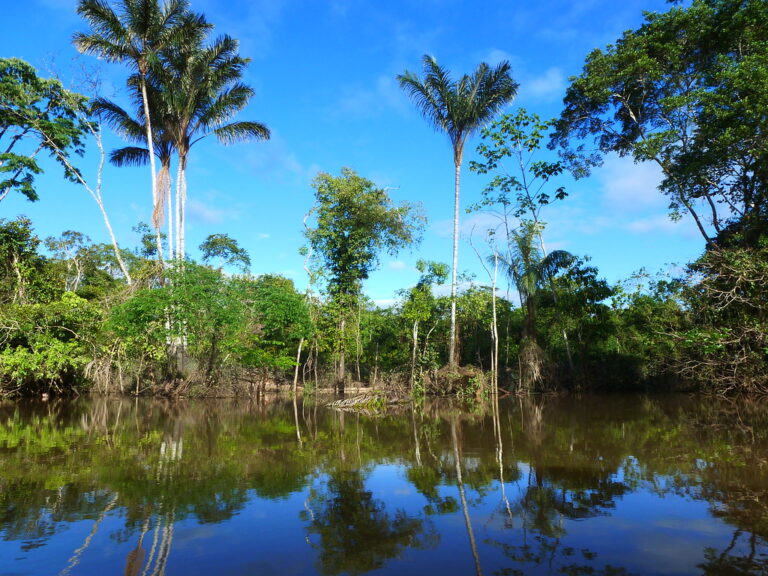
Tabernanthe iboga grows in the undergrowth of tropical forest in the Congo Basin. A 2021 article for the Chacruna Institute by the researcher Anya Ermakova describes its central place in Bwiti, a religion practiced mainly in Gabon, where the root bark is used in initiation ceremonies and in regular ritual gatherings.
A review in the journal Molecules describes two traditional uses. Small amounts were taken against fatigue, hunger and thirst. Much larger amounts are used in initiation rituals during religious ceremonies. A Bwiti initiation is a serious undertaking inside a community with its own teachers, rules and obligations. A week at a retreat that borrows the name is a different thing.
From Gabon to addiction clinics
Ibogaine attracted European medical interest in the early 1900s as a stimulant and a treatment for weakness and fatigue. From the 1960s it drew interest as a possible anti-addiction medicine, and that interest has continued since. It became a Schedule I drug in the United States, which has made research there difficult, and people seeking it have mostly gone to clinics abroad.
Ermakova notes that ibogaine can be made from Voacanga africana, a related African plant that is far more abundant than iboga, which takes pressure off wild iboga.
What it does in the body
The body turns ibogaine into noribogaine, a compound that lasts much longer. According to the Molecules review, ibogaine has a half-life in blood of about 4 to 7 hours, while noribogaine’s has been estimated at 28 to 49 hours. In practical terms, the drug and its effects on the heart are still present for days after the session ends.
The same review explains the main danger. Ibogaine blocks a type of potassium channel in heart cells known as hERG. That slows the heart’s electrical reset between beats, which shows up on an ECG as a longer “QT interval.” A long QT interval can tip into a chaotic, life-threatening rhythm called torsades de pointes. Ibogaine can also slow the heart rate, which adds to the risk.
Less serious effects are common too. In a 2024 Stanford study, every participant had temporary problems with balance and coordination, such as mild unsteadiness and a tremor when reaching for things, and these settled within a day. Headache and nausea were also common.
What research has found
- A 2022 systematic review of clinical studies found 24 studies covering 705 people, including only two randomized, double-blind controlled trials. The authors concluded that ibogaine reduced withdrawal symptoms and craving in substance use disorders, with possible benefits for depression and trauma. They also noted severe medical complications and deaths, and said safe use needs rigorous study designs in medical settings with monitoring and the ability to intervene.
- In a 2024 study published in Nature Medicine, Stanford researchers followed 30 US special operations veterans with traumatic brain injuries who chose treatment at a clinic in Mexico, where ibogaine was given with intravenous magnesium to help protect the heart. One month later, participants reported better day-to-day functioning and less PTSD, depression and anxiety, with no serious or unexpected adverse events. The study had no control group, and the authors said its homogeneous sample, mostly white men from elite military units, limits how far the findings apply.
- In June 2025 Texas passed a law committing up to $50 million in state money, to be matched by private partners, for FDA clinical trials of ibogaine for opioid use disorder and other conditions.
No regulator in the US or Europe has approved ibogaine as a medicine. The promising results so far come from medically screened, monitored settings.
Known risks
A 2012 study in the Journal of Forensic Sciences identified 19 people known to have died within 1.5 to 76 hours of taking ibogaine. In 12 of the 14 cases with enough post-mortem information, advanced pre-existing medical problems, mainly cardiovascular, explained or contributed to the death. The Molecules review lists further reports of severe QT prolongation in the years that followed.
The pattern points to who is most at risk and why screening matters:
- People with heart disease, a history of abnormal heart rhythm, or a family history of sudden cardiac death.
- People taking other medicines that also lengthen the QT interval. A number of everyday prescriptions can, so a full medication review is part of proper screening.
- People whose blood levels of potassium or magnesium are low. The Stanford team gave magnesium precisely because it helps protect against QT prolongation.
Because noribogaine lingers, the risk doesn’t end when the experience does. A setting that sends you home the morning after, with no heart monitoring over the following days, has not planned for that.
Conservation and Gabon’s rules
Global demand for iboga root bark has risen sharply. Ermakova’s article reports shortages in Gabon, especially in cities, with prices rising about tenfold in a decade, which hurts the communities that rely on the plant. Deforestation, logging and the decline of the wildlife that spreads iboga’s seeds add to the pressure.
Gabon declared iboga a strategic cultural heritage resource in 2000, is bound by the Nagoya Protocol on sharing benefits from genetic resources and traditional knowledge, and has prohibited unlicensed export. Asking a center where its iboga or ibogaine comes from is a fair question about both quality and ethics.
A note on the law
Ibogaine is a Schedule I controlled substance in the United States. Its status in other countries ranges from controlled to unregulated, and an unregulated clinic has no outside check on its medical standards. Laws change, and this is a description, not legal advice.
Questions worth asking a center
- Do you require an ECG and blood tests before treatment, and who reviews them?
- Which medicines do you ask about, and how long before treatment must they be stopped under my own doctor’s guidance?
- Is a doctor on site, is the heart monitored continuously, and is there a defibrillator and staff trained to use it?
- How long do you monitor people after the session, given that noribogaine stays in the body for days?
- How far is the nearest hospital with cardiac care, and how would I get there?
- Is this iboga root bark, an extract or ibogaine from another plant source, and how do you know its strength?
If a center can’t answer the first and third questions clearly, walk away.
More guides
- Medications and health conditions: who shouldn’t sit
- Health screening: why a good center asks about your health
- What a center’s emergency plan should cover
- Veterans and ceremonies: what to know
- Reciprocity and sustainability: the plants and the people behind them
Reviews can tell you whether a center’s medical promises held up in practice: who was on site, what checks were done and what happened when someone became unwell. You can search the Safe Ceremonies listings, including the peyote and iboga category and psychedelic-assisted therapy.
Sources
- Ermakova A (2021). Iboga conservation. Chacruna Institute. https://chacruna.net/iboga_conservation/
- Koenig X, Hilber K (2015). The anti-addiction drug ibogaine and the heart: a delicate relation. Molecules, 20(2). https://pmc.ncbi.nlm.nih.gov/articles/PMC4382526/
- Köck P, Froelich K, Walter M, Lang U, Dürsteler KM (2022). A systematic literature review of clinical trials and therapeutic applications of ibogaine. Journal of Substance Abuse Treatment, 138. https://pubmed.ncbi.nlm.nih.gov/35012793/
- Cherian KN, Keynan JN, Anker L, et al. (2024). Magnesium-ibogaine therapy in veterans with traumatic brain injuries. Nature Medicine, 30(2). https://pmc.ncbi.nlm.nih.gov/articles/PMC10878970/
- Alper KR, Stajić M, Gill JR (2012). Forensic study of 19 deaths after ibogaine use (title shortened). Journal of Forensic Sciences, 57(2), 398-412. https://pubmed.ncbi.nlm.nih.gov/22268458/
- Berghaus R (2025). Texas will invest $50 million into psychedelic research under new law. Texas Public Radio, via KUT. https://www.kut.org/politics/2025-06-12/texas-will-invest-50-million-into-psychedelic-research-under-new-law
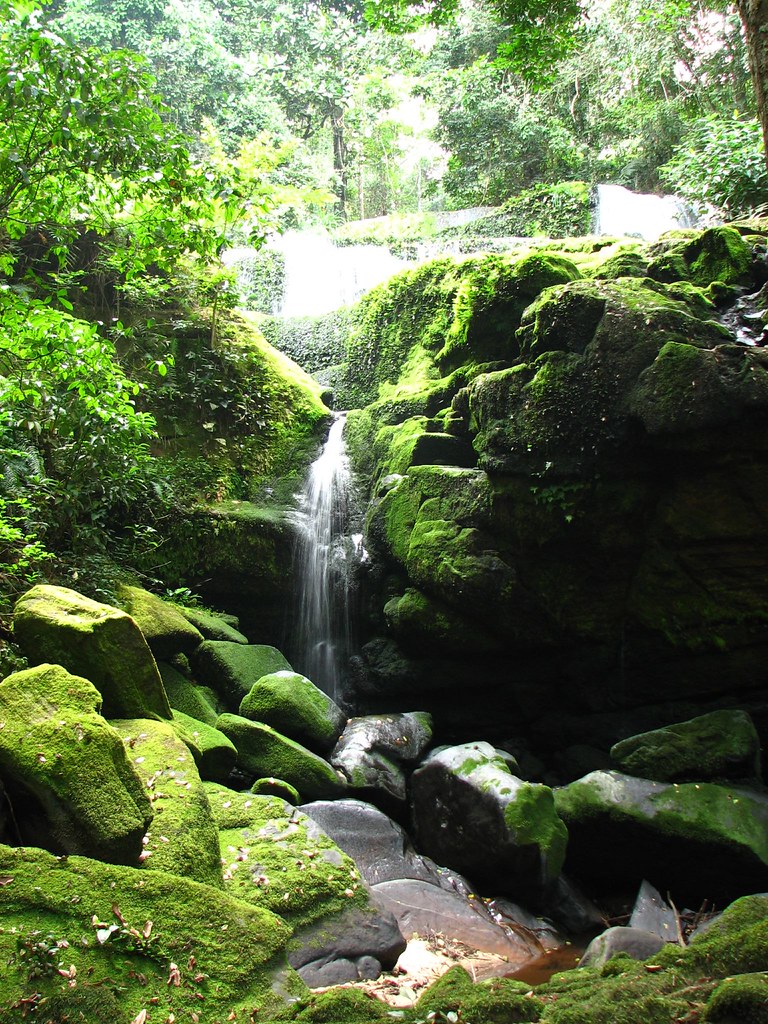
Photo: Waterfall in Ivindo National Park, Gabon by Jefe Le Gran, CC BY 2.0.

Author: Safe Ceremonies
User reviewed ceremonies