Ayahuasca in Mexico: what to know before you go
Ayahuasca is advertised to visitors on Mexico’s Caribbean coast, in and around Cancun, Playa del Carmen and Tulum. It’s a short flight from much of North America, and a retreat can look like one more part of a beach holiday. The UK government’s travel advice for Mexico says these ceremonies are “marketed to tourists as spiritual cleansing.” It also says: “Consumption is not regulated.”
This guide was checked on 2026-10-30. This is not legal or medical advice. We aren’t lawyers, Mexican law and its enforcement change, and you should read your own government’s latest travel advice before you go.
The legal position
You’ll see “legal in Mexico” in retreat advertising. The written law is less clear than that. On 30 October 2026 we read the federal texts published by Mexico’s Chamber of Deputies.
- Article 245 of the General Health Law, last amended 15 January 2026, lists DMT in Group I, the group it describes as having little or no therapeutic value and as a serious public health problem. The same group lists mescaline and peyote, and psilocybin and hallucinogenic mushrooms.
- Article 248 prohibits every act named in article 247 for Group I substances. Those acts include possession, transport, supply and use. Article 249 allows the Health Ministry to authorize acquisition for scientific research.
- Article 194 of the Federal Penal Code, last amended 13 March 2026, sets 10 to 25 years in prison for transporting, selling or supplying a narcotic without authorization, even for free, and for bringing one into or out of the country. Article 195 bis sets 4 years to 7 years 6 months for possession without that purpose.
- Article 195 bis also says federal prosecutors won’t proceed against someone holding peyote or hallucinogenic mushrooms, where the amount and circumstances suggest use in the ceremonies and customs of Indigenous and Afro-Mexican peoples and communities, as recognized by their own authorities.
That exception doesn’t name ayahuasca or DMT. We searched both texts and found neither the word ayahuasca nor the two plants usually used to brew it. Whether the brew counts as DMT under these articles is the disputed point. Lawyers at ICEERS, a nonprofit that defends people prosecuted over ayahuasca, wrote in 2023 that it isn’t a controlled substance under the General Health Law. ICEERS’s legal overview, published in 2019, lists Mexico among countries whose law doesn’t explicitly address the brew, which it says creates uncertainty in enforcement.
A 2024 Mexico News Daily feature says article 195 of the penal code makes mushrooms and ayahuasca legal for traditional ceremonies. We didn’t find that in the text we read. If a retreat says it’s legal, ask under which article, and whether that covers a paying visitor.
What has happened in court
ICEERS reported in March 2023 that a Mexico City court acquitted an Indigenous healer from the Peruvian Amazon, who had been held since March 2022 after traveling with ayahuasca and faced 10 to 25 years. ICEERS’s lawyers worked on the case. It reported seven more people still in pretrial detention over ayahuasca at borders at that time. We couldn’t confirm how their cases ended. One acquittal doesn’t amount to a permit.
On mushrooms, a Supreme Court chamber rejected a draft ruling in August 2025 that would have let one activist use them, and sent the matter to the incoming justices, according to an Associated Press report. We found no final ruling. Infobae reported in April 2026 that psilocybin remained prohibited under the General Health Law.
What that means for you
We found no federal license for ceremony retreats, so nobody official is checking the one you’re considering. The UK advice warns that drug convictions can carry up to 25 years, and that DMT and 5-MeO-DMT are illegal in the UK and many other countries. Your home country’s law applies when you return. Never carry the brew across a border, and never post it.
Tourist-town operators
The people selling ceremonies in resort towns range from long-established groups to someone you met that afternoon. A 2024 Mexico News Daily feature described “self-appointed ‘shamans’ from across the world” running retreats in Mexico. VICE reported in 2021 that healers approached travelers on Tulum’s beaches offering bufo sessions, and that critics saw little preparation or aftercare in some of them. That report is about bufo and it’s several years old, but the pattern is one to watch for.
Some habits of the tourist trade work against you.
- Booking sites list very short packages in the Tulum area, including one-night stays. Ask how you could be screened and prepared in that time.
- A ceremony sold through a hotel, a beach club or a friendly stranger may tell you little about who is running it. Ask for the name of the person and the organization responsible.
- An operator may be based abroad. In a 2026 JAMA Network Open study of 49 organizations advertising psychedelic retreats, only two listed Mexico as their base. Ask who runs it, from which country, and how long they’ve worked at this address.
- The word “Tulum” or “Cancun” in an advert may mean a rented property well outside town. Get the actual location before you pay.
If someone offers you a ceremony on the beach or in a bar, say no. You can’t check anything in that moment. The UK advice also says intoxicated travelers have been assaulted and robbed, and it notes reports of sexual assaults during these ceremonies.
How far you are from emergency care
The UK advice says jungle retreats are often far from medical facilities. Some have basic medical services and some have none, and some have no plan for getting you to emergency care. It also says services outside state capitals and larger urban areas may be limited, including ambulances and basic equipment. The US Centers for Disease Control and Prevention says emergency care outside urban areas may be limited, and that trauma centers are uncommon.
Tulum shows how this can play out, according to local reporting.
- Riviera Maya News reported in September 2025 that the town’s only public hospital is meant for people without social security, and that residents with insurance described being sent to Playa del Carmen, about 65 km away.
- The Tulum Times reported in July 2026 that Tulum has lacked a high-specialty hospital. Work had just begun on a private one, and local coverage expected it to open in December 2026. Check whether it has.
- The Tulum Times reported in September 2025 that the town had opened its first municipal ambulance base, with three ambulances. Before that, help could take anywhere from about five to forty minutes depending on where you were.
Cancun is bigger and has hospitals that treat international medical tourists, but that only helps if you can reach one. Dial 911 for emergencies, according to UK and Canadian government advice. Then work it out for your own retreat: how long is the drive at night, who drives, and what can staff do while you wait?
The Canadian government says private hospitals are generally expensive and may want payment in advance by credit card or bank transfer. It adds that medical evacuation can be very expensive. Many travel policies don’t cover events after taking recreational drugs, according to UK guidance, so read yours and ask the insurer about a ceremony before you rely on it.
Who holds medical responsibility
Get a clear answer to this before you pay. In the JAMA study, 21 of the 49 organizations worked with at least one licensed health care professional, and 32 had someone with licensed or emergency training on site at least occasionally. So “we have a doctor” could mean someone on call, someone who once read the forms, or someone awake in the room.
- Who decides that someone needs a hospital?
- Who is the medical person? Give me a full name and qualification. Mexico’s Education Ministry has a public lookup for professional licenses, the Consulta de Cédulas Profesionales, though a license issued abroad won’t appear there.
- Who pays for the ambulance and hospital, and who goes with me if I’m taken there?
- Does the retreat carry any insurance? What does your waiver say I’m giving up?
Read any waiver at home, before you fly.
Screening
Screening matters most when you’re far from a hospital. Some medicines and health conditions make ayahuasca dangerous, and our guide to medications and health conditions covers them. In the JAMA study, all 49 organizations collected medical histories, 36 excluded people with certain conditions, and 19 offered more than one psychedelic. Screening for one substance doesn’t cover the next.
In the Global Ayahuasca Survey, an online survey of people who chose to answer, 2.3 percent said they needed medical attention for a physical effect, and about 12 percent said they needed professional support for a mental health effect. A small risk still calls for a plan when the nearest hospital is an hour away.
Finish your screening before you fly, so that a no doesn’t cost you the trip. Ask who reads your form, and what you get back if they turn you down.
Travel practicalities
- The UK advice says to be very cautious after dark in the downtown areas of Cancun, Tulum and Playa del Carmen.
- Don’t leave food or drinks unattended. The UK advice says criminals have robbed or assaulted travelers after drugging them.
- The UK advice says some beaches are unpatrolled and sea conditions can be unpredictable. Stay out of the sea and cenotes in the hours after a ceremony.
- Prescriptions from abroad have to be translated into Spanish, and pharmacies may still refuse them, according to the UK advice. Bring enough of any regular medicine.
- The CDC lists malaria risk in Campeche, Chiapas and southern Chihuahua, and warns of dengue. Talk to a travel clinic, and tell the retreat about anything you’re prescribed for the trip.
Questions to ask a Mexican retreat
- Who runs this retreat, as a named person and organization, and how long have you worked at this address?
- Which substances do you serve, and what do you say is the legal basis for each one here?
- Where does your ayahuasca come from, and who brings it to you?
- Who reviews my health form, and what are their qualifications?
- Who is medically trained, and will they be present and sober all night?
- Which hospital would you use, and have you ever made that trip at night?
- How many participants are in a ceremony, and how many staff?
- What is your refund policy if I’m screened out, if I leave early, or if the retreat is closed before my dates?
Write the answers down and compare them with what past participants say in their reviews.
Respect and reciprocity
The plants used for ayahuasca come from the Amazon, as our guide to ayahuasca traditions explains, so a retreat in Mexico has brought them from elsewhere. ICEERS’s lawyers wrote in 2023 that eight people had been arrested for allegedly bringing narcotics into Mexico, among them Indigenous people from Colombia, Peru and Brazil. It’s fair to ask who carries that risk, and whether the communities the brew comes from see any benefit. Our guide to reciprocity and sustainability covers this.
More guides
- Traveling abroad for a ceremony: a safety checklist
- Plant medicine laws around the world: a plain overview
- What a center’s emergency plan should cover
- Ayahuasca in Costa Rica: what to know before you go
- Bufo and 5-MeO-DMT: what to know before you go
- Health screening: why a good center asks about your health
Independent reviews help most where nobody official is checking. You can search the Safe Ceremonies listings and read past participants’ reviews in categories such as ayahuasca and bufo and 5-MeO-DMT.
Sources
- Cámara de Diputados, Mexico. Ley General de Salud (articles 245, 247, 248, 249), last amended DOF 15 January 2026. Checked 30 October 2026. https://www.diputados.gob.mx/LeyesBiblio/pdf/LGS.pdf
- Cámara de Diputados, Mexico. Código Penal Federal (articles 193, 194, 195, 195 bis), last amended DOF 13 March 2026. Checked 30 October 2026. https://www.diputados.gob.mx/LeyesBiblio/pdf/CPF.pdf
- ICEERS (2019). Ayahuasca and the law. https://www.iceers.org/ayahuasca-legal-status/
- Rebollo N, Olamendi JA (2023). A historic opportunity to decolonize plant medicine trials in Mexico. ICEERS. https://www.iceers.org/opportunity-decolonize-plant-medicine-trials-mexico
- ICEERS (7 March 2023). Juicio histórico en México (press note). https://www.iceers.org/wp-content/uploads/2020/05/Nota-de-prensa-Juicio-historico-en-Mexico.pdf
- Associated Press via Cadena 3 (13 August 2025). La Suprema Corte de México remite a nuevos ministros el caso de los hongos alucinógenos. https://www.cadena3.com/noticia/mundo/la-suprema-corte-de-mexico-remite-a-nuevos-ministros-el-caso-de-los-hongos-alucinogenos_454169
- Infobae (12 April 2026). Psilocibina: qué es, cuáles son sus beneficios en salud mental y es legal consumirla en México en 2026. https://www.infobae.com/mexico/2026/04/12/psilocibina-que-es-cuales-son-sus-beneficios-en-salud-mental-y-es-legal-consumirla-en-mexico-en-2026/
- Weekes H (2024). Exploring psychedelic tourism and tradition in Mexico. Mexico News Daily. https://mexiconewsdaily.com/wellness/exploring-psychedelic-tourism-and-tradition-in-mexico/
- Busby M (2021). Tourists are now smoking toad venom in Mexico’s hipster town Tulum. VICE World News. https://vice.com/en/article/wx53e5/tourists-are-now-smoking-toad-venom-in-mexicos-hipster-town-tulum
- UK Foreign, Commonwealth & Development Office. Mexico travel advice: safety and security. Checked 30 October 2026. https://www.gov.uk/foreign-travel-advice/mexico/safety-and-security
- UK Foreign, Commonwealth & Development Office. Mexico travel advice: health. Checked 30 October 2026. https://www.gov.uk/foreign-travel-advice/mexico/health
- UK Foreign, Commonwealth & Development Office. Foreign travel insurance. https://www.gov.uk/guidance/foreign-travel-insurance
- Government of Canada. Travel advice and advisories: Mexico. Updated 19 October 2026, checked 30 October 2026. https://travel.gc.ca/destinations/mexico
- Centers for Disease Control and Prevention. Travelers’ health: Mexico. https://wwwnc.cdc.gov/travel/destinations/traveler/none/mexico
- Riviera Maya News (28 September 2025). Lack of public hospitals in Tulum forces population to turn to private services. https://www.rivieramayanews.mx/lack-of-public-hospitals-in-tulum-forces-population-to-turn-to-private-services/
- The Tulum Times (23 July 2026). Tulum full hospital, 24-hour emergency care. https://tulumtimes.com/tulum-full-hospital-24-hour-emergency-care
- The Tulum Times (5 September 2025). Tulum opens first emergency ambulance base. https://tulumtimes.com/tulum-opens-first-emergency-ambulance-base
- McGuire AL, Neitzke-Spruill L, Robinson JO, et al. (2026). Reported safety practices of publicly advertised psychedelic retreats. JAMA Network Open. https://jamanetwork.com/journals/jamanetworkopen/fullarticle/10.1001/jamanetworkopen.2025.52505
- Bouso JC, Andión Ó, Sarris JJ, et al. (2022). Adverse effects of ayahuasca: results from the Global Ayahuasca Survey. PLOS Global Public Health, 2(11). https://journals.plos.org/globalpublichealth/article?id=10.1371/journal.pgph.0000438
- Secretaría de Educación Pública, Mexico. Consulta de Cédulas Profesionales. https://cedulaprofesional.sep.gob.mx
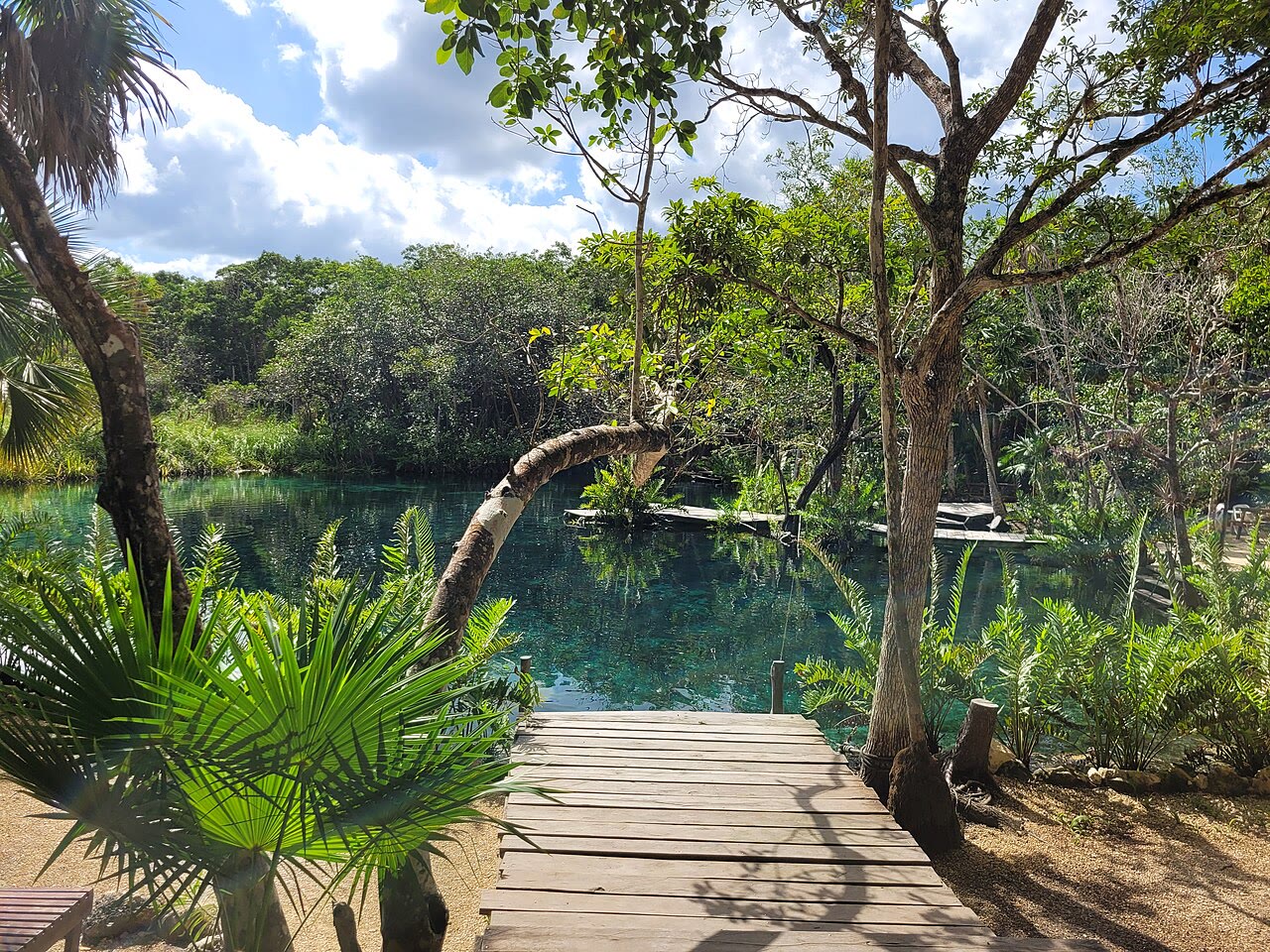
Photo: Cenote Corazon Paraiso, Tulum QR 2023 by Erik Cleves Kristensen, CC BY 2.0.

Author: Safe Ceremonies
User reviewed ceremonies