Finding a bufo ceremony near you: how to check it’s safe
Search for “bufo ceremony near me” and you’ll find retreat pages, event listings and facilitators passing through your city for a weekend. Most of them look alike. They describe a transforming experience and say very little about who will be next to you when you can’t look after yourself.
That is the question that matters, and it matters more with bufo than with most ceremonies. The effects arrive within minutes and can leave you unaware of the room or your own body, so everything depends on people you have only just met. This guide is about how to check those people before you agree. For what bufo is, what a session involves and the physical risks, read Bufo and 5-MeO-DMT: what to know before you go first. This guide won’t repeat it, and it doesn’t cover amounts or how to get the substance.
Laws differ by country and state, and they change. We can’t give legal advice. Our guides on plant medicine laws around the world and traveling abroad for a ceremony are the place to start.
Why you have to do the checking yourself
Nobody does it for you. The Psychedelic Society, a UK organization that publishes advice on finding a guide, says there is no standardized training or industry standard for psychedelic guides. A certificate tells you someone finished a course. You still need to ask what the course covered.
Be careful, too, with claims that “the science shows it’s safe.” A 2024 systematic review of clinical trials of 5-MeO-DMT found no serious adverse events among 78 participants. Those people were taking part in research. Its authors point out that trials recruit highly selected people under controlled conditions, and the review left out ceremonies and other non-clinical settings altogether. In one trial, vital signs were monitored continuously. Few people running a ceremony do anything like that, so those results don’t carry over to a rented room.
Staffing: who is beside you
Fireside Project warns that 5-MeO-DMT can cause loss of consciousness, which can lead to injury or to asphyxiation, and that asphyxiation can be fatal. A 2022 review of the research also lists vomiting and memory blackouts among the reported effects. Put those together and you can see why someone has to stay within reach of you, awake, sober and paying attention.
There is no agreed staffing number for bufo. Two reference points can help you judge what you’re told:
- The Psychedelic Society lists more than four people with one facilitator as a red flag, for psychedelic groups in general.
- Safety guidelines for research from Johns Hopkins scientists recommend at least two monitors for each session, so that one is always in the room, with a physician available. They were written for research with other psychedelics, and few ceremonies will match them.
Ask these questions, and listen for the kind of answer you get:
“Who will be next to me, and what else will they be doing?”
A good answer names a person and says they will stay beside you from before you inhale until you are sitting up and talking. Be wary if the facilitator is also preparing the next person, playing music and looking after someone else across the room.
“How many people do you serve in a day, and how do you keep them apart?”
Sessions are short, which makes it tempting to run people through quickly. Ask how many are booked, how much time each one gets, and where people go to recover. If you’d be lying next to someone else in the middle of their session, ask who is watching each of you.
“What happens if two people need help at once?”
There is one honest way to answer this: a second sober, trained person who is there all the time. If the answer is that it has never happened, you’ve learned that they haven’t planned for it.
“Who is trained in CPR and first aid, and when did they last renew?”
Our guide to emergency plans treats a current certificate as the minimum for any strong substance. Ask to see it. Someone who has really kept it up won’t mind. In a 2026 study of 49 organizations advertising psychedelic retreats, 32 had trained personnel on site at least some of the time. That leaves plenty that didn’t. Our guide to group size and staffing has more on this.
Screening: what a real one looks like
The Psychedelic Society calls an intake form or screening process absolutely necessary and treats its absence as a warning sign. A form on its own isn’t enough. Someone has to read it, understand it and be willing to say no.
Look for these signs that screening is real:
- It happens before you pay anything you can’t get back.
- You speak to a person, and they follow up on your answers.
- They ask about every medicine and supplement you take. The 2022 review says MAO inhibitors and lithium should be avoided with 5-MeO-DMT.
- They ask what else you’ve taken lately, and specifically about ayahuasca.
- They ask about your heart, seizures, and your own and your family’s mental health history.
- They can name people they have turned away, and why, without giving identities.
If you take a prescribed medicine and they tell you to stop it, take that to the person who prescribed it. Our guide to medications and health conditions explains why. The study of retreats found that most asked people to stop medicines first, and only 7 of the 49 said they consulted medical professionals about how to do it.
Watch for this one at retreats that offer several substances. The most serious reports involve 5-MeO-DMT combined with ayahuasca or another MAO inhibitor. If bufo comes as an add-on during an ayahuasca week, ask how far apart they are and what that gap is based on. We couldn’t find a research-based figure, so someone who gives you a confident number should be able to say where it came from. A place that can’t explain its timing, or that adds bufo on the day because you feel ready, hasn’t done this work.
Time matters too. Fireside Project says a good facilitator’s preparation lasts from weeks to months. Being offered a session for next Saturday with no preparation, because a spot opened up, is a poor sign.
Emergency readiness
Ask them to walk you through a bad outcome step by step, starting from the moment you stop responding normally. You’re listening for specifics:
- How they position someone who is vomiting and barely aware, and who is responsible for doing it.
- At what point they call for an ambulance, and whether anyone has ever told them not to.
- The exact address, whether emergency services can reach it at night, and how long they would take.
- Whether there is phone signal, and who speaks the local language.
- Who tells the paramedics what you took, and whether they will say so honestly.
- Where your emergency contact and medical details are kept.
The space matters as well. Fireside Project advises being somewhere with padding and no nearby hazards, and asking whether the facilitators have a protocol to keep your body safe. If you can, look at the room or ask for photos. You want a low, soft surface with clear floor around it, away from stairs, water and furniture with sharp edges.
A private home or a rented house isn’t automatically a bad setting. It does mean you should ask more of these questions, because nothing about the place was designed for this.
What’s in it, and where it came from
Ask whether they use toad secretion or synthetic 5-MeO-DMT, how they know what’s in it and how strong it is, and how they decide how much to give you. The 2022 review notes that reports of toxicity generally involved toad secretions, other drugs or MAO inhibitors. If the answer is that the medicine is pure because of who gave it to them, you’ve learned they can’t actually tell you.
Ask about tradition as well, if it’s part of the pitch. The same review says there is no conclusive evidence of traditional psychoactive use of the toad, and that its use became popular after a booklet published in 1984. Reporting in Undark says practitioners market it as a traditional pan-Indigenous remedy even though no historical use by tribes in Mexico or the US is documented. A facilitator can have years of real experience without an ancient lineage. Our guide on leadership and lineage explains what to do with a claim you can’t check.
The toad
National Geographic reported in 2023 that the Sonoran Desert toad isn’t listed as endangered but is increasingly caught by poachers, locals and visiting fans. It also faces climate change, human expansion and pollution. Undark’s 2021 report says the toad is listed as threatened in New Mexico, is believed gone from California and is still considered abundant in Arizona, with no federal listing in the US or Mexico. Officials quoted there say no standard monitoring exists, so a decline could go unnoticed for about a decade.
Milking doesn’t physically injure the toad, according to National Geographic, but it does stress the animal, and a conservationist quoted there doubts that a milked toad finds its way home. The physician Andrew Weil told the magazine there is very little difference between the natural and synthetic forms. Fireside Project’s safety advice is blunt: go synthetic.
So if a facilitator says they use the toad, it’s fair to ask why, and where theirs came from. Anyone who has thought about this will have an answer.
Red flags specific to bufo
- You’d be alone with one facilitator in a private place and nobody else knows where you are.
- Sessions are advertised at festivals, parties or events, with little or no time for screening.
- The price is per hit, or you’re encouraged to take more than you agreed to.
- Claims that it cures depression, addiction or trauma in one session.
- “You can’t be harmed, because you’re only leaving your body.”
- Someone who was unresponsive for a long time is described as having gone deep.
- Nobody can tell you who to call next week.
Our guide to red flags covers the general ones. Some things can feel off and aren’t warning signs. A slow process, a lot of questions, or being told to wait or turned down are usually signs of care.
After they leave town
Traveling facilitators are common with bufo, so ask who you can contact in the weeks afterwards, and how. Fireside Project suggests at least three to seven low-stress days after the experience. It also says that re-activations, moments when part of the experience seems to return, happen in about 15 to 20% of participants. You may want more than a text from someone now in another state. Set up your own support first, using our guide to finding integration support.
Fireside Project’s free psychedelic peer support line, 62-FIRESIDE (623-473-7433), takes calls and texts from 11 a.m. to 11 p.m. Pacific time every day. In the US, the 988 Suicide & Crisis Lifeline takes calls and texts at 988. In an emergency, call your local emergency number.
A short plan
- Read what to know about bufo, and check your medicines with a doctor or pharmacist.
- Search the listings for your state or country, and shortlist groups with reviews you can read.
- Send the questions above by email, so that you have the answers in writing.
- Ask to speak with someone who has sat with them. Our guide to reading reviews shows what to look for.
- Tell someone you trust where you’ll be and when you’ll check in.
More guides
- Bufo and 5-MeO-DMT: what to know before you go
- Kambo vs bufo: two “frog medicines” that often get confused
- Ceremony group size and staffing: how many is too many
- What a center’s emergency plan should cover
- Questions to ask before you book
- Reciprocity and sustainability: the plants and the people behind them
You can search the Safe Ceremonies listings by state or country and read what past participants say about staffing and aftercare. Start with bufo and 5-MeO-DMT and, for support closer to home, integration and aftercare.
Sources
- Ermakova AO, Dunbar F, Rucker J, Johnson MW (2022). A narrative synthesis of research with 5-MeO-DMT. Journal of Psychopharmacology. https://pmc.ncbi.nlm.nih.gov/articles/PMC8902691/
- Kwaśny A, Wilkowska A, Cubała WJ (2024). Short-term safety and tolerability profile of 5-methoxy-N,N-dimethyltryptamine in human subjects: a systematic review of clinical trials. Frontiers in Psychiatry. https://www.frontiersin.org/articles/10.3389/fpsyt.2024.1477996/full
- McGuire AL, Neitzke-Spruill L, Robinson JO, et al. (2026). Reported safety practices of publicly advertised psychedelic retreats. JAMA Network Open. https://pmc.ncbi.nlm.nih.gov/articles/PMC12780929/
- Johnson MW, Richards WA, Griffiths RR (2008). Human hallucinogen research: guidelines for safety. Journal of Psychopharmacology. https://pmc.ncbi.nlm.nih.gov/articles/PMC3056407/
- Fireside Project. Psychedelic citizenship: 10 safety practices for 5-MeO-DMT. https://firesideproject.org/blog/psychedelic-citizenship-10-safety-practices-for-5-meo-dmt
- The Psychedelic Society. Finding psychedelic facilitation. https://psychedelicsociety.org.uk/harm-reduction/facilitation
- Peterson K (2023). This toad can get you high, really, really high. Poachers have taken notice. National Geographic. https://www.nationalgeographic.com/animals/article/sonoran-desert-toad-dmt-psychedelic-movement
- Kutz J, High Country News (2021). A threatened toad’s hallucinogenic secretions are in high demand. Undark. https://undark.org/2021/06/08/endangered-toads-hallucinogenic-secretions-are-in-high-demand/
- Fireside Project, psychedelic peer support line. https://firesideproject.org/
- 988 Suicide & Crisis Lifeline. https://988lifeline.org/
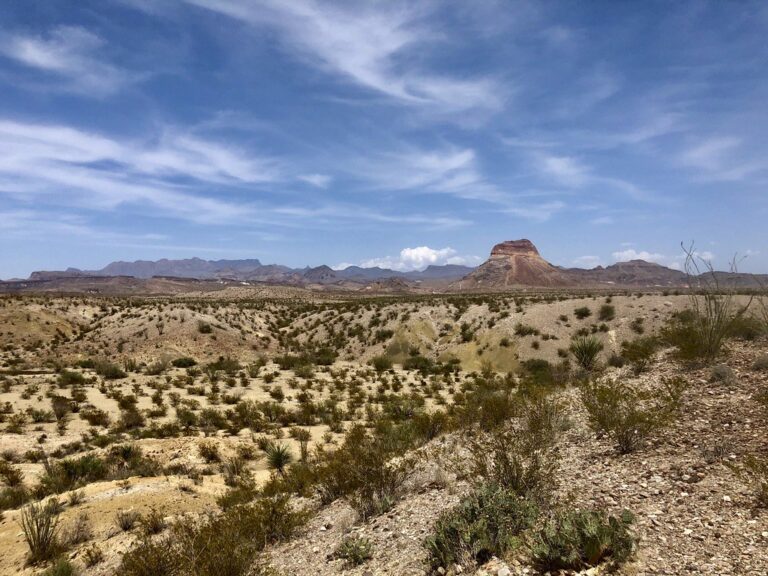
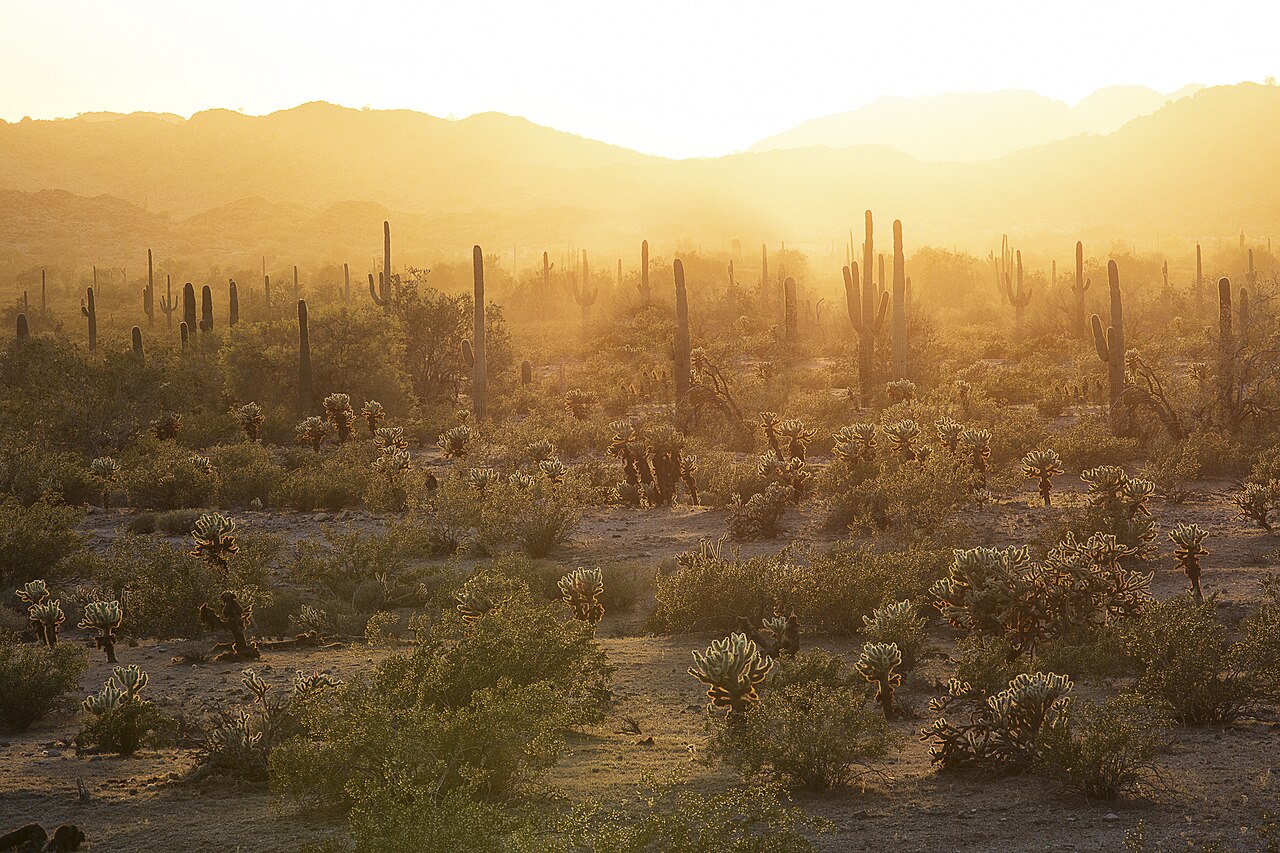
Photo: Sonoran Desert National Monument (26699736295) by BLMArizona (US Bureau of Land Management), Public domain.

Author: Safe Ceremonies
User reviewed ceremonies